


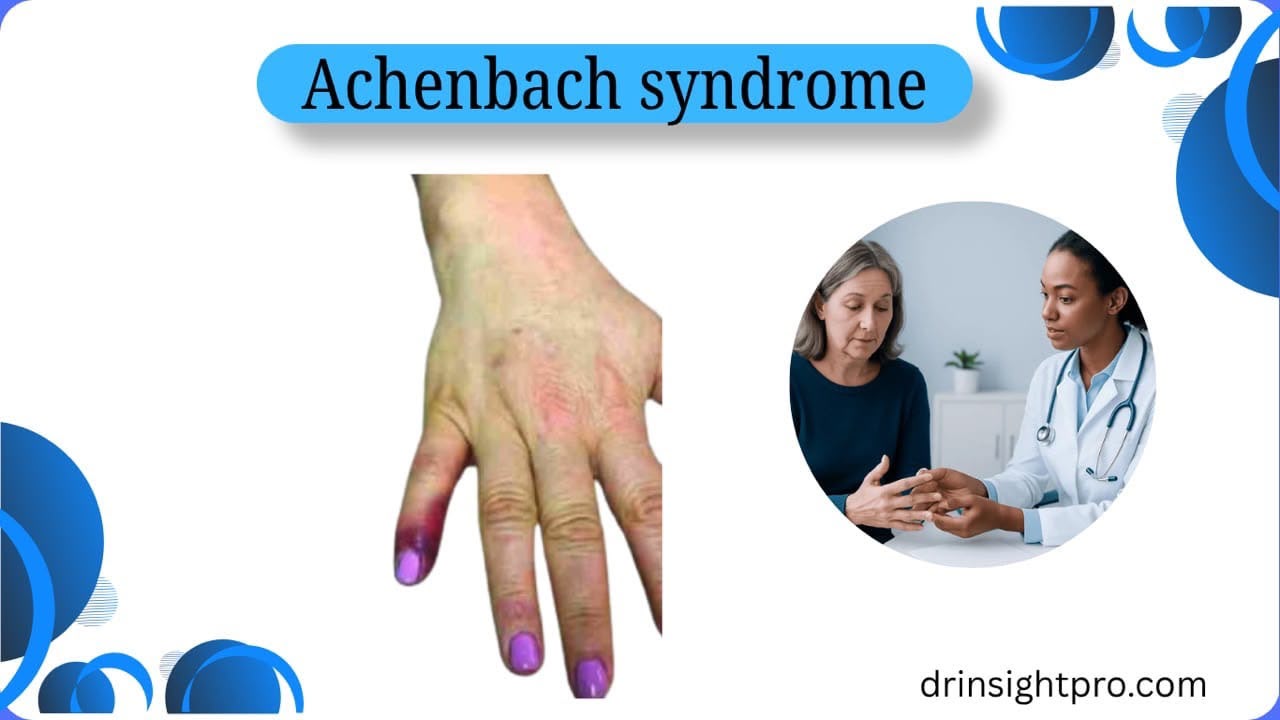
Achenbach syndrome is a harmless temporary condition in which tiny blood vessels just beneath the skin of a finger suddenly rupture. This causes a small amount of internal bleeding essentially a spontaneous bruise which leads to sudden pain, rapid swelling and a blue to purple discoloration.
- Paroxysmal finger hematoma
- Acute idiopathic blue finger
- Painful blue finger
- Paroxysmal hand hematoma
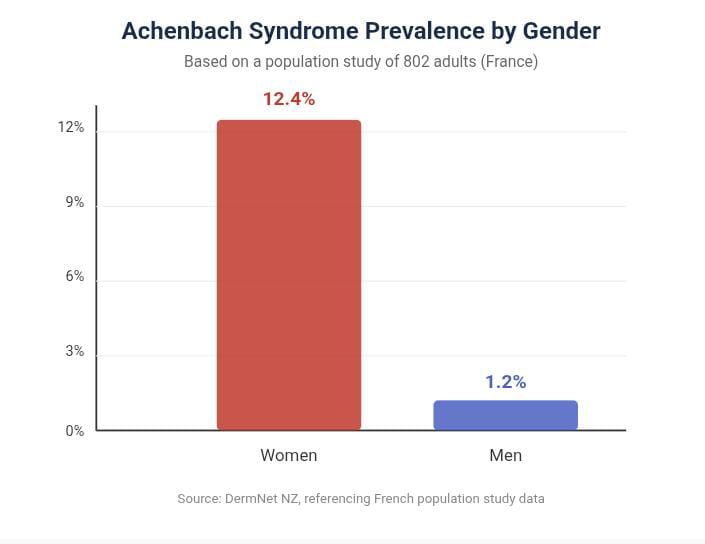
A German Dr. Walter Achenbach first described the condition in the late 1950s after noticing that several of his female patients kept reporting the same strange, recurring pattern of sudden hand and finger bruising with no clear cause. That picture has shifted somewhat in recent years. A population study out of France, surveying more than 800 adults, found that roughly 12.4% of women and 1.2% of men reported symptoms matching the condition at some point in their lives.
Who Is Most at Risk: Age, Gender and Raynaud’s Connection
Women between the ages of 40 and 60 are primarily experience this condition. Although it is much less common in men . There’s no clear connection to any particular job, body type or general health status. That said, some clinical observations suggest a modest overlap between people who experience Achenbach syndrome who also deal with Raynaud’s phenomenon Circulation related conditions triggered by cold. It’s worth being clear though that Achenbach syndrome itself doesn’t result from cold triggered and physicians diagnose and understand the two conditions differently. One of the clearest distinguishing features is that Raynaud’s typically affects the whole finger and follows a color sequence tied to temperature, while an Achenbach episode almost always spares the very fingertip which keeps its normal color even as the rest of the finger darkens and swells.
Causes of Achenbach Syndrome
- Doctors do not fully understand the exact cause of Achenbach syndrome. However, researchers believe that a very small blood vessel under the skin of a finger may become weak and break. When this happens, a small amount of blood can leak into the surrounding tissue. As a result, a blue or purple patch can suddenly appear and may look like a bruise.
- In some people, symptoms can appear after a minor hand movement or pressure. For example, gripping an object tightly, carrying something, wringing clothes or performing other repetitive hand activities may trigger an episode. However, many people do not remember any specific injury or activity before the finger changes color.
- Importantly, a major injury, infection or serious blood clotting disorder usually does not cause Achenbach syndrome. Instead, doctors consider it a benign condition that affects the small blood vessels in the fingers. Most episodes improve on their own and the condition usually does not cause lasting damage.
Is Achenbach Syndrome Linked to COVID-19?
A possible connection between Achenbach syndrome and COVID-19 has attracted some medical interest. A few published case reports have describe people develop paroxysmal finger hematoma (sudden bleeding under the skin of a finger) after COVID-19 infection. However, these reports do not prove that COVID-19 causes Achenbach syndrome. The number of reported cases is small and a direct cause and effect relationship remains unclear.
Is Achenbach Syndrome Caused by Vitamin Deficiency?
Achenbach syndrome also differs from conditions that can cause easy bruising. For example, vitamin C deficiency can weaken connective tissue and blood vessels which makes bruising more likely.
However, Achenbach syndrome itself is not a vitamin C deficiency disorder. When a person has unusual, frequent or widespread bruising a doctor may consider nutritional deficiencies
Symptoms of Achenbach Syndrome:
Symptoms usually appear suddenly, often without warning and unfold in a few recognizable stages
Warning sensation
Some people notice tingling, itching or a burning feeling in the finger minutes to hours before anything becomes visible.
Sudden pain
A sharp, burning or stabbing pain appears usually in a single finger most often the index or middle finger of the dominant hand though any finger.
Rapid swelling
The finger swells noticeably within minutes.
Blue purple discoloration
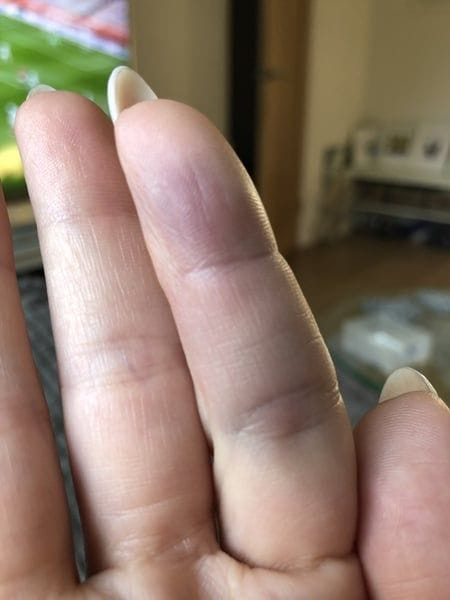
The skin usually on the palm facing side of the finger around the base or middle joint turns a deep blue or purple color resembling a fresh bruise.
Fingertip stays normal
This is one of the most important clues for diagnosis: unlike circulation problems that affect blood flow to the entire finger Achenbach syndrome typically spares the very tip which keeps its normal color throughout the episode.
How long does it take for Achenbach syndrome to go away?
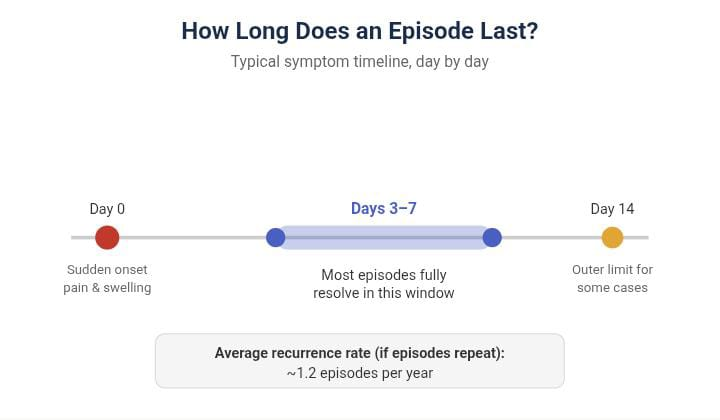
Most episodes resolve completely within 3 to 7 days though some cases can take up to two weeks to fully clear on their own.
Diagnosis of Achenbach Syndrome
During the examination, the doctor will usually ask when the discoloration started whether there was any recent injury or pressure on the finger and whether similar episodes have happened before. The doctor then examine the affected finger for bruising, swelling, tenderness, sensation, movement and blood circulation.
- Complete blood count (CBC) to look for problems such as low platelets or anemia.
- Clotting tests when a bleeding or clotting disorder is suspected.
- Doppler ultrasound if reduced blood flow is a concern.
Treatment of Achenbach Syndrome
The reassuring truth is that no specific medical treatment is required because the body resolves this entirely on its own. Management really just comes down to comfort;
- A cool compress you apply to the affected finger can help ease swelling and discomfort.
- Keeping the hand elevated helps minimize swelling in the early stage of an episode.
- Doctors generally recommed acetaminophen for pain relief; doctors often suggest avoiding aspirin and NSAIDs like ibuprofen, since these can thin the blood slightly and may worsen the bruising.
- If you notice a pattern connected to a specific activity, avoiding that trigger going forward may help reduce how often episodes occur.
Frequently asked questions
Is Achenbach Syndrome Dangerous?
No, Achenbach syndrome is a benign self limiting condition. It does not linked to stroke, blood clots, heart disease or any serious underlying illness. There are no long term complications and it does not lead to permanent damage to the finger.
Can Achenbach Syndrome Affect the Feet?
While it’s most commonly seen in the fingers rare cases have been reported of similar symptoms occurring on the toes or soles of the feet. This is far less common but follows the same benign self resolving pattern.
Is it an autoimmune condition?
No, Blood work in documented cases consistently comes back normal which rules out autoimmune or rheumatologic disease as a cause. It’s considered an isolated localized vascular event rather than a systemic illness.
How long does it take for Achenbach syndrome to go away?
Most episodes clear up completely within 3 to 7 days though some cases can take up to two weeks.
What triggers Achenbach syndrome?
The exact trigger is often unknown. About 30% of cases follow minor physical activity like gripping something tightly or wringing laundry, while 70% happen with no identifiable trigger at all.
Medical Disclaimer
This article is intended for general educational purposes only and should not replace professional medical advice, diagnosis, or treatment. If you have concerning or persistent symptoms, consult a qualified healthcare professional.
About the Author
Dr. Sufiyan Awan, MD is a medical doctor and healthcare writer.
He has completed his medical training and clinical experience at Nishtar Hospital, Multan. He is interested in evidence-based medical education and patient friendly health information.
His goal is to provide clear, accurate and easy to understand medical content for general readers.