


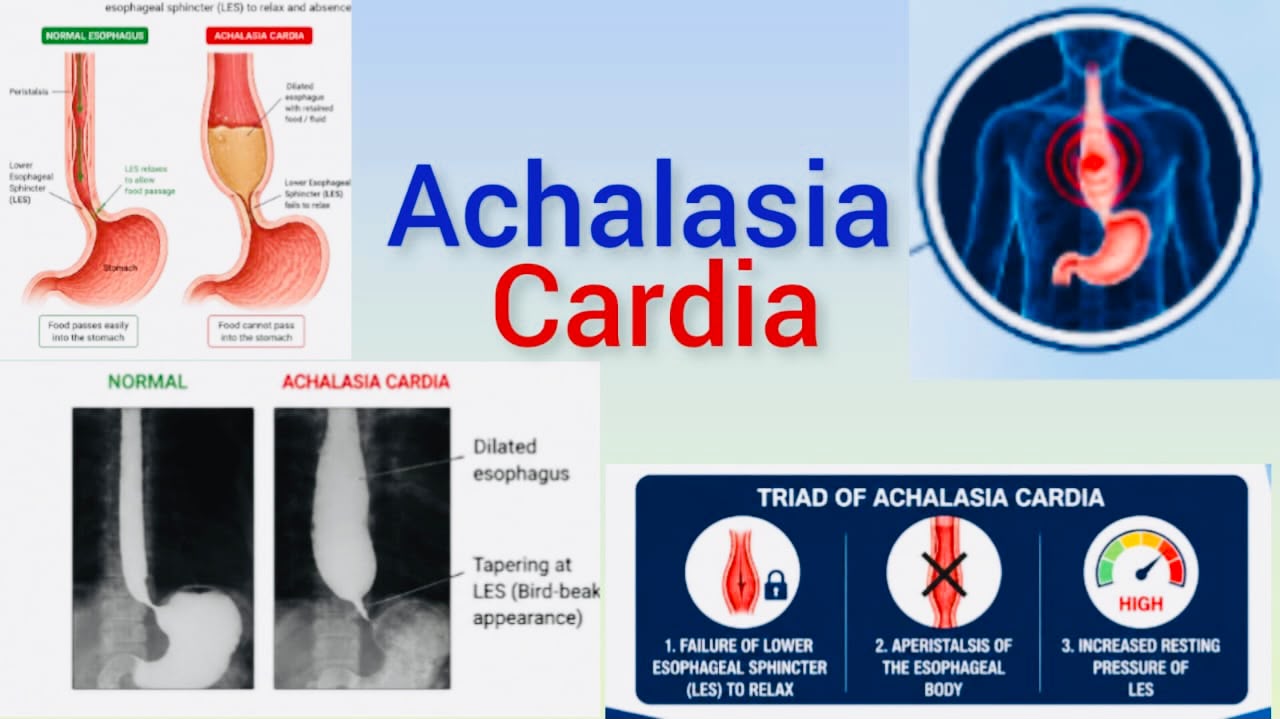
Definition:
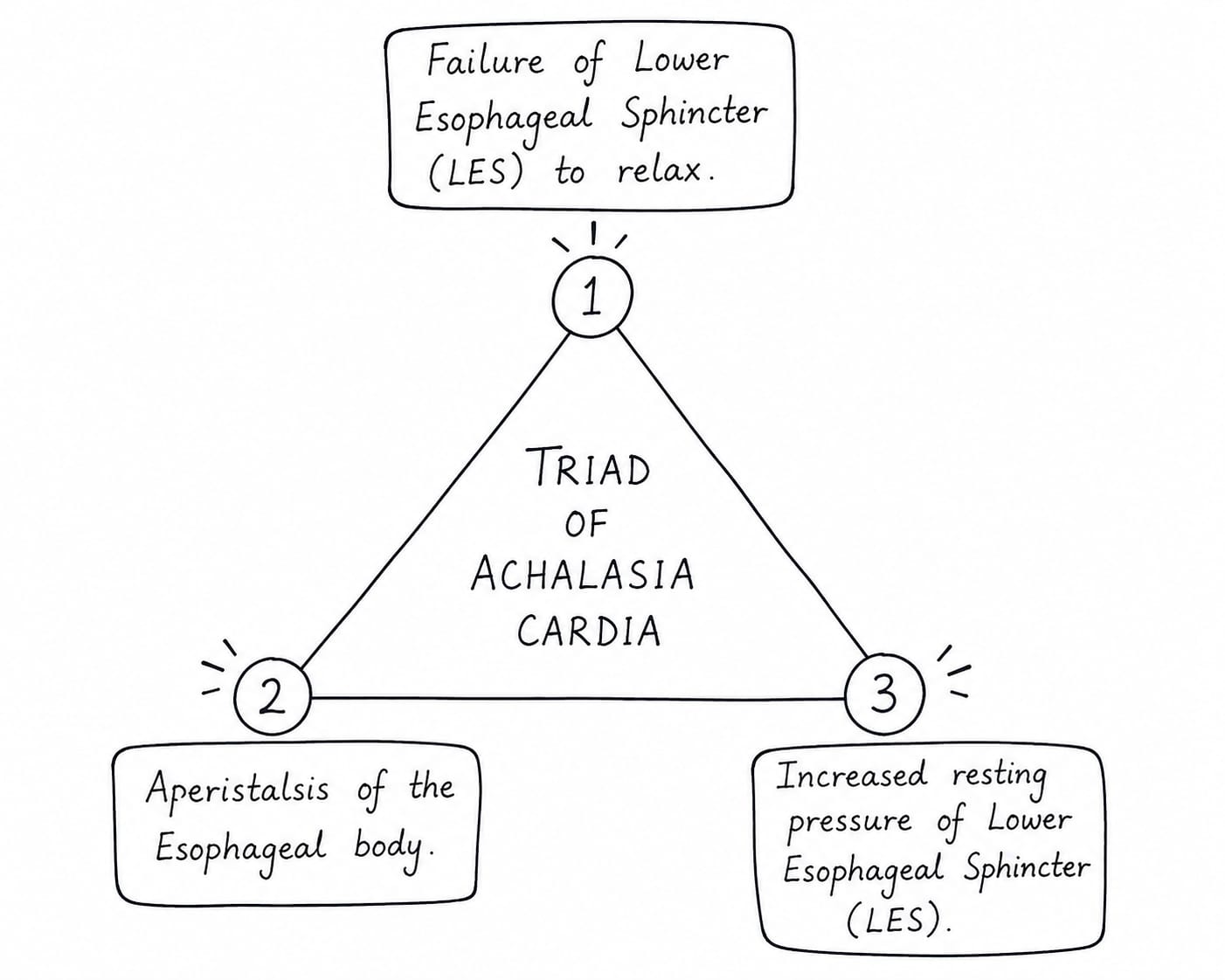
We define Achalasia cardia through a triad of disorder which include,
1-Failure of lower esophageal sphincter to relax.
2-Aperistalsis
3-increased lower esophageal sphincter
Introduction:
Achalasia cardia is the motility or movement disorder of esophagus in which lower esophageal sphincter fails to relax, which causes difficulty in movement of food from esophagus to stomach. In achalasia cardia there is loss of peristalsis, involuntary movement of muscles which pushes food from esophagus to stomach. Peristalsis occur in whole GIT, in stomach it mixes food, in intestine it moves digested food toward.
Pathophysiology of Achalasia cardia
There is a degeneration of inhibitory neurons in the myenteric plexus, also called as Auerbach plexus in achalasia.
Myenteric plexus
It is the collection of nerves present on the wall of gastrointestinal system between the layers of circular and longitudinal smooth muscles. Myenteric plexus controls movement or peristalsis of gastrointestinal system. In achalasia cardia dysfunction of myenteric plexus can lead to failure of LES to relax.
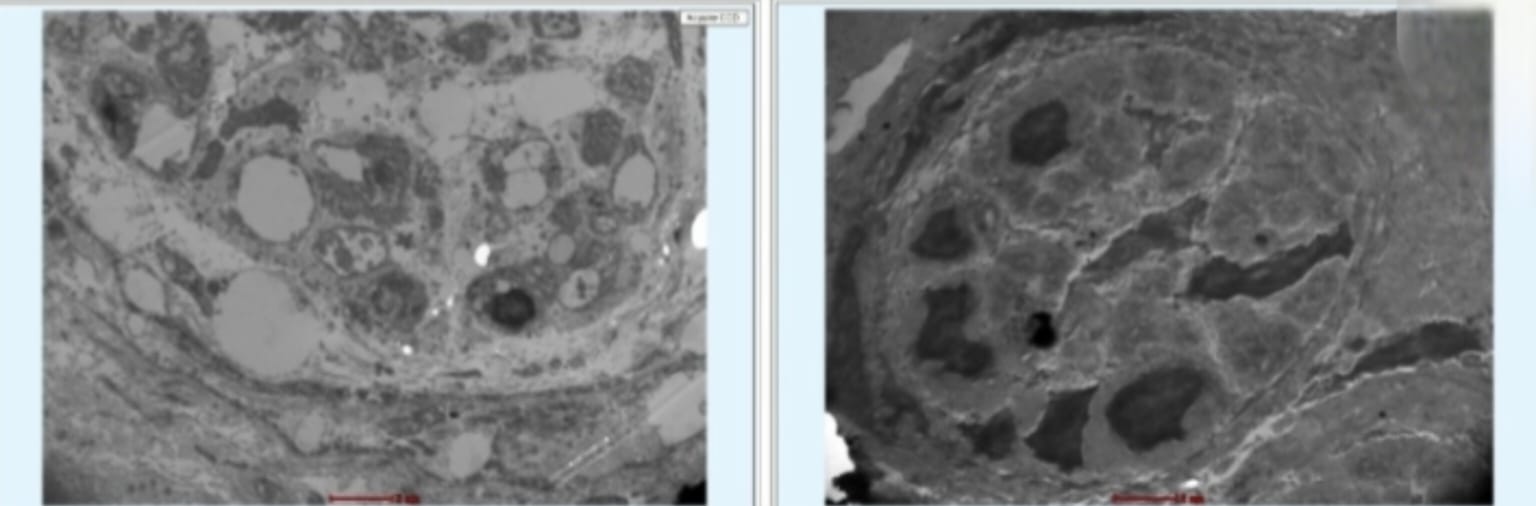
Degenerated pre and post ganglionic nerve cell on electron microscopy.
Etiology/ causes of Achalasia:
On the basis of cause:
Achalasia cardia is of two types.
1- Primary achalasia.
2- Secondary achalasia.
Primary achalasia:
It is an idiopathic, which means the cause is unknown but may also be due to:
- For instance, autoimmune destruction. [Body’s immune system mistakenly attacks its own healthy cells].
- Viral infection
However, while viruses may trigger achalasia cardia researchers have not yet identified a single, definitive viral cause.
In particular, herpes simplex virus type 1[HSV-1] which is most common cause of primary achalasia.
- Varicella zoster which cause chickenpox
- Measles virus
2-Secondary Achalasia:
In addition, it is also call as pseudoachalasia because it looks like primary achalasia however, it results from some other diseases mostly by some obstructions like malignancy which is esophageal cancer and gastric cancer.
drinsightpro.com > Gastroenterology > Achalasia Cardia
Chagas Disease
Specifically, it tropical parasite Trypanosoma cruzi. The disease is spread by the bug bite and directly affect automatic nerve in esophagus and causes failure of LES to relax. It produces secondary achalasia.
Chicago classification:
To determine this, physician base this classification on esophageal manometry , diagonstic test that measure .
- Pressure inside the esophagus
- Relaxation of muscle in the LES
- Contraction of muscle in the LES
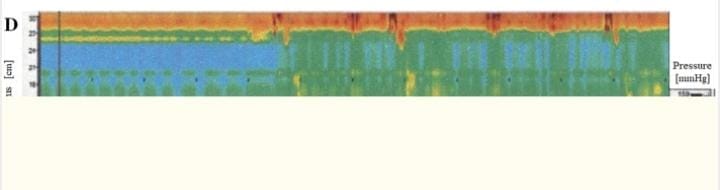
Moreover, it is a gold standard test for achalasia .it also guides about treatment plan for achalasia according to type of achalasia .
Procedure of Esophageal Manometry:
During the test, the physician passes a pressure-sensitive catheter through the nose into the esophagus. As the patient swallows small sips of water, the machine records esophageal pressure and LES relaxation.
1- Type 1 Achalasia
It is also called as classic achalasia the manometric findings shows:
- No contraction of esophageal muscle
- Minimal pressure inside the esophagus .
Type 2 Achalasia
Manometry shows pan esophageal pressurization [pan means hole ]which means pressure inside hole or complete esophagus at the same time during swallowing.
- No peristalsis
- It shows best treatment response.
Type 3 Achalasia
Clinicians also call this condition spastic achalasia because the esophagus develops sudden, abnormally tight spasms, while the LES fails to relax. Consequently, patients experience severe chest pain due to these sudden spasms.
Clinical Features of Achalasia Cardia:
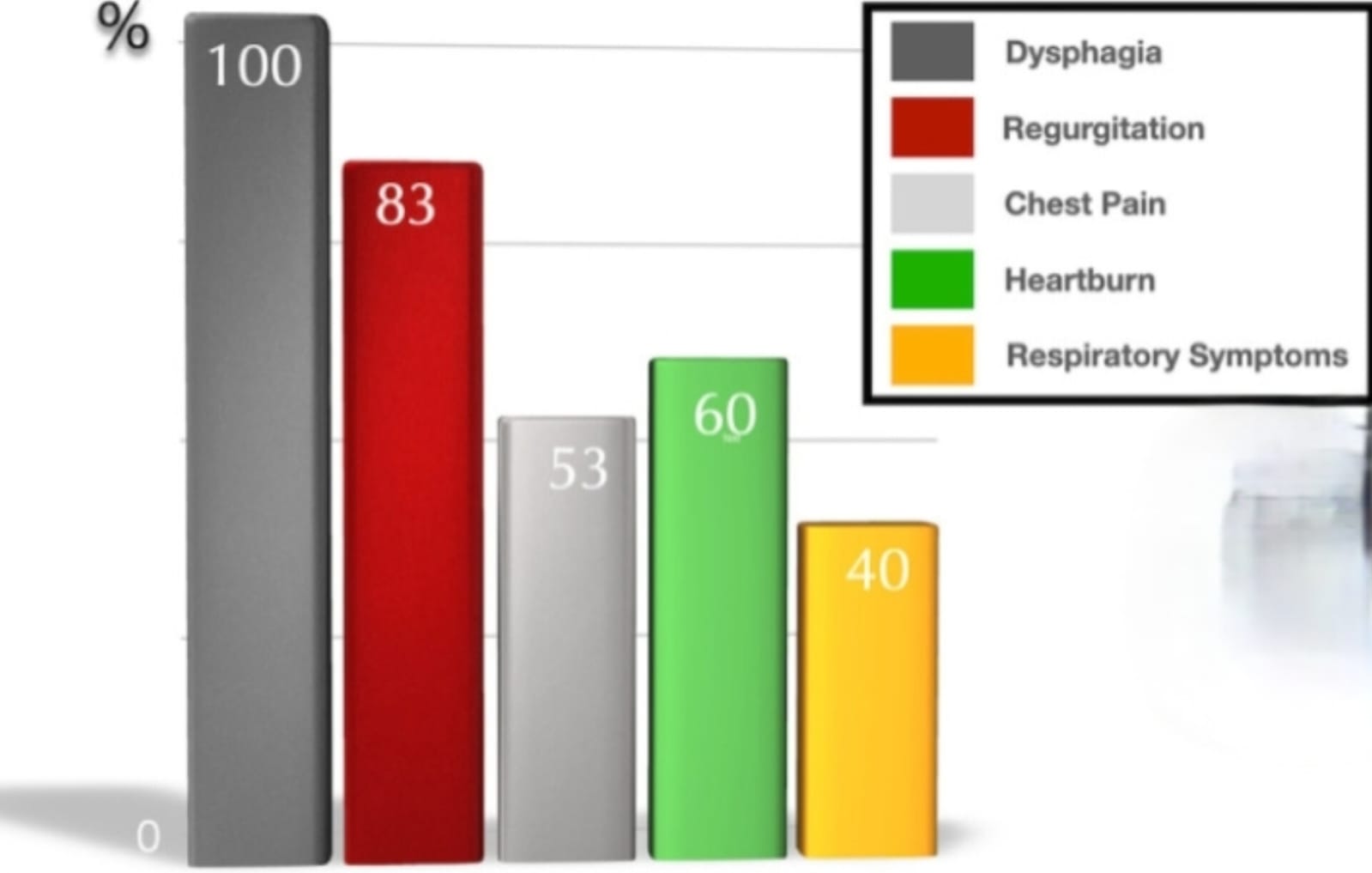
1-Dysphagia:
Notably, this is most common feature of achalasia ( which is the difficulty in swallowing) in mechanical obstruction there is only difficult to swallow solid content of food but in achalasia there is difficulty in both solid and then liquid .
2-Regurgitation:
Typically, undigested food return into mouth it mostly occur at night while sleeping.
3- Chest Pain:
In fact, 2/3 of patient tell about chest pain, it is so severe that it can cause low food intake and weight loss it is most common in type 3 achalasia because of sudden spasm of esophageal muscle
4-Weight Loss:
As a result, this occurs due to low intake of food .
5-Heartburn:
Heartburn may occur due to retained food, esophageal irritation, or gastroesophageal reflux after treatment.
6- Cough at night
7- Wheezing sound
8- Aspiration Pneumonia
Which is lung infection when food intake mistakenly enters lung instead of stomach.
How To Diagnose Achalasia Cardia?
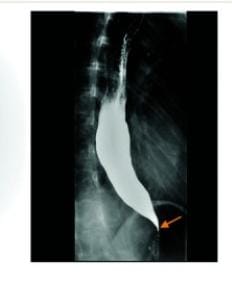
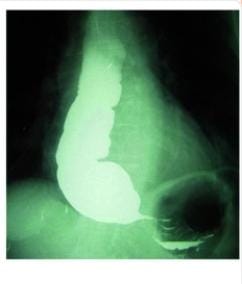
1- Barium Swallow:
Essentially, this diagnostic X-ray test to examine the esophagus and the swallowing process.
Procedure:
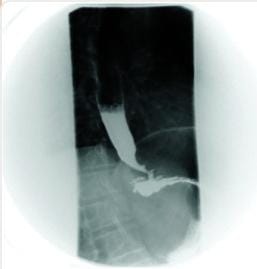
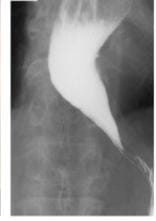
First, during the procedure, the patient drinks a white liquid contrast called barium, which coats the esophagus. As a result, this coating appears clearly on the X-ray. Consequently, on a barium swallow, achalasia typically presents with:
- Esophagus is dilated above [wide at top]
- LES is narrow.
- Bird beak appearance.
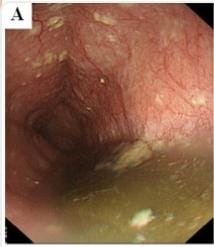
2- Upper GI endoscopy for Achalasia Cardia:
In this procedure, a flexible camera tube is passed from mouth to stomach it is used to differentiate between primary achalasia from cancer. Generally, the scope can be passed from LES by putting small pressure even in primary achalasia. However, if achalasia is due to cancer it will be difficult to pass scope from LES it also shows;
- Remains of food in esophagus even after fasting
- Tight or closed LES
Therefore, it is the gold standard because it confirms:
- Impaired LES relaxation
- Elevated integrated relaxation pressure (IRP)
- Absent peristalsis
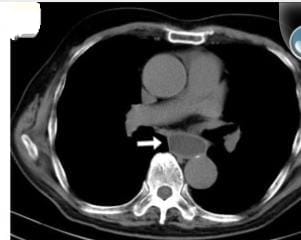
3-CT- scan
4- High Resolution Manometry of Achalasia Cardia
Differential Diagnosis: of Achalasia cardia
- carcinoma
- GERD .
- Diffuse esophageal spasm
- Esophageal stricture
How to Manage Achalasia Cardia:
Although, neuronal damage cannot be treated but some treatment plans are present.
1- Medical Treatment of Achalasia Cardia:
Typically, it is a temporary or given to those patient who are not eligible for surgery.
For example,
- Nitrates (isosorbide dinitrate )it relaxes LES.
- Calcium channel blocker (Nifidipine) decreases pressure in LES .
2- Endoscopic Treatment of Achalasia cardia :
Pneumatic Dilatation for Achalasia Cardia:
Basically, it is a process in which balloon dilation is uses to treat achalasia when there is tight LES. first, in this process the patient is gives light anesthesia and the endoscope is passes from mouth to the esophagus. Next, a guide wire is passes through the scope and then withdraw the scope or remove the scope leaving the guide wire. After that, pneumatic balloon dilator over the guide wire positions balloon across LES under endoscopic guide wire inflate balloon with air or contrast inflate for 30 to 60sec.
Notably, balloon is fills with water because water puts same pressure on all the walls and water is safer and visible on fluoroscopy.
Botulinum toxin injection:
Similarly, botox is injects in LES it blocks acetylcholine release. However, it gives temporary benefit. Therefore, it is uses in older patient who are at high risk.
3- Surgical Treatment of Achalasia Cardia:
Heller Myotomy:
Essentially, it is an operation to treat achalasia.Typically, it is performes laparoscopically through small abdominal incisions. Additionally, there is often a need to cut the fundus called fundoplication, because of acid reflux. As a result, it gives long-term relief.
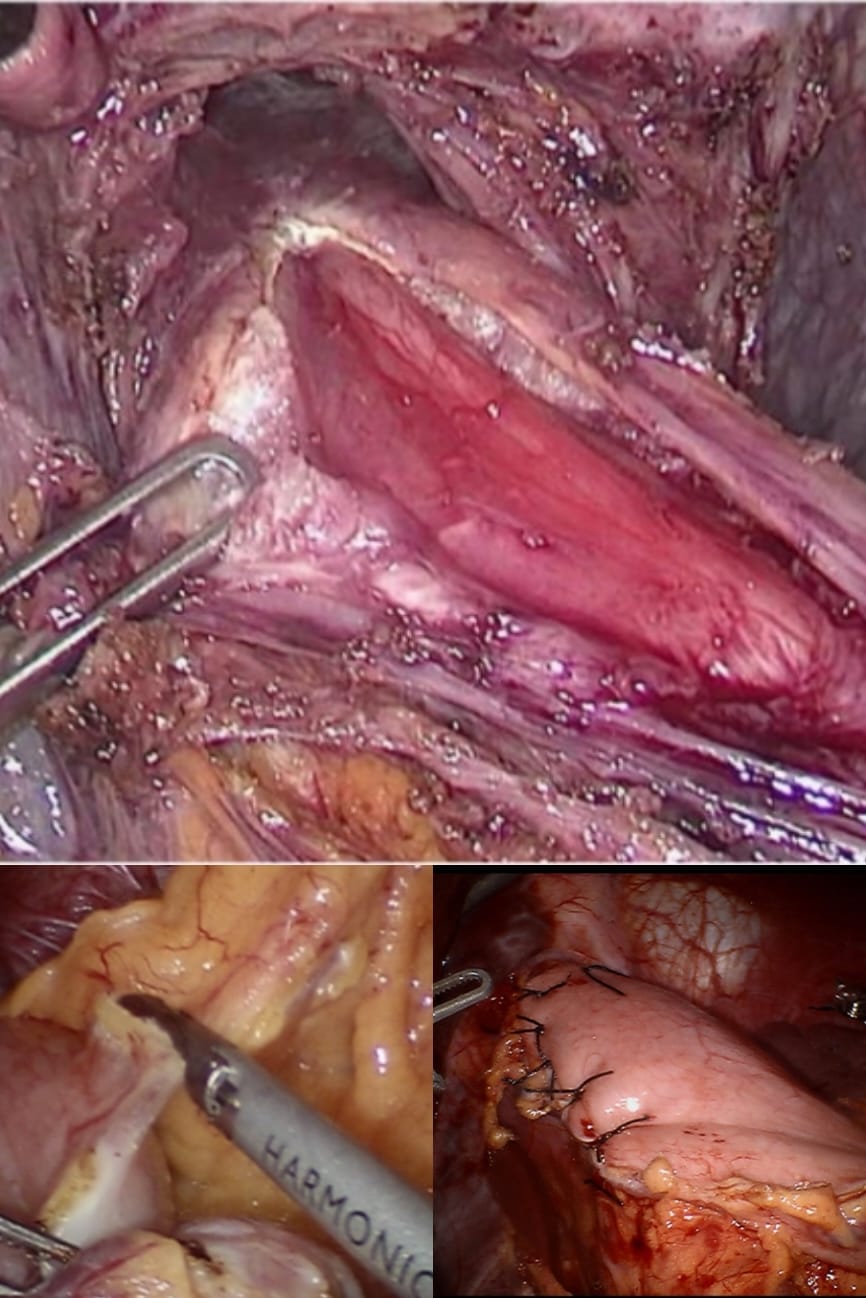
POEM:
Notably, it is a modern treatment for achalasia .
- per oral means through the mouth
- endoscopic (using camera tube)
- myotomy (cutting muscle)
First endoscope is passes via mouth small cut is made in inner esophageal lining tight fiber are cut. Finally, the entry side is closes with clips.
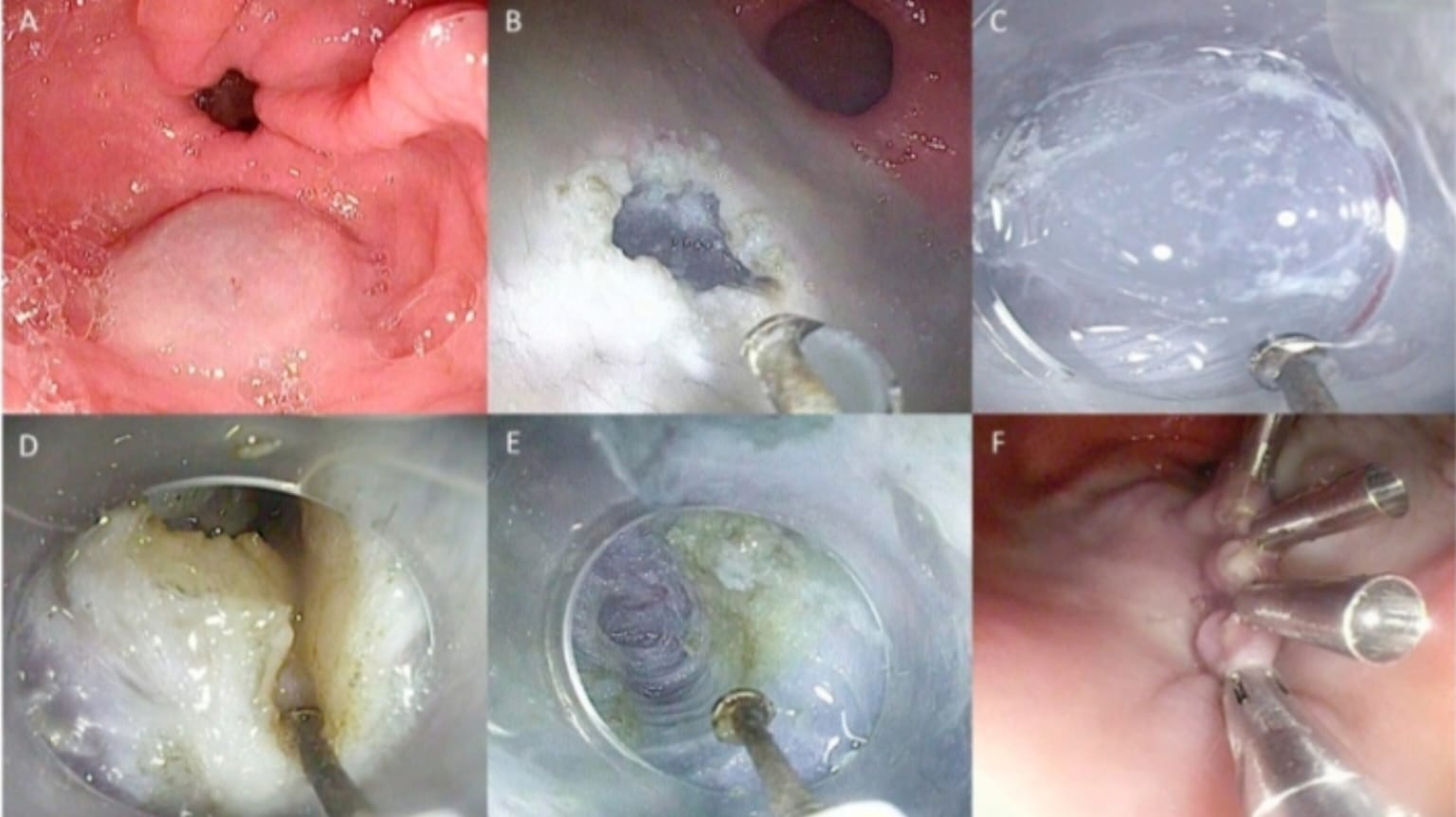
Technical steps of esophageal POEM
Advantages Of POEM :
Firstly, there is no external surgical cut. Secondly, recovery is fast. Moreover, it is very effective and it is especially good for type 3 achalasia.
Disadvantage of POEM
However, there is higher risk of GERD because fundoplication is not performed.
Complications of Achalasia cardia:
Firstly, esophageal ulcers may develop.Additionally, there is a risk of cancer if achalasia remains untreated for a long time.Similarly, esophagitis can occur due to remains of food. Furthermore, aspiration pneumonia may result due to regurgitation. In some cases, megaesophagus develops.Consequently, malnutrition can occur.Rarely, esophageal perforation may occur after treatment.
Conclusion:
Achalasia cardia is a motility disorder of esophagus which causes difficulty in swallowing and chest pain. Early diagnosis and timely treatment can relieve symptoms and also prevent complications. Regular follow ups are essential for better management.
Frequently Asked Questions FAQ :
1-what is the gold standard to test achalasia ?
Answer : Esophageal manometry is used for gold standard test for achalasia.
2-what are the findings on barium swallow ?
Answer: Bird beak appearance due to narrowing of the lower esophageal sphincter .
3- what is the most definite treatment for achalasia ?
Answer: 1- Medical Treatment of Achalasia Cardia:
It is a temporary or given to those patient who are not eligible for surgery.
Nitrates (isosorbide dinitrate )it relaxes LES.
Calcium channel blocker (Nifidipine) decreases pressure in LES . And most definite treament is :Hellers myotomy & POEM.
1-Failure of lower esophageal sphincter to relax.
2-Aperistalsis
3-increased lower esophageal sphincter
i-Hellers myotomy
ii-POEM
Medical Treatment of Achalasia Cardia:
It is a temporary or given to those patient who are not eligible for surgery.
Nitrates (isosorbide dinitrate )it relaxes LES.
Early diagnosis and timely treatment can relieve symptoms and also prevent complications. Regular follow ups are essential for better management.
About the Author:-
Dr. Sufiyan Awan is a dedicated medical professional and healthcare researcher with comprehensive clinical exposure. He has formerly served as a House Officer at Nishtar Hospital, Multan, where he managed diverse clinical cases. Along with his foundational medical expertise, Dr. Sufiyan has completed specialized training with the World Health Organization (WHO), enhancing his insight into global health standards and infectious disease management. He actively writes evidence-based medical articles to bridge the gap between complex clinical science and public health awareness, helping readers access reliable and scientifically accurate medical information.