



A complete blood count (CBC) measures red blood cells, white blood cells and platelets. It also provides information about the size and characteristics of blood cells.
Common adult CBC reference ranges include hemoglobin around 13.5–17.5 g/dL in men and 12.0–15.5 g/dL in women, white blood cells around 4,500–11,000/µL and platelets around 150,000–450,000/µL. However, exact ranges vary by laboratory, age, sex, pregnancy status and other factors.
An abnormal CBC result does not automatically mean you have a disease. Your healthcare provider interprets the result together with your symptoms, medical history and other laboratory tests.
What Is a CBC Test?
A complete blood count is one of the most commonly performed blood tests. Moreover, it evaluates the major types of cells found in your blood:
- Red blood cells (RBCs) carry oxygen to tissues.
- White blood cells (WBCs) help protect the body against infection and inflammation.
- Platelets help the blood form clots and stop bleeding.
A CBC may be ordered during a routine checkup or before surgery. Doctors may also request it when someone has fatigue, weakness, unexplained bruising, bleeding, frequent infections or other symptoms.
A CBC may be ordered alone or together with other blood tests such as a comprehensive metabolic panel.

CBC Normal Range Chart
The following are commonly used adult reference ranges. Your own laboratory’s reference interval should be used when interpreting your results.
| CBC Component | What It Measures | Typical Adult Reference Range |
|---|---|---|
| RBC | Number of red blood cells | Men: 4.5–5.9 million/µL; Women: 4.1–5.1 million/µL |
| Hemoglobin | Oxygen-carrying protein | Men: 13.5–17.5 g/dL; Women: 12.0–15.5 g/dL |
| Hematocrit | Percentage of blood made up of red blood cells | Men: about 41–50%; Women: about 36–44% |
| WBC | Total white blood cell count | 4,500–11,000/µL |
| Platelets | Blood-clotting cell fragments | 150,000–450,000/µL |
| MCV | Average red blood cell size | 80–100 fL |
| MCH | Average amount of hemoglobin per red blood cell | About 27–33 pg/cell |
| MCHC | Hemoglobin concentration inside red blood cells | About 32–36 g/dL |
| RDW | Variation in red blood cell size | About 11.5–14.5% |
| MPV | Average platelet size | About 7.5–12 fL |
Important: Reference ranges differ between laboratories. Always compare your result with the range printed on your own laboratory report.
What Do the CBC Numbers Mean?
1. Red Blood Cell Count
In addition, red blood cells carry oxygen from your lungs to the rest of your body.
A low RBC count may occur with:
- Anemia
- Blood loss
- Iron deficiency
- Vitamin B12 or folate deficiency
- Chronic kidney disease
- Bone marrow disorders
A high RBC count may occur with:
- Dehydration
- Smoking
- Living at high altitude
- Chronic low oxygen levels
- Certain disorders that increase red blood cell production
Equally important, the RBC count should not be interpreted separately from hemoglobin and hematocrit.
2. Hemoglobin
Hemoglobin is the protein inside red blood cells that carries oxygen.
In particular, low hemoglobin is one of the main laboratory findings used to identify anemia.
Possible causes include the following:
- Iron deficiency
- Blood loss
- Vitamin B12 deficiency
- Folate deficiency
- Chronic disease
- Kidney disease
- Bone marrow disorders
High hemoglobin may occur because of dehydration or increased red blood cell production. Smoking and chronic low oxygen levels can also contribute.
3. Hematocrit
To illustrate, hematocrit shows the percentage of your blood volume occupied by red blood cells.
Specifically, a low hematocrit may occur with anemia or blood loss.
In particular, a high hematocrit may occur with dehydration or conditions that increase red blood cell production.
Because hematocrit is affected by blood volume, dehydration can make the value appear higher than it would be when you are adequately hydrated.
Red Blood Cell Indices
Accordingly, CBC reports often include several measurements called red blood cell indices. Consequently, these help doctors determine the type of anemia or identify other blood abnormalities.
4. MCV
Furthermore, the mean corpuscular volume (MCV) measures the average size of red blood cells.
Typical adult range:
80–100 fL
Low MCV
Besides, small red blood cells are called microcytosis.
Possible causes include the following:
- Iron deficiency
- Thalassemia
- Some chronic inflammatory conditions
- Certain inherited blood disorders
High MCV
Large red blood cells are called macrocytosis.
Possible causes include the following:
- Vitamin B12 deficiency
- Folate deficiency
- Alcohol use
- Liver disease
- Certain medications
- Some bone marrow disorders
Additionally, MCV should always be interpreted with hemoglobin, RDW and other CBC findings.
5. MCH
Mean corpuscular hemoglobin (MCH) measures the average amount of hemoglobin inside each red blood cell.
A low MCH can occur when red blood cells contain less hemoglobin than expected. Iron deficiency is one possible cause.
A high MCH can occur when red blood cells are larger than usual. It is usually interpreted together with MCV and other red cell indices.
6. MCHC
Mean corpuscular hemoglobin concentration (MCHC) measures the concentration of hemoglobin within red blood cells.
A low MCHC may occur with hypochromic red blood cells such as those seen in some cases of iron deficiency.
A high MCHC is less common and may occur in certain red blood cell disorders or because of laboratory interference.
7. RDW
Red cell distribution width (RDW) measures how much red blood cell size varies.
A high RDW means that red blood cells vary more in size than expected.
An increased RDW may occur with:
- Iron deficiency
- Vitamin B12 deficiency
- Folate deficiency
- Recent blood loss
- Some mixed nutritional deficiencies
RDW can provide useful information when interpreted with MCV.
For example, iron deficiency often produces a low MCV with an increased RDW. Thalassemia trait may have a low MCV with a normal or mildly increased RDW.
However, RDW alone cannot distinguish between these conditions.
White Blood Cell Count
8. WBC
On the other hand, white blood cells help the immune system fight infections and respond to inflammation.
A typical adult WBC range is approximately the following:
4,500–11,000 cells/µL
High WBC Count
Whereas a high WBC count is called leukocytosis.
Possible causes include:
- Infection
- Inflammation
- Physical stress
- Certain medications
- Smoking
- Allergic conditions
- Bone marrow disorders
Despite this, a high WBC count does not automatically mean a bacterial infection.
Low WBC Count
Furthermore, a low WBC count is called leukopenia.
Possible causes include:
- Viral infections
- Certain medications
- Chemotherapy
- Autoimmune disorders
- Nutritional deficiencies
- Bone marrow disorders
Even though, the significance of a low WBC count depends partly on which type of white blood cell is reduced.
CBC with Differential: What Are Neutrophils, Lymphocytes and Other WBCs?
Accordingly, CBC with differential provides additional information about the different types of white blood cells.
The main types include:
| WBC Type | Main Role | Possible Causes of Increased Levels |
|---|---|---|
| Neutrophils | Fight many bacterial and fungal infections | Infection, inflammation, physical stress |
| Lymphocytes | Help with immune responses | Some viral infections and other conditions |
| Monocytes | Help remove damaged cells and respond to infection | Some infections and inflammatory conditions |
| Eosinophils | Involved in allergic and parasitic responses | Allergies, asthma, some parasitic infections |
| Basophils | Participate in allergic and inflammatory responses | Some allergic or inflammatory conditions |
For this reason, your report may show these as percentages or as absolute counts.
What Is ANC?
Absolute neutrophil count (ANC) estimates the number of neutrophils available to fight infection.
A significantly low ANC is called neutropenia. The risk of infection generally becomes more important as the ANC decreases.
To illustrate, doctors pay particular attention to ANC in people receiving chemotherapy or certain medications that can suppress the immune system.
Platelet Count
9. Platelets
Platelets are small cell fragments that help blood clot.
Typical adult platelet range:
150,000–450,000/µL
Low Platelet Count
Meanwhile, a low platelet count is called thrombocytopenia.
Importantly, possible causes include:
- Viral infections
- Certain medications
- Immune disorders
- Liver disease
- Increased platelet destruction
- Reduced platelet production in the bone marrow
Indeed, very low platelet counts may increase the risk of bleeding.
High Platelet Count
A high platelet count is called thrombocytosis.
Possible causes include:
- Infection
- Inflammation
- Iron deficiency
- Recent surgery
- Blood loss
- Certain bone marrow disorders
Additionally, a high platelet count does not by itself diagnose a clotting disorder. The cause and the overall clinical situation are important.
What Is MPV on a CBC?
Mean platelet volume (MPV) measures the average size of platelets.
Compared with, a higher MPV can indicate that the blood contains more newly produced larger platelets. Also, lower MPV may occur in some conditions involving platelet production.
MPV should be interpreted together with the platelet count and the rest of the CBC. It should not be used alone to diagnose a disease.
Why Is My CBC Normal Range Different From an Online Chart?
To illustrate, it is common for CBC reference ranges to differ between laboratories.
Reasons include:
- Different laboratory analyzers
- Different testing methods
- Age
- Sex
- Pregnancy
- Altitude
- Smoking
- Population used to establish the reference interval
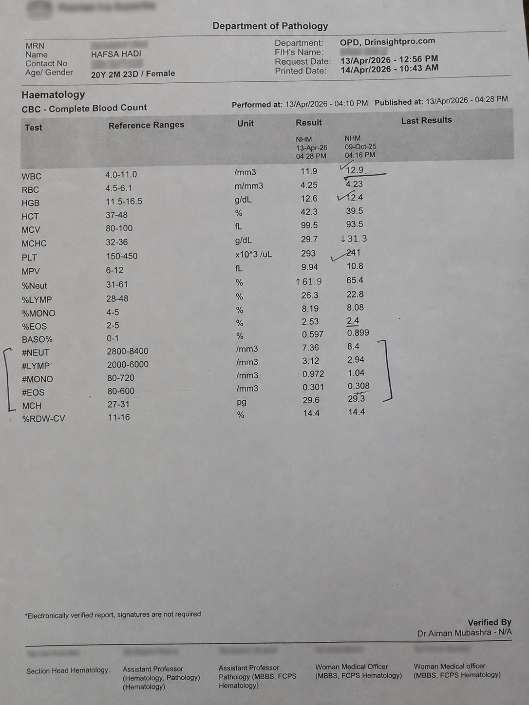
Children also have different reference ranges from adults.
For this reason, the reference range printed on your own laboratory report is more useful than a generic online range.
The Overlooked Factor: When an Abnormal CBC Result May Not Reflect Your True Blood Count
Furthermore, an abnormal CBC result does not always mean that something is wrong with your health. However, in some cases, problems with blood collection, handling or testing can affect the reported result. Therefore, these are often called preanalytical or laboratory-related errors.
This is important because an unexpected result may sometimes need to be confirmed before its significance can be determined.
Lab Artifacts Can Mimic a Real Abnormality
Firstly, several factors can interfere with CBC measurements.
Platelet Clumping
In addition, platelets can sometimes clump together inside the blood collection tube. When this happens, an automated blood analyzer may fail to count some of the platelets correctly.
Therefore, this can produce a falsely low platelet count called pseudothrombocytopenia.
If platelet clumping is suspected, the laboratory may examine a blood smear or repeat the test using a different anticoagulant tube. The platelet count may then be found to be normal.
Sample Dilution
Furthermore, a blood sample collected from or too close to an intravenous fluid line can become diluted with IV fluid.
This may produce unexpectedly low results across several CBC parameters, including hemoglobin, hematocrit and blood cell counts.
When sample dilution is suspected, the healthcare team may recommend collecting another sample from an appropriate site.
Delayed or Improper Sample Handling
CBC samples need to be collected and handled according to laboratory requirements. Excessive delays before analysis or inappropriate storage conditions can affect the quality of the sample and may alter some blood cell measurements.
Even though, the effect depends on the specific parameter and the circumstances of the sample.
What Should You Do About an Unexpected CBC Result?
If a CBC result is unexpectedly abnormal, do not assume that it is either a serious disease or simply a laboratory error.
Equally important, your healthcare provider may consider:
- Whether the result is consistent with your previous CBC results.
- Whether other CBC parameters show a similar pattern.
- Whether there were problems with collection or sample handling.
- Whether you have symptoms or medical conditions that could explain the result.
- Whether the CBC should be repeated or confirmed with additional laboratory testing.
A repeat test may be appropriate in some situations. However, do not delay medical evaluation simply because you feel well. Despite this, some important blood abnormalities can occur without obvious symptoms.
Bottom line: An unexpected CBC result sometimes reflects a problem with the sample rather than a problem in the body. When a result does not fit the clinical picture, your healthcare provider can determine whether repeat testing or further investigation is appropriate.
What Can Cause an Abnormal CBC?
An abnormal CBC has many possible causes.
For example, common categories include:
Infections
Infections can change the WBC count and the distribution of different white blood cells.
Nutritional Deficiencies
Iron deficiency can affect hemoglobin, MCV, MCH and RDW.
Whereas, vitamin B12 or folate deficiency can produce macrocytosis.
Blood Loss
Moreover, recent or chronic blood loss can reduce hemoglobin and hematocrit.
Chronic Disease
Also, kidney disease, liver disease and inflammatory disorders can affect blood counts.
Medications
Also, some medications can affect white blood cells, red blood cells or platelets.
Furthermore, chemotherapy is a well-known example.
Bone Marrow Disorders
Moreover, bone marrow diseases can affect one or several blood cell lines.
An abnormal CBC does not establish a diagnosis by itself. Additional tests may be required.
Risk Factors for Abnormal Blood Counts
Certain factors can increase the likelihood of abnormal blood counts, including:
- Chronic medical conditions
- A family history of inherited blood disorders
- Recent significant blood loss or surgery
- A diet low in iron, vitamin B12 or folate
- Chemotherapy or other treatments that affect blood cell production
- Pregnancy
- Certain medications
CBC Normal Ranges by Age
CBC values change considerably during childhood.
Besides, newborns can have different hemoglobin and white blood cell values from older children. Infants and young children also have age-specific reference intervals.
Therefore, a CBC value that is normal for a newborn may be abnormal for an adult.
As well as, parents should not compare a child’s CBC with an adult reference chart.
For pediatric results, use the age-specific reference range provided by the laboratory also, discuss unexpected results with the child’s healthcare provider.
Older adults can also have changes in blood counts related to chronic disease, medications and other health conditions.
CBC During Pregnancy
Equally important, pregnancy causes major changes in blood volume and blood cell measurements.
Hemoglobin and hematocrit can decrease because plasma volume increases during pregnancy. This is sometimes called physiologic dilution.
Pregnant patients should therefore be interpreted using pregnancy-appropriate reference information when available.
Anemia during pregnancy is common but should not automatically be considered a normal effect of pregnancy. Additionally, iron deficiency and other causes may require evaluation.
Can Dehydration Cause a High CBC?
Yes. Dehydration can make some blood measurements appear higher because the liquid portion of blood decreases.
This can increase the measured concentration of the following:
- Hemoglobin
- Hematocrit
- RBC count in some situations
Likewise, a high result caused by dehydration may improve after adequate fluid replacement.
However, persistent elevation requires medical evaluation because dehydration is only one possible explanation.
What Is a Critical or Dangerous CBC Count?
There is no single CBC number that is dangerous for every patient.
Critical values are laboratory-specific and depend on factors such as:
- The patient’s age
- Symptoms
- Medical history
- Cancer or chemotherapy treatment
- Pregnancy
- Other laboratory results
- How quickly the value changed
For example, a very low neutrophil count can be particularly concerning when accompanied by fever. Severe anemia can be more concerning when accompanied by chest pain, fainting or severe shortness of breath.
If your laboratory report labels a result as critical, panic or urgent, contact your healthcare provider immediately. If you have severe symptoms, seek emergency medical care.
Symptoms That May Lead to a CBC Test
Doctors may order a CBC when someone has:
- Persistent fatigue
- Weakness
- Pale skin
- Shortness of breath
- Dizziness
- Unexplained bruising
- Unusual bleeding
- Frequent infections
- Persistent fever
- Unexplained weight loss
- Symptoms suggesting anemia or another blood disorder
A CBC may also be ordered as part of routine medical care or to monitor certain diseases and treatments.
When Should You Seek Emergency Care?
Seek urgent medical attention if abnormal blood results occur with serious symptoms such as:
- Severe or uncontrolled bleeding
- Fainting
- Chest pain
- Severe shortness of breath
- Confusion
- Severe weakness
- High fever with a known very low neutrophil count
- Signs of a serious infection
Specifically, patients receiving chemotherapy or other treatments that suppress the immune system should follow their healthcare team’s specific instructions for fever or infection symptoms.
How Is a CBC Test Done?
Accordingly, a CBC usually requires a small blood sample collected from a vein in your arm.
The procedure generally takes only a few minutes.
Fasting is usually not required for a CBC alone.
If other blood tests are ordered at the same time, such as certain glucose or lipid tests, your doctor or laboratory may give you separate fasting instructions.
However, CBC results may be available within several hours or within a day depending on the laboratory.
Do You Need to Prepare for a CBC?
For a CBC alone:
- Fasting is usually unnecessary.
- Drink water normally unless your healthcare provider gives different instructions.
- Tell your healthcare provider about medications and supplements you take.
- Follow any additional instructions if other blood tests are being performed.
What Should You Do If Your CBC Is Abnormal?
If you see an abnormal CBC result, do not immediately assume that you have a serious disease.
Use this simple approach:
Step 1: Check Your Laboratory’s Reference Range
Equally important, compare your result with the reference interval printed on your own report.
Step 2: Look at the Complete CBC
However, do not focus on one number alone.
Look at:
- Hemoglobin
- Hematocrit
- RBC
- MCV
- MCH
- MCHC
- RDW
- WBC
- Differential
- Platelets
- MPV
Step 3: Consider Your Symptoms
Tell your doctor if you have fatigue, fever, bleeding, bruising, weight loss, shortness of breath or recurrent infections.
Step 4: Ask Whether Repeat Testing Is Needed
A mildly abnormal result may sometimes be temporary. Because of this, your doctor may recommend repeating the CBC or ordering additional tests.
Step 5: Complete Further Testing When Recommended
Depending on the pattern, your doctor may order tests such as:
- Iron studies
- Ferritin
- Vitamin B12
- Folate
- Reticulocyte count
- Kidney function tests
- Liver function tests
- Peripheral blood smear
- Other tests based on your symptoms
Treatment for an Abnormal CBC
Treatment depends on the underlying cause.
For example:
Iron deficiency anemia may require iron replacement and investigation for the cause of iron deficiency.
Vitamin B12 deficiency may require vitamin B12 replacement.
An infection may require treatment based on the type and cause of the infection.
Medication-related abnormalities may require adjustment of the responsible medication under medical supervision.
Bone marrow disorders may require evaluation by a hematologist.
Despite this, the CBC result itself is not usually the treatment target. The underlying cause is what needs to be identified and managed.
Can a CBC Detect Cancer?
A CBC cannot diagnose cancer by itself.
Some cancers involving the blood or bone marrow can produce abnormal CBC patterns. In contrast, other cancers may have a completely normal CBC.
If a CBC shows an unexplained or persistent abnormality, your doctor may recommend additional testing.
Depending on the situation, this may include the following:
- Peripheral blood smear
- Additional blood tests
- Imaging
- Bone marrow examination
- Other diagnostic procedures
Meanwhile, an abnormal CBC does not automatically mean cancer.
Can Stress Affect a CBC?
Yes. Significant physical stress can temporarily increase the WBC count in some people.
For example:
- Severe illness
- Surgery
- Trauma
- Intense physical stress
Emotional stress may also influence certain blood measurements in some situations.
A mildly abnormal WBC count should therefore be interpreted in the context of recent illness, medications, symptoms and other findings.
How Often Should You Get a CBC?
There is no universal schedule for CBC testing in every healthy adult.
Your doctor may recommend a CBC when:
- You have symptoms that require evaluation.
- You have a chronic medical condition.
- You take medication that can affect blood counts.
- You are receiving chemotherapy or another treatment requiring monitoring.
- A previous CBC was abnormal.
- Your doctor considers it appropriate as part of your medical evaluation.
Routine testing should be based on your individual health needs rather than a fixed schedule for everyone.
When to See a Doctor About Your CBC
Contact your healthcare provider if your CBC shows a persistent abnormal result or if you have symptoms such as:
- Persistent fatigue
- Unexplained bleeding
- Frequent infections
- Persistent fever
- Unexplained bruising
- Shortness of breath
- Dizziness
- Unexplained weight loss
In that case, seek emergency care for severe bleeding, chest pain, fainting, severe breathing difficulty or other serious symptoms.
Key Takeaways
To summarize,
- A CBC measures red blood cells, white blood cells and platelets.
- CBC reports commonly include RBC indices such as MCV, MCH, MCHC and RDW.
- A CBC with differential provides additional information about different types of white blood cells.
- Platelet count and MPV provide information about platelets.
- Normal ranges vary between laboratories.
- Children and adults have different CBC reference ranges.
- Pregnancy can change several CBC measurements.
- Dehydration can increase hemoglobin and hematocrit.
- Sample problems can sometimes produce misleading CBC results.
- Platelet clumping can cause a falsely low platelet count.
- An abnormal CBC does not automatically mean disease.
- A single CBC value should not be interpreted in isolation.
- Persistent or significant abnormalities may require additional testing.
- Always discuss abnormal results with the healthcare professional who ordered the test.
Frequently Asked Questions
A CBC with differential is a blood test that measures your red blood cells, white blood cells and platelets. In addition, it provides a breakdown of the different types of white blood cells, including neutrophils, lymphocytes, monocytes, eosinophils and basophil.
Usually, you do not need to fast before a CBC test. However, if your doctor orders other blood tests at the same time, such as certain glucose or lipid tests, fasting may be required. Therefore, follow the instructions given by your doctor or laboratory before the blood test
A CBC cannot diagnose cancer by itself. However, certain abnormal blood count patterns may indicate that further testing is needed. For example, persistent changes in white blood cells, red blood cells or platelets may require additional blood tests or other investigations.
Yes, sometimes the blood sample itself can affect a CBC result. For instance, platelet clumping can cause a falsely low platelet count. In addition, collecting blood from a site affected by intravenous fluids can dilute the sample. As a result, your doctor may recommend repeating the CBC when a result is unexpected or does not fit the overall clinical picture
Yes, sometimes the blood sample itself can affect a CBC result. For instance, platelet clumping can cause a falsely low platelet count. In addition, collecting blood from a site affected by intravenous fluids can dilute the sample.
Disclaimer
This article is for educational and informational purposes only. It does not provide a diagnosis or replace professional medical advice.
CBC results should be interpreted according to the patient’s symptoms, medical history and laboratory reference ranges. Speak with a qualified healthcare professional about your individual results.
About Athur
Dr. Hafsa Hadi is a medical professional and contributing writer at drinsightpro.com She focuses on delivering evidence-based health insights and reliable medical education to help patients better understand preventive healthcare and disease management.
Textbooks and Reference Manuals
- Bain, B. J., Bates, I., & Laffan, M. A. (2016). Dacie and Lewis Practical Haematology (12th ed.). Elsevier.
- Greer, J. P., Arber, D. A., Glader, B., List, A. F., Means, R. T., & Rodgers, G. M. (2018). Wintrobe’s Clinical Hematology (14th ed.). Wolters Kluwer.
- Kaushansky, K., Prchal, J. T., Burns, L. J., Lichtman, M. A., Levi, M., & Linch, D. C. (2021). Williams Hematology (10th ed.). McGraw Hill.
- Walker, H. K., Hall, W. D., & Hurst, J. W. (Eds.). (1990). Clinical Methods: The History, Physical, and Laboratory Examinations (3rd ed.). Butterworths. Chapter 154: The Complete Blood Count.
Clinical Reviews and StatPearls (NCBI Bookshelf)
- George, M., & Moosavi, L. (2024). Normal and Abnormal Complete Blood Count With Differential. StatPearls Publishing. NCBI Bookshelf ID: NBK604207.
- Teachey, D. T., & O’Connor, S. W. (2019). Clinical approach to complete blood count interpretation in primary care. Pediatric Clinics of North America, 60(6), 1363–1380.
- Means, R. T. (2020). Evaluation of the adult patient with anemia. American Family Physician, 101(9), 543–550.
Guidelines and Laboratory Standards
- Clinical and Laboratory Standards Institute (CLSI). (2022). Validation, Verification, and Quality Assurance of Automated Hematology Analyzers (CLSI document H26-A2). CLSI.
- World Health Organization (WHO). (2011). Haemoglobin concentrations for the diagnosis of anaemia and assessment of severity. Vitamin and Mineral Nutrition Information System (WHO/NMH/NHD/MNM/11.1).
- American Association for Clinical Chemistry (AACC) / Testing.com. (2024). Complete Blood Count (CBC) Reference Ranges and Clinical Utility.