


Initially, tuberculosis, commonly known as TB remains one of the most significant infectious diseases in global public health.In fact caused by the Mycobacterium tuberculosis and this infection primarily attacks the respiratory system, though it can potentially affect almost any organ in the human body. However, despite fully preventable and curable, tuberculosis continues to present a major challenge, particularly in developing countries across South Asia and Africa.
How Does Tuberculosis Spread?
Mode of Transmission:
Primarily, the transmission of Mycobacterium tuberculosis occurs almost exclusively through the air via droplet nuclei.Consequently, when an individual with active pulmonary tuberculosis coughs, sneezes, speaks or spits contsequently they release tiny infectious particles into the surrounding atmosphere. In contrast, extra-pulmonary TB (such as TB of the bones, kidneys, or lymph nodes) is generally not contagious to others.
Inhalation of Droplets: Subequently, a healthy individual inhales these microscopic droplets, allowing the bacteria to travel down the respiratory tract and settle in the lungs. Furthermore, overcrowding, poor ventilation, malnutrition, and prolonged indoor contact highly drive transmission which is why it spreads rapidly within tight household settings.
Pathophysiology of Tuberculosis (Latent TB vs. Active TB ):
What happens after the bacteria enter the lungs depends entirely on the host’s immune system response.Tuberculosis progresses through two distinct clinical phases.
Primary Infection and Granuloma Formation
Once inhaled, the bacteria reach the alveoli (air sacs) of the lungs where they are engulfed by alveolar macrophages. However, instead of dying the bacteria use the specialized cell wall of M. tuberculosis to multiply inside the macrophage cells. Subequently, in order to contain the infection the body’s cell mediated immunity activates creating a cellular wall around the infected cells. As a result,clinicians call this defensive structure is called a granuloma. Finally, the combination of this initial lung lesion and an infected lymph node is visible on a chest X-ray as a Ghon complex.
Latent tuberculosis Infection
In about 90% of individuals with a healthy immune system, the granuloma successfully contains the bacteria. Consequently, the infection becomes dormant. Therefore, the patient has Latent TB.They feel completely healthy, show no symptoms, and cannot spread the disease to others.
Active tuberculosis Disease
However,if the patient’s immune system weakens due to aging, malnutrition, severe stress, or chronic conditions like diabetes, the granuloma walls break down. As a result, the dormant bacteria multiply rapidly, and cause structural damage to the lung tissue. This is Active TB, which causes clinical illness and allows the patient to infect others.
Risk Factor of tuberculosis :
- Diabetes mellitus: High blood sugar levels weaken your body’s natural defense system.
- Smoking: Damages lung tissues, making it easier for bacteria to attack.
- Alcoholism: Destroys immunity and general health over time.
- Weak immunity: HIV or chemotherapy quickly exposesz patients to infection
- Poor nutrition: A weak body lacks the power to fight off the germs,
Clinical Presentation and symptom of tuberculosis :
Active pulmonary tuberculosis presents with a slow, gradual onset. Symptoms creep up over weeks or months, which often delays the initial diagnosis.
Common pulmonary tuberculosis symptoms :
Chronic Productive Cough: Additionly, a persistent cough that lasts for more than 3 weeks, frequently producing thick sputum which may eventually contain streaks of blood (hemoptysis).
Unexplained Weight Loss: A noticeable drop in body mass along with a loss of appetite (anorexia).
Night Sweats: Furthermore, Profuse drenching sweats during sleep often require a change of clothes.
Low-Grade Fever: Moreover, a persistent evening rise in body temperature.
Chest Pain and Dyspnea: Finally, general discomfort in the chest region that also worsens during coughing or deep breathing.
https://www.mayoclinic.org/diseases-conditions/tuberculosis/symptoms-causes/syc-20351250
Extrapulmonary tuberculosis symptoms :
For example, TB of the bones, kidneys, or lymph nodes affecting organs other than the lungs.

How is Tuberculosis Diagnosed?
A precise diagnosis combines microbiological confirmation with radiological evidence:
Sputum Smear Microscopy (AFB Staining for TB):
The traditional method where technicians stain sputum samples using the Ziehl-Neelsen technique to look for Acid-Fast Bacilli (AFB).
GeneXpert (MTB/RIF Assay for drug Resistance):
Moreover, a revolutionary molecular test that identifies the DNA of the TB bacteria within hours. Crucially, it also detects whether the strain is resistant to Rifampicin, the primary first-line drug.
Chest X-ray for pulmonary tuberculosis:
Additionlly, chest X-ray is essential for visualizing apical infiltrates, cavitary lesions, or pleural effusions in pulmonary cases.
Tuberculin Skin Test (Mantoux Test for Latent):
Furthermore, it is primarily used to screen for Latent TB by measuring the skin’s immune response to a small injection of purified protein derivative (PPD)
Effective Medical Protocol forTuberculosis Treatment:
Generally, treating tuberculosis requires a prolonged, strict combination of antibiotics to eliminate every single bacterium.
First-Line TB Regimen (Standard 6-Month Course)
Specifically, the standard treatment for drug-susceptible pulmonary TB is split into two phases:
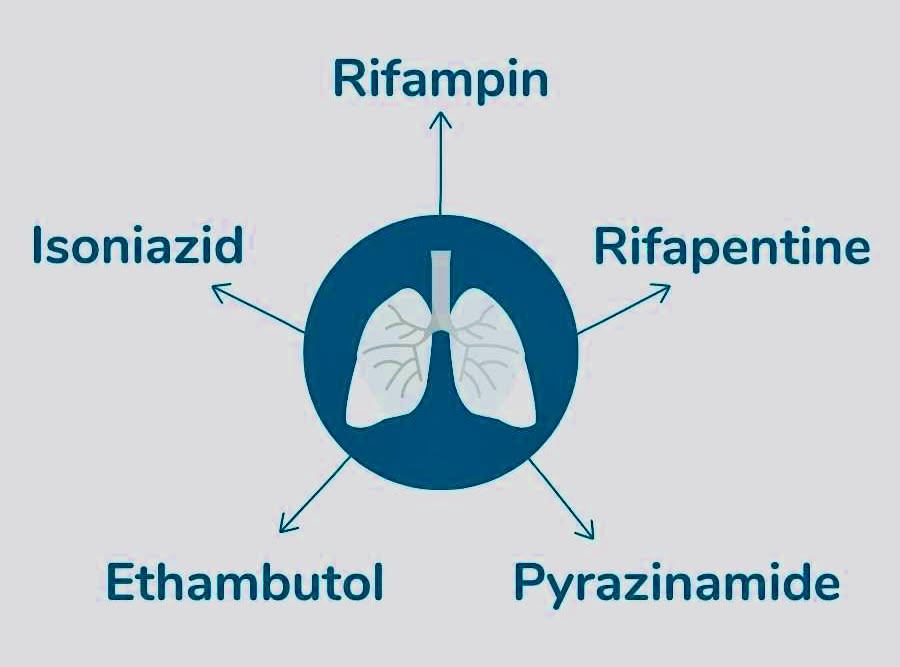
Initial Intensive Phase (2 Months): A combination of four primary drugs daily: Isoniazid (H), Rifampicin (R), Pyrazinamide (Z), and Ethambutol (E).
Continuation Phase (4 Months): Continued daily treatment with two drugs: Isoniazid and Rifampicin.
Multidrug-Resistant TB (MDR-TB Treatment):
Stopping medication early or irregular dosing leads directly to the development of MDR-TB (Multidrug-Resistant TB), where the bacteria become resistant to Isoniazid and Rifampicin. This requires a much longer, expensive, and more toxic second-line drug regimen.

World Health Organization (WHO) DOTS Strategy:
To combat this, the World Health Organization enforces the DOTS (Directly Observed Treatment, Short-course) strategy, where a healthcare worker visually ensures the patient swallows every single dose of their medication.
Prevention and Control of Tuberculosis:
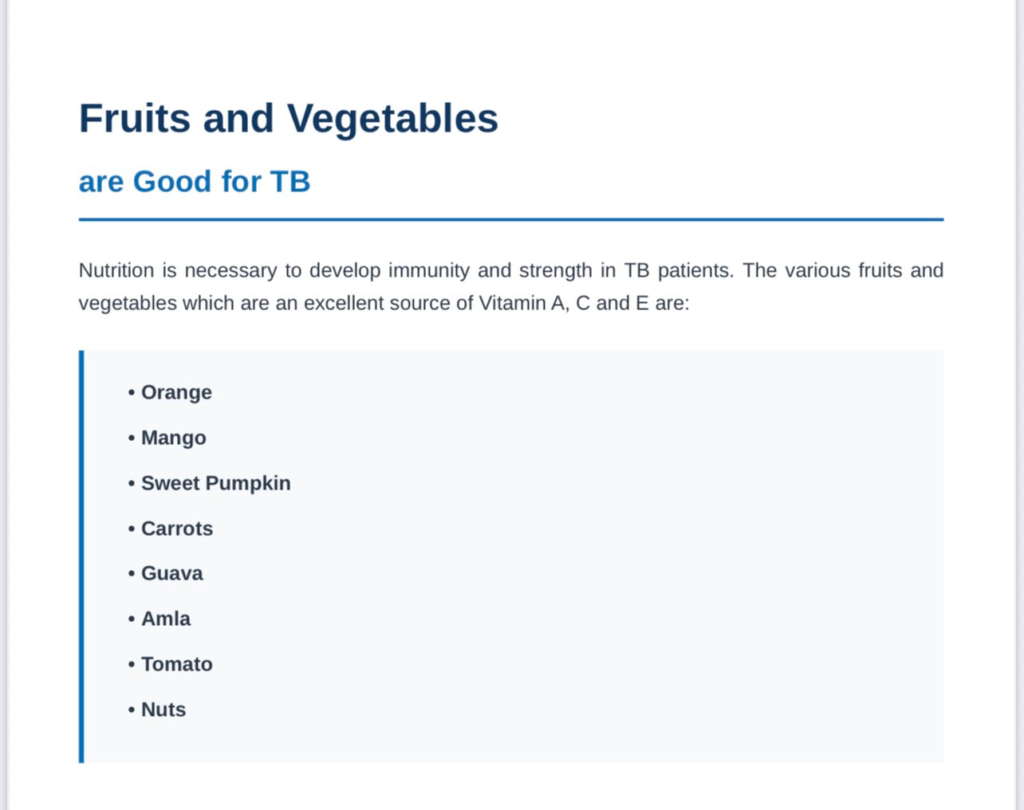
- Eat Healthy to Boost Immunity: A strong immune system can naturally fight off the bacteria. Eat a healthy diet full of proteins, vitamins & fresh fruits to keep your body’s defense system strong.
- Wear a Mask and Cover Your Mouth: Active TB patients must always cover their mouth and nose with a tissue or mask when coughing or sneezing. This stops the bacteria from spreading into the air.
- Maintain Good Personal Hygiene: Wash your hands regularly and avoid spitting in open public places. Keeping your surroundings clean stops the spread of many airborne infections.
- Get Tested If You Are at Risk: If you live with or closely care for a TB patient get yourself tested immediately. Catching latent TB early allows for quick preventive medicine before it turns into active disease .
- Keep Rooms Well Ventilated: Open windows and doors to let fresh air and natural sunlight inside the house. Good airflow completely destroys and dilutes the tiny germs hanging in the air.
Get the BCG Vaccine:
The BCG vaccine is the best protection for newborns and young children. It successfully protects them from severe and dangerous forms of tuberculosis from an early age.
Diet Plan for Tuberculosis Patient:
Frequently Asked Questions (FAQs):
Is every type of TB contagious?
No , Only pulmonary TB (TB of the lungs) spreads through the air. TB of other organs, like bones or kidneys, does not spread.
Can TB be fully cured?
Yes, tuberculosis is 100% curable if you take the complete course of prescribed medicines regularly without skipping a single day.
How long does TB treatment take?
The standard treatment usually takes 6 months. Some complicated or drug-resistant cases might need a longer treatment plan.
What is the difference between latent and active TB?
Latent TB means the bacteria are sleeping in your body and you have no symptoms. Active TB means the bacteria are awake, making you sick and spreading to others.
What should a TB patient eat?
In addition, patients need to eat a high-protein diet including eggs, meat, milk, lentils, and fresh fruits to help their body recover and gain weight faster.
Does the BCG vaccine give lifetime protection?
The BCG vaccine is excellent for protecting newborn babies and young children from deadly forms of TB. However, its protection can decrease as you grow into an adult.
Important Medical Disclaimer:
This article is intended for educational and informational purposes only. Therefore, it should not be used as a substitute for professional medical advice, diagnosis or treatment. If you have symptoms such as a persistent cough, coughing up blood, fever, night sweats & unexplained weight loss or if you think you may have tuberculosis, consult a qualified healthcare professional immediately. Furthermore, never start stop or change any medication without medical supervision.
About the Author:
Dr. Sufiyan Awan is a medical doctor affiliated with Nishtar Medical University Multan a He has completed multiple professional training programs including internationally recognized courses from the World Health Organization (WHO).