



Although An enema is one of the oldest medical procedures still used today, yet many people remain unsure about what it actually involves or when it’s truly necessary. Whether your doctor has recommended one before a colonoscopy, or you’re researching fecal impaction treatment options, this guide breaks everything down clearly and safely.
What Is an Enema?
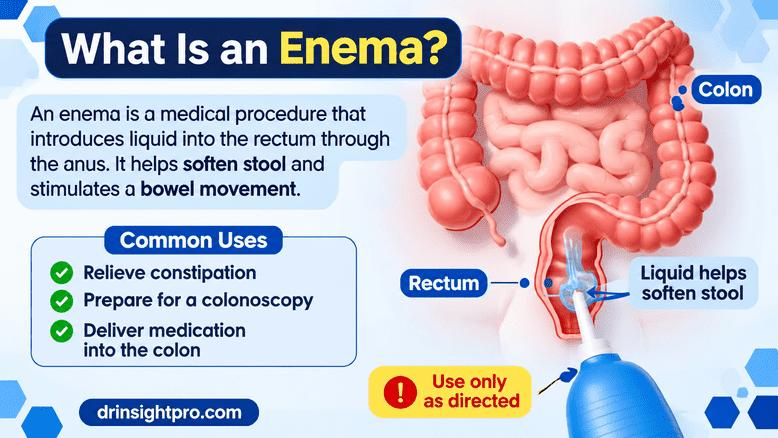
Is a medical procedure that involves introducing liquid, or occasionally gas, into the rectum through the anus. This process stimulates the bowel and helps clear stool from the lower intestine. Doctors commonly use an enema for constipation relief, bowel preparation before a colonoscopy, or to deliver specific medications directly into the colon.
How Does an Enema Work?
Once the liquid enters the rectum, it softens hardened stool and gently stretches the bowel wall. This stimulates the urge to have a bowel movement. Depending on the solution used, the effect can begin within minutes. Most over-the-counter enemas, such as saline or phosphate-based solutions, work within 2 to 15 minutes. Retention-type enemas are designed to stay in the colon longer before release, sometimes up to 30 minutes.
Enema Types
Not all enemas serve the same purpose. Understanding the different enema types helps you recognize which one your doctor might recommend.
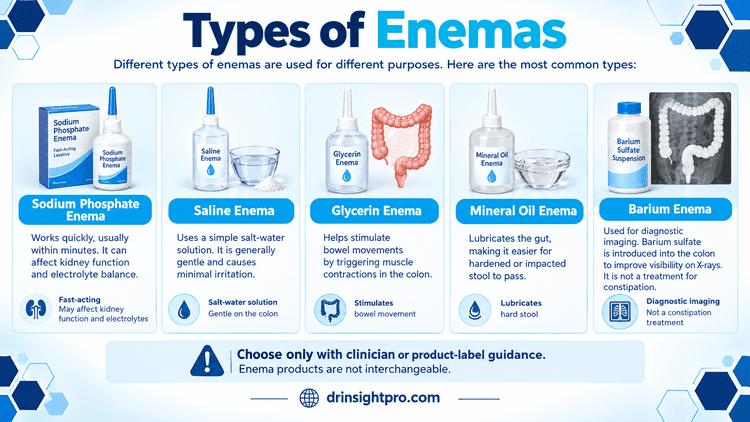
Sodium Phosphate Enema
Widely available over the counter, a sodium phosphate draws water into the bowel and directly stimulates colon contractions, working quickly, usually within minutes.
Saline Enema
A saline uses a simple salt-water solution and doctors is consider it one of the gentlest options, causing minimal irritation to the colon lining.
Glycerin Enema
A glycerin works by stimulating muscle contractions in the colon wall. Doctors frequently use it for constipation relief, including in pediatric patients experiencing fecal impaction.
Bisacodyl Enema
Bisacodyl serves as a common stimulant laxative preparation that encourages bowel contractions and often assists before procedures requiring a clean bowel.
Mineral Oil Enema
A mineral oil lubricates the gut, making it easier for hardened or impacted stool to pass through the colon comfortably.
Barium Enema
Unlike the enemas above, a barium enema is not used for constipation. It is a diagnostic imaging procedure in which barium sulfate is introduced into the colon to improve visibility on X-rays helping doctors examine the entire colon for abnormalities. Patients typically prepare with bisacodyl tablets or magnesium citrate the day before the procedure.
Enema for Constipation and Fecal Impaction
For constipation is most effective when other methods, such as dietary changes or oral laxatives, haven’t provided relief. For more severe cases, doctors often use an enema for fecal impaction, a painful condition in which a large, hardened mass of stool becomes stuck in the rectum. In these situations, a glycerin or phosphate is frequently combined with gentle abdominal massage and additional oral treatments to fully clear the blockage.
Enema Procedure: Step-by-Step
If your doctor has recommended using an enema at home, following the correct procedure makes the process safer and more comfortable.
- Read the instructions first. Every enema kit is slightly different, so reviewing the manufacturer’s guidance beforehand is essential.
- Use room-temperature liquid. Fluid that’s too hot or too cold can cause unnecessary cramping.
- Lie on your left side. This position naturally aligns with the shape of your colon, allowing the fluid to flow in more easily.
- Insert the nozzle gently, using a lubricant to reduce discomfort.
- Hold the position as directed, since some enema types require a short retention period.
- Stay near a bathroom for at least an hour afterward, as the urge to go can occur suddenly.
Enema Before Colonoscopy
An enema before colonoscopy is sometimes used alongside oral bowel-prep solutions to ensure the colon is completely clear, allowing doctors to detect polyps or abnormalities accurately.
Side Effects and Risks
While generally safe when used as directed, side effects and risks can occur, including:
- Cramping and bloating
- Electrolyte imbalance, particularly with phosphate-based solutions
- Dehydration
- Rectal or bowel irritation
- In rare cases, bowel perforation
Post-Enema Recovery and Hydration Guidelines
Although the physical relief following an enema is often immediate, your body still requires a brief recovery window to normalize. Furthermore, drinking plenty of electrolyte-rich fluids is essential to prevent dehydration after the procedure. Therefore, you should rest comfortably and avoid strenuous physical activities for the remainder of the day. In addition, if you experience persistent abdominal cramping or unusual fatigue, it is important to let your healthcare provider know. Consequently, monitoring how your body responds ensures both safety and long-term digestive comfort.
Who Should Avoid Enema?
- Inflammatory bowel disease
- A history of bowel obstruction or recent rectal surgery
- Severe fecal impaction or suspected bowel perforation
- Heart conditions, since certain enema types can affect electrolyte balance
- Pregnancy
FAQs
Most over-the-counter enemas, such as saline or phosphate-based solutions, work within 2 to 15 minutes. Manufacturers design retention-type enemas to stay in the colon longer before release, sometimes up to 30 minutes.
After reading the kit’s instructions, lie on your left side, gently insert the lubricated nozzle and allow the solution to work as directed. Stay near a bathroom until the urge to go has passed.
No, Medical evidence does not support coffee enemas for detoxification, and they carry real risks, including burns, infection and bowel injury.
Doctors primarily use an enema to relieve constipation, prepare the bowel for a medical procedure or deliver medication directly into the colon.
No, Daily use can disrupt normal bowel function and increase the risk of electrolyte imbalance, so enemas should only be used occasionally under medical guidance.
References
National Center for Biotechnology Information (NCBI) – Procedures and Clinical Indications: https://www.ncbi.nlm.nih.gov/books/
American Society of Gastrointestinal Endoscopy (ASGE) – Bowel Preparation Guidelines for Colonoscopy: https://www.asge.org/
Mayo Clinic – Constipation Diagnosis and Treatment: Over-the-Counter Enemas and Laxative Options: https://www.mayoclinic.org/
MedlinePlus – Constipation and Management Guidelines: https://medlineplus.gov/
World Health Organization (WHO) – Clinical Procedures and Patient Safety Guidelines: https://www.who.int/
Medical Disclaimer
This article is for general educational purposes only and does not replace individualized medical advice. Always consult a qualified healthcare provider before using an especially if you have an underlying medical condition.
About Author
Dr. Sufiyan Awan is a medical doctor and former House Officer at Nishtar Hospital, Multan. Having completed professional healthcare certifications from the World Health Organization (WHO), he founded drinsightpro.com to share accurate, research-backed medical insights and promote public health awareness