



Stomach gurgling is usually caused by normal movement of food, fluid, and gas through the digestive tract. These sounds are also called as borborygmi. These can happen when you are hungry after eating. Gurgling becomes more concerning when it occurs with severe pain, vomiting, persistent diarrhea, blood in the stool, weight loss or inability to pass stool or gas.
What is stomach gurgling?
Stomach gurgling describes the bubbling, rumbling, growling, or churning sounds you hear from your abdomen.
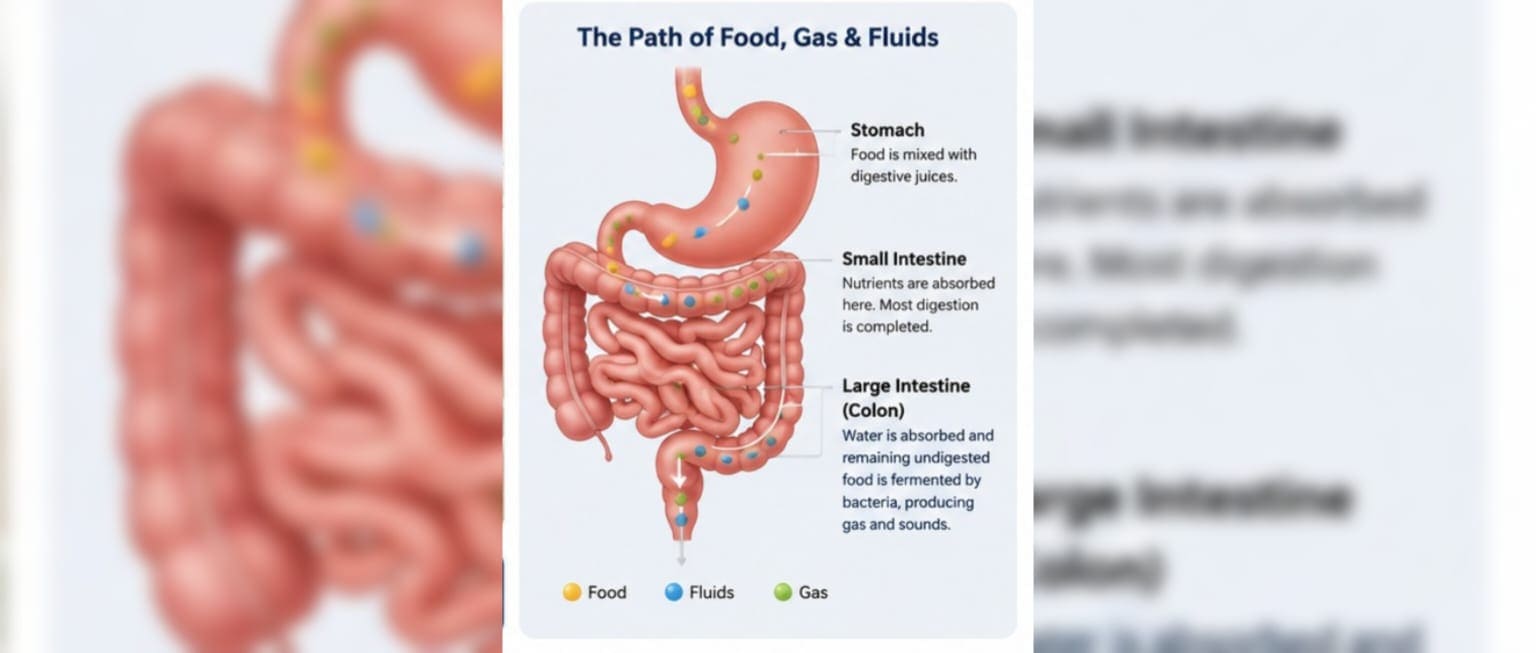
Despite the name, the sound does not always come from the stomach. Much of it comes from the intestines, where food, liquid, digestive secretions, and gas move through different parts of the gastrointestinal tract.
The medical term “borborygmi” is used for these intestinal noises. They are produced as the muscles of the digestive tract contract and move its contents. This coordinated muscular activity is called peristalsis.
Why does my stomach gurgle?
Several normal processes can make your abdomen noisy.
1. Hunger
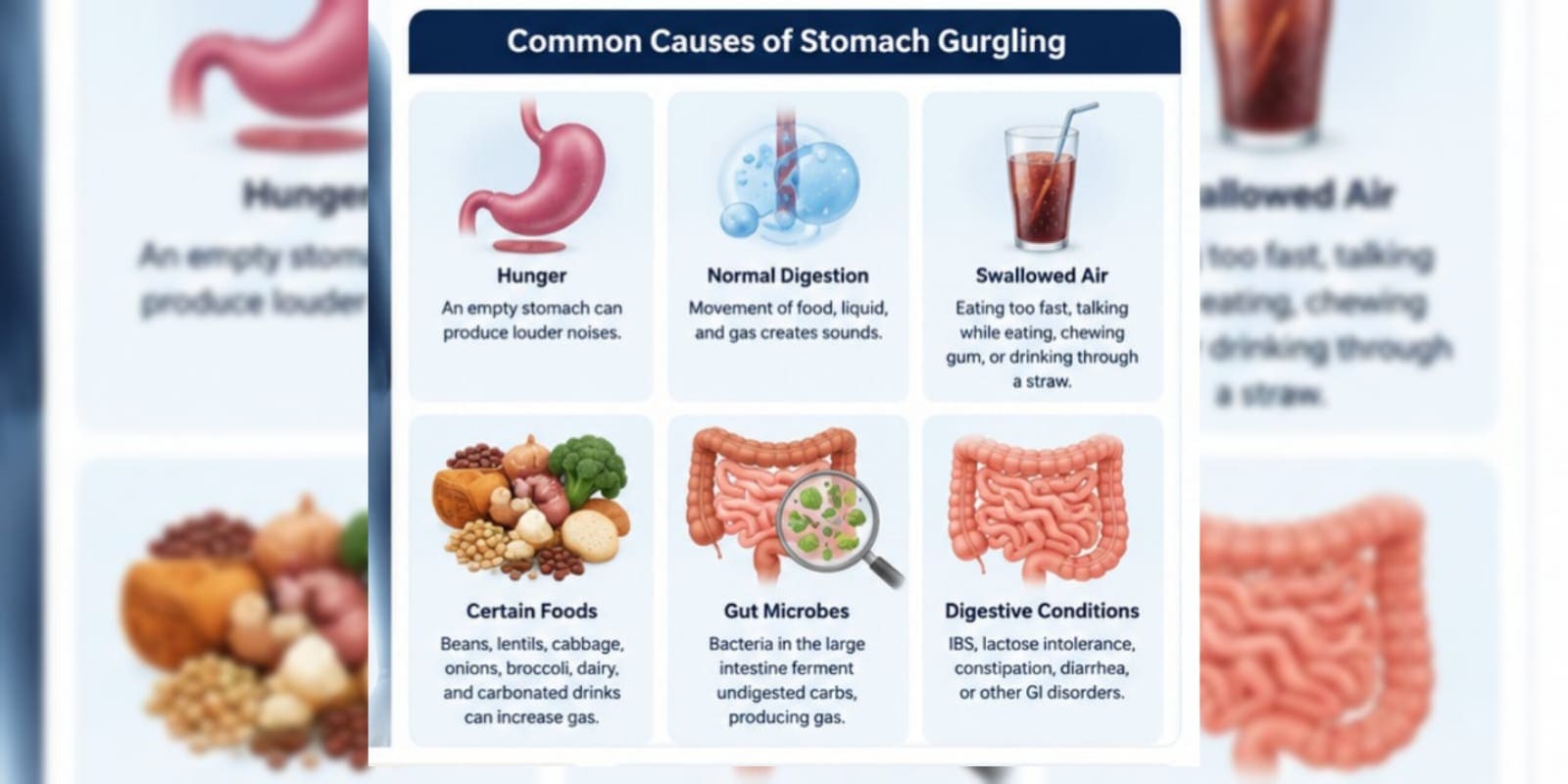
Stomach growling is often noticed when the stomach is empty. This fasting activity is driven by the Migrating Motor Complex (MMC), a regular cycle of electrical waves that acts like a ‘sweeper’ to clear residual food and bacteria out of the gut between meals, often creating audible sounds between meals. However, hunger is not the only explanation.
Your digestive tract continues to contract even when you have not recently eaten. Gas and fluid moving through the intestines can therefore create audible sounds between meals.
That is why hearing your stomach gurgle does not necessarily mean that something is wrong or that you urgently need food.
2. Normal digestion
After you eat, your digestive system becomes busy moving and processing food.
Muscular contractions move food and liquid through the stomach and intestines. Gas and fluid moving alongside these contents can produce bubbling or churning sounds.
You may therefore notice stomach noises shortly after eating or several hours later.
3. Gas
Gas is another common reason for noticeable abdominal sounds.
It enters the digestive tract when you swallow air. It is also produced when bacteria in the large intestine break down carbohydrates that were not completely digested earlier in the digestive process.
You may swallow more air when you:
- Eat quickly
- Drink fizzy beverages i.e. soda
- Chew gum
- Suck on hard candy
- Drink through a straw
- Talk while eating
- Smoke
If gurgling occurs with bloating, belching or frequent passing of gas, excess gas or increased sensitivity to normal amounts of gas may be contributing.
4. Certain foods
Some carbohydrates can cause more gas because your body does not fully digest them in the stomach and small intestine. When they reach the large intestine, bacteria break them down and produce gas.
Potential triggers vary from person to person. They may include:
- Beans, peas, and lentils
- Broccoli, cauliflower, and similar vegetables
- Certain fruits
- Dairy products in people with lactose intolerance
- Some high-fiber foods
- Foods or drinks high in certain sugars
- Sugar-free products containing some sweeteners
- Sugar alcohols like sorbitol, xylitol, and mannitol (found in sugar-free gums and candies), which draw extra water into the gut and ferment rapidly
- Caffeine and alcohol, which irritate the digestive lining and speed up gut contractions
You do not need to avoid all of these foods simply because your stomach makes noises. Your own symptom pattern matters more than a general list of “bad” foods.
5. Diarrhea
When intestinal activity increases, bowel sounds can become more noticeable.
Diarrhea can therefore occur with frequent or louder abdominal sounds. Short-term diarrhea may result from infections, food-related problems, or other temporary disturbances. Persistent or recurrent diarrhea needs a more careful evaluation.
6. Constipation
Constipation can be associated with bloating, abdominal discomfort, and gas. Changes in intestinal movement can also alter the sounds you hear.
If constipation continues or occurs with significant abdominal pain, vomiting, swelling or inability to pass gas, medical assessment is important.
7. Stress and the gut-brain connection
The digestive system and nervous system communicate continuously. Stress can affect gastrointestinal symptoms and may make sensations such as gas, bloating, or abdominal movement more noticeable. During stress or anxiety, the body releases adrenaline, redirecting blood flow away from the digestive tract. This can suddenly alter peristalsis, causing rapid shifts between hyperactive (loud) and sluggish bowel sounds.
Stress alone should not automatically be blamed for persistent symptoms. However, if symptoms continue, evaluate other possible causes.
Is stomach gurgling normal?
Usually, yes.
Occasional gurgling without other symptoms is generally a normal part of gastrointestinal activity.
The sound itself is not a reliable way to diagnose a disease. What matters more is what happens along with the sound.
For example, occasional gurgling after a meal is very different from persistent gurgling accompanied by severe abdominal pain and repeated vomiting.
What causes stomach gurgling pattern?
This is one of the most useful ways to think about abdominal noises.
| Gurgling pattern | Possible explanation | What it means clinically |
| Gurgling alone | Normal intestinal movement | Usually harmless |
| Gurgling when hungry | Empty stomach and ongoing contractions | Usually normal |
| Gurgling after eating | Digestion and movement of food, fluid, and gas | Usually normal |
| Gurgling with bloating/gas | Increased gas or sensitivity to gas | Consider diet and other gastrointestinal causes |
| Gurgling with diarrhea | Increased intestinal activity | Consider infection, food intolerance, or bowel disorders depending on duration |
| Gurgling with constipation | Altered bowel movement and gas | Address constipation and investigate if persistent |
| Gurgling with recurrent abdominal pain and bowel changes | Possible gastrointestinal disorder such as IBS | Medical evaluation may be appropriate |
| Gurgling with severe pain, vomiting, swelling, and inability to pass gas/stool | Possible intestinal obstruction or another acute abdominal problem, Gastritis | Urgent medical assessment |
This pattern-based approach is more useful than trying to diagnose an illness from the sound alone.
Why is my stomach gurgling when I’m not hungry?
This is a common question.
Hunger is not required for stomach gurgling/borborygmi.
Your stomach and intestines remain active throughout the day. Muscular contractions continue to move digestive contents, fluid, and gas through the gastrointestinal tract.
You might therefore hear gurgling:
- Shortly after eating
- Several hours after eating
- Before a bowel movement
- When lying quietly in bed
- At night
- When you are not hungry at all
If the noise occurs without pain, vomiting, significant bloating, diarrhea, constipation, or other concerning symptoms, it is usually not a sign of disease.
IBS cause of Stomach gurgling
Irritable bowel syndrome (IBS) is a disorder of gut-brain interaction associated mainly with repeated abdominal pain and changes in bowel habits. These changes may include diarrhea, constipation, or both. Bloating can also occur.
Some people with IBS may notice increased abdominal noises, but gurgling alone does not diagnose IBS.
A clinician looks at the overall symptom pattern and its duration rather than using bowel sounds as a stand-alone diagnostic test.
Could lactose intolerance cause stomach gurgling?
Yes it can, Lactose is a carbohydrate found in milk and many dairy products. People who do not digest lactose adequately may develop symptoms after consuming lactose-containing foods. Symptoms can include gas, bloating, abdominal discomfort, and diarrhea. The increased gas and intestinal activity may make abdominal noises more noticeable.
SIBO (Small Intestinal Bacterial Overgrowth)
Beyond intolerances, conditions like small intestinal bacterial overgrowth (SIBO) can cause severe gurgling. When excess bacteria inhabit the small intestine, they ferment carbohydrates prematurely, releasing high volumes of gas and liquid that churn loudly shortly after eating.
How to reduce stomach gurgling
If the noises are bothersome, particularly when they occur with gas or bloating, several simple measures may help.
Eat slowly
Eating quickly can increase swallowed air. Slowing down and chewing your food thoroughly may reduce gas-related symptoms.
Limit fizzy drinks
Carbonated beverages can increase the amount of gas in the digestive tract and may make abdominal sounds more noticeable.
Reduce chewing gum and hard candy
These habits can increase air swallowing in some people.
Notice your personal food triggers
A simple food-and-symptom diary can be useful Record;
- What you ate and drank
- When the gurgling started
- Whether you had bloating or pain
- Your bowel movements
- Whether symptoms improved after passing stool or gas
This can reveal patterns that are difficult to remember from day to day.
Do not unnecessarily eliminate large food groups
A restrictive diet is not automatically better.
If particular foods repeatedly cause symptoms, a doctor or registered dietitian can help determine whether a specific dietary intolerance or gastrointestinal disorder is involved. NIDDK [The National Institute of Diabetes and Digestive and Kidney Diseases] notes that dietary changes may be useful for some gas-related conditions, but the appropriate approach depends on the underlying problem.
When does stomach gurgling/borborygmi need medical evaluation?
Arrange a medical assessment if the noises are persistent, troublesome, or occur together with the following:
- Recurrent abdominal pain
- Persistent bloating
- Frequent diarrhea
- Ongoing constipation
- Repeated nausea or vomiting
- Unexplained weight loss
- Blood in the stool
- Significant changes in bowel habits
- Symptoms that interfere with normal daily activities
- A sudden, total absence of stomach sounds (a completely silent abdomen), especially if accompanied by severe pain, bloating, or nausea. This can mean the bowel has temporarily stopped moving (a condition called “paralytic ileus” or “bowel sluggishness”)
When is stomach gurgling/borborygmi an emergency?
Seek urgent medical attention if abdominal noises occur with severe or worsening abdominal pain, repeated vomiting, marked abdominal swelling, blood in the stool or vomit, or inability to pass stool or gas.
A combination of abdominal pain, vomiting, swelling, and inability to pass gas or stool can occur with intestinal obstruction and should not be managed at home without medical assessment.
Very abnormal bowel sounds also cannot be interpreted reliably without considering the rest of the clinical picture. MedlinePlus [a service of the U.S. National Library of Medicine] notes that very high-pitched sounds can occur with bowel obstruction and that abnormal bowel sounds are evaluated alongside other symptoms.

Evaluation of persistent abdominal noises in stomach gurgling
The evaluation depends on the symptoms accompanying the gurgling.
A clinician may ask:
- When did the noises begin?
- Are they present every day?
- Do they occur before or after meals?
- Are they louder than usual?
- Do you have abdominal pain?
- Are you constipated or having diarrhea?
- Do you have bloating or excessive gas?
- Have you lost weight without trying?
- What medications and supplements do you take?
- Do certain foods trigger symptoms?
During an examination, a healthcare professional may listen to the abdomen and assess for tenderness, swelling, or other findings. Additional testing is considered when the history or examination suggests an underlying disorder.
Evidence: what we know and what we cannot tell from gurgling/borborygmi alone
Well established: Intestinal movement produces abdominal sounds, and most bowel sounds are normal.
Well established: Gas can result from swallowed air and bacterial breakdown of incompletely digested carbohydrates.
Established clinical principle: Associated symptoms are more useful than the sound itself when deciding whether further evaluation is needed.
Not diagnostic: Stomach gurgling alone cannot establish IBS, lactose intolerance, infection, inflammatory bowel disease, or bowel obstruction.
Individual variation: Food triggers and the perception of gas vary between people. A symptom diary can help identify personal patterns.
Conclusion:
Stomach gurgling is usually a normal part of digestion. The sound may come from intestinal contractions moving food, liquid, and gas through the gastrointestinal tract. Rather than judging the sound alone, pay attention to the symptoms that occur with it. Gurgling without other symptoms is usually harmless. Persistent noises accompanied by pain, vomiting, significant bowel changes, bleeding, weight loss, or abdominal swelling deserve medical evaluation.
Medical disclaimer:
This article is for educational purposes only and is not a substitute for professional medical advice, diagnosis or treatment.
About author
Dr. Sufiyan Awan is a medical doctor and former House Officer at Nishtar Hospital, Multan. Having completed professional healthcare certifications from the World Health Organization (WHO), he founded drinsightpro.com to share accurate, research-backed medical insights and promote public health awareness.
Medical References:
National Institute of Diabetes and Digestive and Kidney Diseases (NIDDK). Gas in the Digestive Tract. National Institutes of Health.
NIDDK — Gas in the Digestive Tract National Institute of Diabetes and Digestive and Kidney Diseases (NIDDK). Symptoms & Causes of Gas in the Digestive Tract. National Institutes of Health.
NIDDK — Symptoms & Causes of Gas National Institute of Diabetes and Digestive and Kidney Diseases (NIDDK). Irritable Bowel Syndrome: Symptoms & Causes. National Institutes of Health.
NIDDK — IBS Symptoms & Causes MedlinePlus. Abdominal Sounds. U.S. National Library of Medicine, National Institutes of Health.
MedlinePlus — Abdominal Sounds
Loud bowel sounds alone do not diagnose bowel obstruction. However, obstruction can cause symptoms such as abdominal pain, vomiting, abdominal swelling, and inability to pass stool or gas. When these symptoms occur together, urgent medical assessment is necessary. Do not rely on the sound of your abdomen to determine whether an obstruction is present.
Yes. Most stomach and intestinal noises are normal and result from movement of food, fluid, and gas through the digestive tract. Occasional gurgling without other symptoms usually does not require treatment. The situation is different when the noises are persistent or occur with severe pain, vomiting, bleeding, significant bowel changes, or unexplained weight loss.
You may not be able to stop normal digestive sounds completely. However, eating slowly, limiting fizzy drinks, reducing chewing gum, and avoiding unnecessary air swallowing may help when gas contributes to the noise. If gurgling is persistent and occurs with pain, diarrhea, constipation, bloating, or weight loss, treating the underlying cause is more useful than trying to suppress the sound.
Hunger is not necessary for abdominal noises. The stomach and intestines continue contracting throughout the day to move digestive contents through the gastrointestinal tract. Gas and fluid can also make these contractions audible. Therefore, hearing your stomach gurgle when you are not hungry is usually normal if you have no concerning accompanying symptoms.