


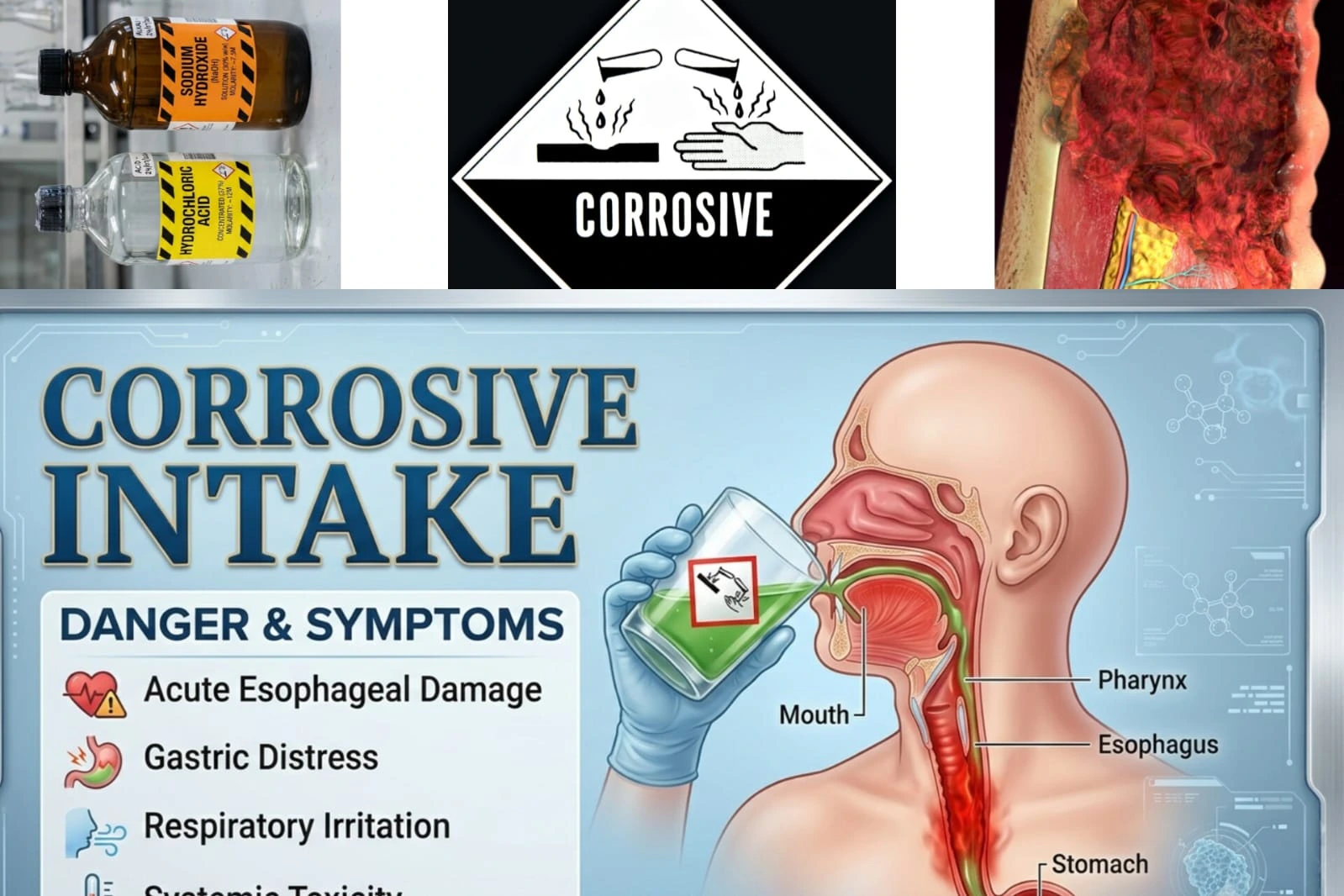
Corrosive intake is a life threatening medical emergency that occur when a person accidently or intentionally swallows a chemical capable of causing severe burn to mouth throat esophagus and stomach. Ever year, thousands of children and adults ingest these corrosive substances. Young children usually ingest accidently because household cleaning products are easily available and accessible, whereas adults are more likely to ingest intentionally during suicide attempts.
What Is Corrosive Intake?
Swallowing of harmful chemicals that can burn tissues in gastro intestinal tract i.e: esophagus, stomach, mouth. Unlike poisons that primarily affect internal organs after absorption into bloodstream, corrosive agents produce quick injury at the site of contact.
Corrosive agents
1- Acid
Primary target:
Acid is particularly more dangerous to stomach because hydrochloric acid and digestive enzymes protected by thick mucus layer. Strong corrosive chemicals can overwhelm these protective mechanism because they result in gastric necrosis.
Example: HCL (Toilet cleaner), Sulfuric acid (battery acid), nitric acid.
Mechanism of acid injury:
Acids primarily produce coagulative necrosis. Strong acids frequently injure gastric antrum pylorus and lesser curvature of stomach.
Pathophysiology of acid intake:
Acid coagulates surface proteins hence, forming a thick protective eschar ( coagulum) which limits deeper penetration into tissues.
Alkali:
Primary target:
It is particularly more dangerous to esophagus because esophagus lacks same level of protective mucus found in stomach.
Example: sodium hydroxide (caustic soda), potassium hydroxide, bleach ,drain cleaner, oven cleaner, dishwasher detergents, industrial cleaning agents, Ammonia-cleaning agents etc.
Mechanism of alkali injury:
Alkaline substances cause liquefactive necrosis. Alkali continue penetrating deeper layer because liquefactive necrosis does not create protective barrier, increasing risk of transmural necrosis and perforation.
Pathophysiology of alkali intake:
Alkaline substances saponifies cellular fats therefore, dissolves protein this allows chemical to penetrate deeply into tissue layers.
Stages of tissue injury and healing:
Timeline is important for diagnostic innovation safely.
1-Inflammatory Phase_ within hours:
Within hours damaged tissues produce inflammatory mediators including:
- Tumor necrosis factor-alpha [TNF-α]
- Interlukin-1
- Interlukin-6
- Reactive oxygen species These mediators increases vascular permeability, edema and inflammatory cells hence, causing tissue destruction.
2-Healing Phase:
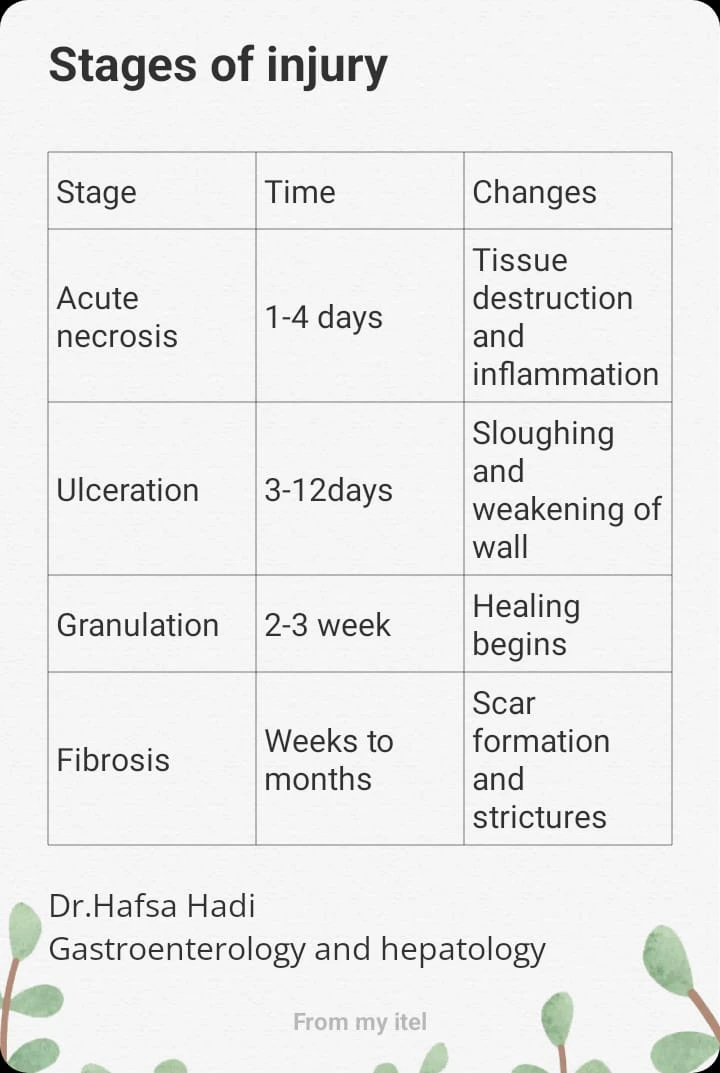
Acute Necrosis Phase _ Day ( 1-4 )
Initially, acute necrosis tissue destruction inflammation and cellular death develops and gastrointestinal wall become extremely fragile.
Ulceration Phase _ Day ( 3 to 12)
Ulceration of dead tissues are removed leaving deep ulcers.
Mucosal wall is weakest during this phase therefore, this phase carries highest risk of perforation because degeneration temporarily weakens the gastrointestinal wall before adequate scar formation.
Fibrosis and Granulation _week 3 to 5
- Subsequently, granulation and healing starts at this phase.
- During this phase, fibroblast produce collagen.
- Furthermore, collagen re- modelling begins.
Scar Formation Phase/Chronic/Cicatrization phase _Week to months
Circumferential scarring narrows the esophageal lumen , therefore, resulting in benign esophageal strictures that causes persistent dysphagia [difficulty in swallowing].
Clinical features of Corrosive Intake:
Clinical presentation of corrosive ingestion varies because it depend on several factors, including pH of chemical, physical form [solid or liquid]
Symptoms:
- Severe burning pain in mouth and chest
- Dysphagia (difficulty swallowing)
- Odynophagia (painful swallowing)
- Excessive salvation [drooling]
- Vomiting
- Hematemesis (blood in vomiting)
- Abdominal pain
Furthermore, mild oral lesions do not rule out severe esophageal injury or gastric injury. Conversely, extensive oral burns may coexist with relatively limited internal damage. However, patient often avoid swallowing because even small sips of water causes severe pain.
Signs
- Oral burn drooling (drops saliva uncontrollably from mouth
- Stridor ( harsh or grating sound) hoarseness (voice sounds rough or breathy)
- Tachycardia( rapid heart rate)
- Shock (acute condition associated with fall in blood pressure)
- Respiratory distress (difficulty breathing)
Red flag for perforation:
Furthermore, patients may develop:
- Stridor , hoarseness or wheezing indicate upper airway edema and airways loss.
- Subcutaneous emphysema (crepitus in neck) indicate esophageal perforation and mediastinitis.
- Rigid board-like abdomen indicates gastric perforation and peritonitis.
- Additionally, presence of fever
- Moreover, difficulty breathing
Diagnosis for Corrosive Intake :
History
Initially, diagnosis of corrosive intake depends on detailed history. Firstly, healthcare providers collect important information, including:
- Substance ingested
- Quantity consumed
- Time since ingested
- Intentional or accidental
- Presence of vomiting
- Previous gastrointestinal diseases
Physical Examination:
Moreover, doctors perform a careful examination.
Airway patency
respiratory effort
oxygen saturation
blood pressure
heart rate
mental status
oral cavity
neck swelling
chest examination
abdominal tenderness
Laboratory Tests for Corrosive intake:
Additionally, laboratory tests help assess patient overall health and detect complication.
- CBC
- Electrolytes
- Renal function tests
- Liver function test
- Arterial blood gas
- C-reactive protein
- Coagulation profile
Leukocytosis, metabolic acidosis, elevated serum lactate, and worsening renal function mostly, indicate severe injury and poorer prognosis.
Imaging:
Furthermore, imaging helps detect complications and deep tissue damage.
Chest and Abdominal X-ray;
- Pneumomediastinum (air and gas between lungs and heart)
- Pneumoperitoneum (presence of gas in peritoneal cavity)
- Pleural effusion (excessive fluid around lungs)
CT scan:
- For death of injury
- Detects perforation
- Esophageal wall thickening
- Gastric wall necrosis
- Free air
- Fluid collection
Upper GI endoscopy:
- Most importantly, EGD is gold standard because it indicates injury severity, predicts prognosis, and guides management.
- Endoscopy should not be performed in patients with suspected perforation and hemodynamically unstable.
- Ideal time: Generally, doctors perform endoscopy within 12-48 hour of ingestion .
Danger zone:
Avoid EGD between 5-15 days during this ulceration phase the tissue is extremely friable and week risk of perforation by scope is exceptionally high.
Prognosis for corrosive intake
Generally, the outcome of corrosive intake depends on type or amount of chemical.
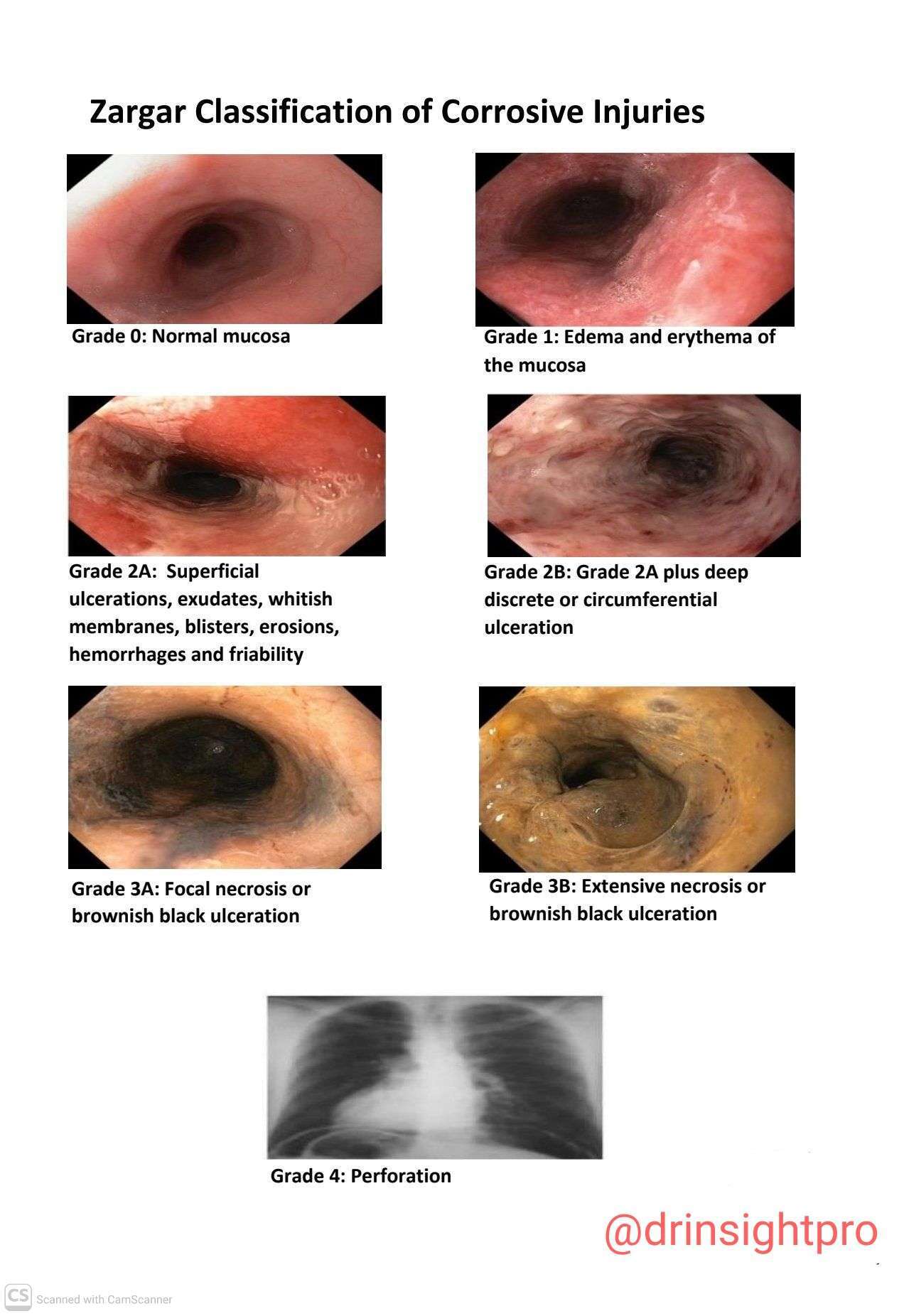
- Patient with mild injuries -Grade 0-1 = excellent recovery
- However, patient with moderate to severe injury -Grade 2 = moderates risk of stricture.
- Grade 3 = high risk stricture and mortality.
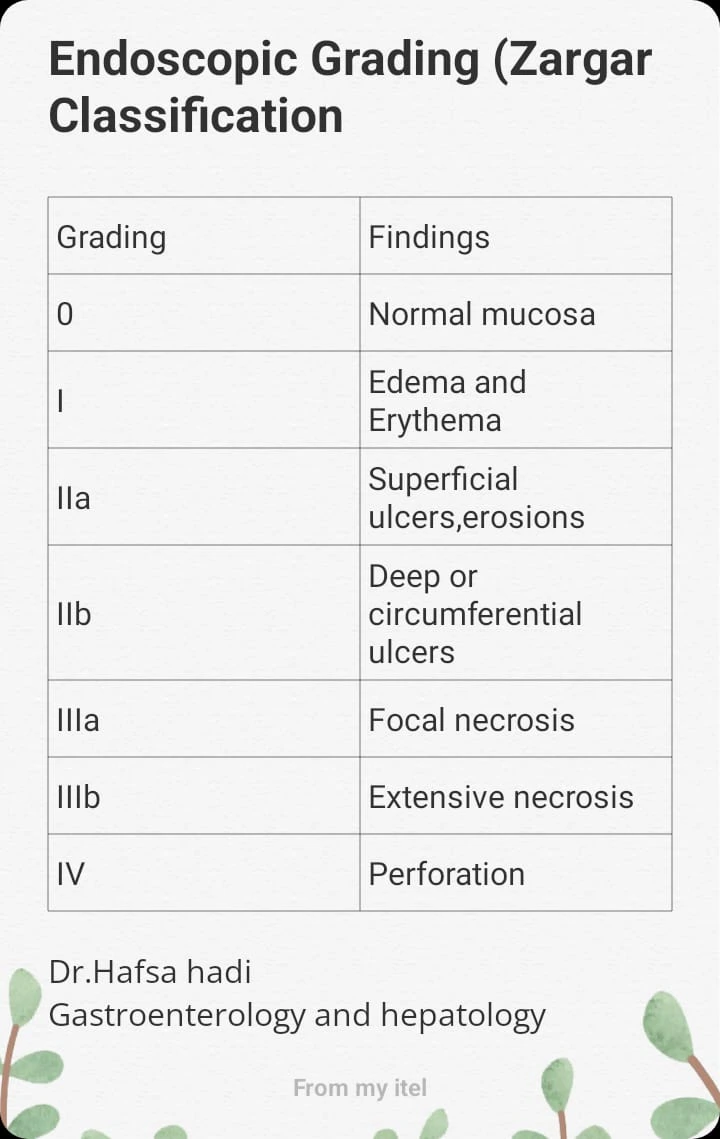
Zargar Endoscopic Classification:
Zargar classification is the most widely used endoscopic grading system for corrosive injuries because it corelates closely with prognosis and risk of complications. In addition, Zargar classification helps doctor identify patients who need intensive monitoring.
Management of Corrosive Intake:
Step :1
- Resuscitation (ABC’s)
- Airways; secure airway early if there is any evidence of stridor, respiratory distress. avoid blind intubation use video laryngoscopy.
- Breathing: oxygen supplement
- Circulation
- IV fluids (establish large bore IV lines and start aggressive crystalloid fluid resuscitation.)
Contraindications about Corrosive Intake:
( *What not to do)*
❌Do not induce vomiting
❌ Do not perform gastric lavage
❌Do not give neutralizing agents
❌Do not give activated charcoal
Step-2
Note :WHO does not publish a standard drug regimen for corrosive intake.
Medical treatment
- NPO
- IV fluids
- PPI to reduce gastric acid
- pain control
- Antibiotics used only when infection is suspected, perforation is present or grade III injuries.
Step -3
Endoscopic Management of Corrosive Intake
- Assessment of injury severity
- It guides treatment decisions
- It guides whether oral feeding is safe or not
- dilatation of stricture
Step-4
Surgical Management of Corrosive Intake
Emergency esophagectomy, gastrectomy with feeding Jejunostomy is indicated if patient develop sign of perforation, mediastinitis and peritonitis.
Complications of Corrosive Intake:
Corrosive intake can cause both early and late complications because chemical injury may continue to damage tissue even after initial exposure. Therefore, recognize these complications early.
Early complications :
Initially, severe corrosive injury lead to :
- Airway obstruction peritonitis
- bleeding
- perforation mediastinitis
- shock
Late complications:
Subsequently, healing of damaged tissue result in long term complications, including
- Esophageal stricture
- it is most common mostly it develops 3to 8 weeks after ingestion.
- Gastric outlet obstruction
- Furthermore, Scaring of pylorus leading to uncontrolled vomiting
- malnutrition (lack of proper nutrition)
- fistula formation (abnormal connection between two organs. )
Long term complications:
Esophageal Squamous cell carcinoma;
Risk of esophageal Cancer increases by up to 1000 fold it develops 20 to 40 years after intake.
Prevention from Corrosive Intake
Most accidental corrosive intake are preventable by following preventive measures which are as follows
- Store household cleaning products in their original container
- Keep corrosive substances out of reach of children
- Never put corrosive agents into food containers
- Seek mental health support for those who are at risk of intentional self harm
Dietary modification during injury from Corrosive Intake
1- Mild Injury
Soft food are generally taken before normal meal.
2- Moderate to Severe injury
- Consume soft ,well cooked food.
- Eat small frequent meals.
- Chew food thoroughly.
- Maintain adequate hydration.
- Avoid hot food and beverages.
- Avoid alcohol and tobacco because they may delay healing and worsen inflammation.
When to Seek Emergency Medical Care? 🚑
- Difficult breathing or noisy breathing (stridor)
- Inability to swallow saliva ( drooling)
- Severe chest or abdominal pain
- Persistent vomiting
- Blood in vomiting
- Fever or chills
- Rapid heartbeat or dizziness
- Swallowing difficulty
- Signs of shock such as confusion or fainting

Frequently Asked Questions:
This is common misconception, attempting to neutralize a corrosive agent a corrosive agent at home may delay emergency care and in some situation it can worsen injury. therefore, the safest way is to seek immediate medical attention because health care professional will determine most appropriate management.
Diet depend on the severity of injury and doctors recommendations. Therefore, dietary advice should be individaulized .
1- Mild Injury
Soft food are generally taken before normal meal.
2- Moderate to Severe injury
Consume soft ,well cooked food.
Eat small frequent meals.
Chew food thoroughly.
Maintain adequate hydration.
Avoid hot food and beverages.
Avoid alcohol and tobacco as they may delay healing and worsen inflammation.
Yes, severe corrosive intake can cause permanent damage to esophagus. Initially, they cause burn to esophageal lining, leading to inflammation and necrosis. Subsequently, healing process result in scar formation, which narrows esophagus. Consequently, patients experience difficulty in swallowing. Therefore, early diagnosis and treatment is essential.
Both acid and alkali are dangerous however, they damage tract differently. Generally, alkali causes deep esophageal burn because they produce liquefactive necrosis. In contrast, acid usually cause coagulate necrosis and more severe to stomach. Therefore, neither type should be considered safe.
No, it should not be treated at home because, serious internal injuries may occur. Therefore, patient should seek medical emergency. Moreover, home remedies such as drinking lemon juice, milk, vinegar can damage tissue. Instead, follow first aid recommendation.
About the Author:
Dr. Sufiyan Awan is a medical doctor affiliated with Nishtar Medical University Multan a He has completed multiple professional training programs including internationally recognized courses from the World Health Organization (WHO).