


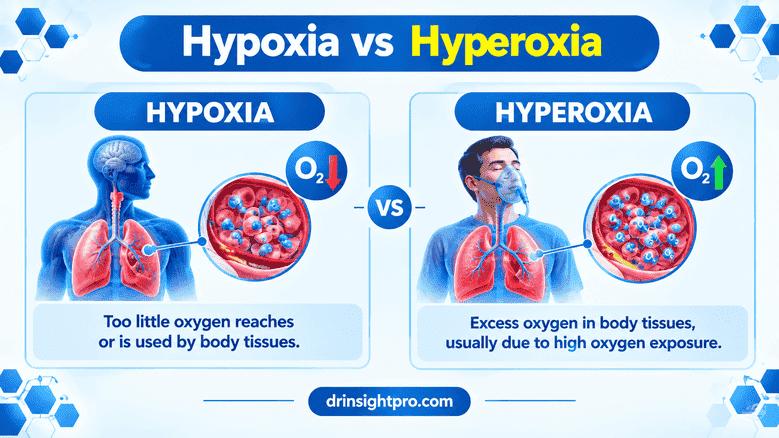
Hypoxia vs hypoxemia is a crucial distinction in medicine, where hypoxemia specifically means a low level of oxygen in the blood, while hypoxia refers to a broader shortage of oxygen reaching the body’s tissues and organs. Common causes for both include respiratory conditions like COPD or pneumonia, heart problems, or low environmental oxygen levels.
Hypoxia vs Hypoxemia
Before going into detail, here is the core difference in simple terms;
Hypoxemia
Hypoxemia means your blood does not carry enough oxygen.
Hypoxia
Hypoxia  means your body tissues are not receiving enough oxygen, whether or not the blood itself is low in oxygen.

In short, hypoxemia is a blood problem, while hypoxia is a tissue-level problem. One frequently leads to the other, but they are not always the same thing, which is exactly why doctors treat them as two related yet distinct conditions.
| Feature | Hypoxemia | Hypoxia |
|---|---|---|
| Definition | Low oxygen level in arterial blood | Inadequate oxygen supply or utilization by body tissues |
| Measurement | ABG (PaO₂) or pulse oximetry (SpO₂) | Clinical assessment and, when indicated, tissue perfusion or oxygenation markers |
| Can it occur without the other? | Yes. Hypoxemia may occur without significant tissue hypoxia initially. | Yes. It can occur with normal arterial oxygen levels, such as in severe anemia or poor circulation. |
| Relationship | Can cause hypoxia if oxygen delivery to tissues becomes inadequate. | May result from hypoxemia or other causes, including anemia, ischemia, and impaired cellular oxygen utilization. |
Causes: Hypoxemia vs Hypoxia
What Causes Low Oxygen Levels in Blood (Hypoxemia)?
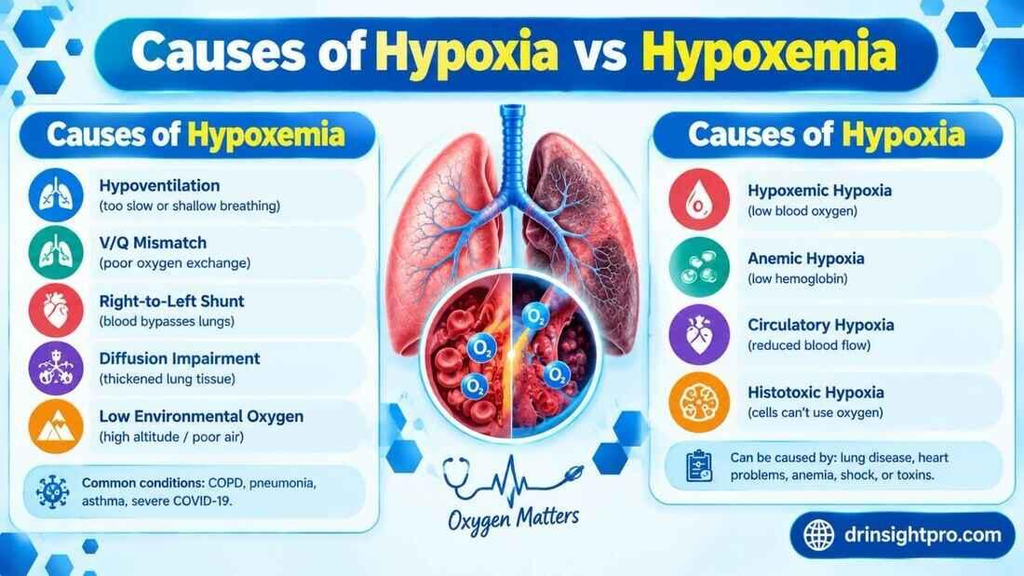
Doctors generally group the causes of hypoxemia into five main categories, since each affects the lungs or blood oxygen supply differently.
- Hypoventilation — Breathing that is too slow or too shallow prevents enough oxygen from entering the lungs.
- V/Q Mismatch — Air reaches lung areas without enough blood flow, or blood reaches areas without enough air, making oxygen exchange inefficient.
- Right-to-Left Shunt Hypoxemia — Blood bypasses the lungs entirely without picking up oxygen, often due to certain heart or lung conditions.
- Diffusion Impairment — Thickened or damaged lung tissue makes it harder for oxygen to pass into the bloodstream.
- Low Environmental Oxygen — Simply being at high altitude or in an oxygen-poor environment can lower blood oxygen levels.
Additionally, conditions such as COPD, pneumonia, asthma, and severe COVID-19 infections frequently trigger hypoxemia through one or more of these mechanisms.
Types of Hypoxia vs Hypoxemia
Hypoxemia by Severity
Doctors often classify hypoxemia based on how low the blood oxygen level has dropped, since this directly affects how urgently treatment is needed;
- Mild Hypoxemia: SpO2 between 91–94 percent, or PaO2 between 60–79 mmHg. Symptoms may be minimal or absent at this stage.
- Moderate Hypoxemia: SpO2 between 85–90 percent, or PaO2 between 40–59 mmHg. Noticeable symptoms such as shortness of breath typically appear here.
- Severe Hypoxemia: SpO2 below 85 percent, or PaO2 below 40 mmHg. This level is considered a medical emergency requiring immediate oxygen therapy.
Types of Hypoxia
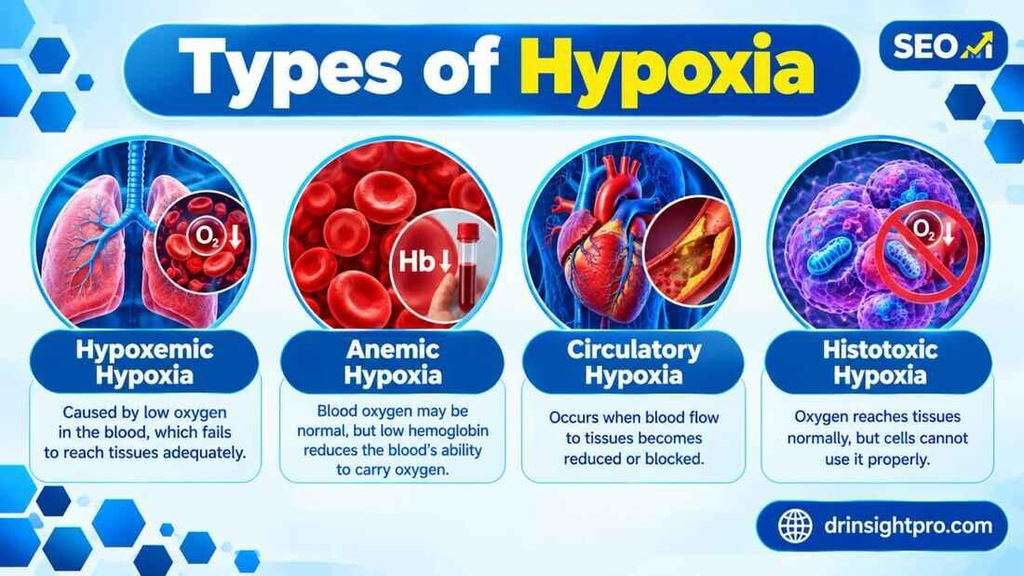
While hypoxemia has specific blood-related causes, hypoxia has broader causes that go beyond the lungs. Medical experts classify hypoxia into four main types:
- Hypoxemic Hypoxia — Caused directly by low blood oxygen, which then fails to reach tissues adequately.
- Anemic Hypoxia — Blood oxygen may appear normal, but low hemoglobin levels reduce the blood’s actual ability to carry oxygen, as seen in significant blood loss or severe anemia.
- Circulatory Hypoxia — Occurs when blood flow to tissues becomes reduced or blocked, such as during a heart attack or shock.
- Histotoxic Hypoxia — A rare type where oxygen reaches tissues normally, but cells cannot use it properly, which can occur with certain poisonings.
Symptoms of Hypoxia vs Hypoxemia
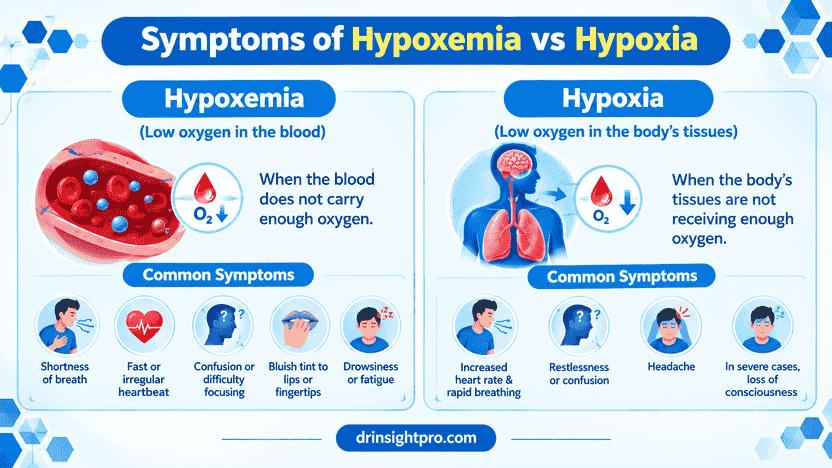
Hypoxemia symptom
Hypoxemia symptom often include;
- Shortness of breath
- A fast or irregular heartbeat
- Confusion or difficulty focusing
- Bluish tint to the lips or fingertips
- Unusual drowsiness or fatigue
Hypoxia symptom
Hypoxia symptoms often include;
- Increased heart rate and rapid breathing, as the body tries to compensate
- Restlessness or confusion
- Headache
- In severe cases, loss of consciousness
Since these symptoms overlap significantly, laboratory testing remains the most reliable way to tell the two conditions apart, rather than relying on symptoms alone.
Diagnosis: Hypoxemia vs Hypoxia
How Is Hypoxemia Diagnosed?
Doctors typically diagnose hypoxemia using;
Pulse oximetry, a simple finger clip that estimates oxygen saturation (SpO2) within seconds. ABG testing, which provides precise oxygen and carbon dioxide levels from an arterial blood sample. Chest imaging, such as an X-ray or CT scan, when an underlying lung condition is suspected.
How Is Hypoxia Diagnosed?
Diagnosing hypoxia is slightly more involved, since blood oxygen readings alone cannot always confirm it. Instead, doctors rely on a combination of;
- Clinical assessment, checking for symptoms such as confusion, rapid breathing, or bluish skin discoloration.
- Pulse oximetry and ABG testing, to rule out or confirm whether hypoxemia is contributing to the problem.
- Complete blood count (CBC), to check for anemia, since low hemoglobin can cause anemic hypoxia even with normal blood oxygen levels.
- Lactate levels, since elevated blood lactate often indicates that tissues are not receiving enough oxygen to function prop.
Treatment: Hypoxemia vs Hypoxia
Hypoxemia Treatment
The main goal of hypoxemia treatment is restoring normal blood oxygen levels as quickly as possible. Depending on the cause, this may involve;
- Supplemental oxygen therapy, delivered through a nasal cannula or face mask
- Treating the root cause, such as antibiotics for pneumonia or inhalers for asthma
- Mechanical ventilation, used in severe cases requiring breathing support
Treatment for Hypoxia
Because hypoxia can stem from several different causes, treatment varies accordingly;
- Supplemental oxygen therapy, when hypoxemia is contributing to the problem
- Blood transfusion, for anemic hypoxia caused by significant blood loss
- Medications or procedures to restore proper blood flow, for circulatory hypoxia
- Treating the specific toxin exposure, in cases of histotoxic hypoxia
Hypoxemia vs Hypoxia: Clinical and Nursing Perspective
From a clinical standpoint, nurses and doctors monitor both conditions closely, since early signs can be subtle. Nursing assessments often combine SpO2 monitoring with close observation of breathing rate, skin color, and mental alertness.
Two important clinical concepts worth understanding are:
Refractory hypoxemia
A severe form that does not improve even with high levels of supplemental oxygen, which signals the need for urgent escalation of care.
Dead space ventilation
Which occurs when air reaches lung areas that lack adequate blood flow. Although breathing appears normal, oxygen exchange becomes inefficient, worsening hypoxemia in critically ill patients.
Frequently Asked Questions
Hypoxemia means low oxygen in the blood, while hypoxia means low oxygen in the body’s tissues. Hypoxemia often leads to hypoxia, though hypoxia can also occur on its own.
Doctors use pulse oximetry for quick screening and ABG testing for a precise, detailed measurement of blood oxygen levels.
Yes, if left untreated, hypoxemia can lead to serious complications affecting the brain, heart, and other organs. Prompt treatment greatly reduces this risk.
The four types are hypoxemic hypoxia, anemic hypoxia, circulatory hypoxia, and histotoxic hypoxia.
Altitude sickness primarily causes hypoxemia, since lower atmospheric pressure at high altitudes reduces the amount of oxygen available in each breath. If this reduced blood oxygen isn’t corrected, it can progress to hypoxia, as the body’s tissues eventually fail to receive adequate oxygen.
Yes, in most cases hypoxia can be reversed if the underlying cause is identified and treated promptly. For example, supplemental oxygen can quickly correct hypoxemic hypoxia, while a blood transfusion can resolve anemic hypoxia. However, if tissue damage has already occurred due to prolonged oxygen deprivation, some effects may become permanent.
References
- National Center for Biotechnology Information (NCBI) – StatPearls: Respiratory Failure and Oxygen Transport Overview. Available at: https://www.ncbi.nlm.nih.gov/books/NBK526127/
- MedlinePlus (U.S. National Library of Medicine) – Cerebral Hypoxia and Tissue Oxygenation Medical Encyclopedia. Available at: https://medlineplus.gov/ency/article/001435.htm
- National Institutes of Health (NIH) – Pulse Oximetry and Blood Oxygen Saturation Clinical Guidelines. Available at: https://magazine.medlineplus.gov/article/getting-an-accurate-read-on-pulse-oximeters
- Wikipedia – Comprehensive Overview of Hypoxia Types, Causes, and Pathophysiology. Available at: https://en.wikipedia.org/wiki/Hypoxia_(medicine)
Medical Disclaimer
This article is for general educational purposes only and does not replace individualized medical advice. Always consult a qualified healthcare provider if you experience symptoms of low oxygen levels, such as persistent shortness of breath or confusion.
About the Author
Dr. Sufiyan Awan is a medical doctor and former House Officer at Nishtar Hospital, Multan. Having completed professional healthcare certifications from the World Health Organization (WHO), he founded drinsightpro.com to share accurate, research-backed medical insights and promote public health awareness.