



Viral fever is one of the most common reasons people visit a doctor. A virus triggers your immune system into action. That response often raises body temperature. Most people get viral fever at least once a year. It usually clears up on its own within a week. Still, some cases need closer attention.
What is Viral Fever?
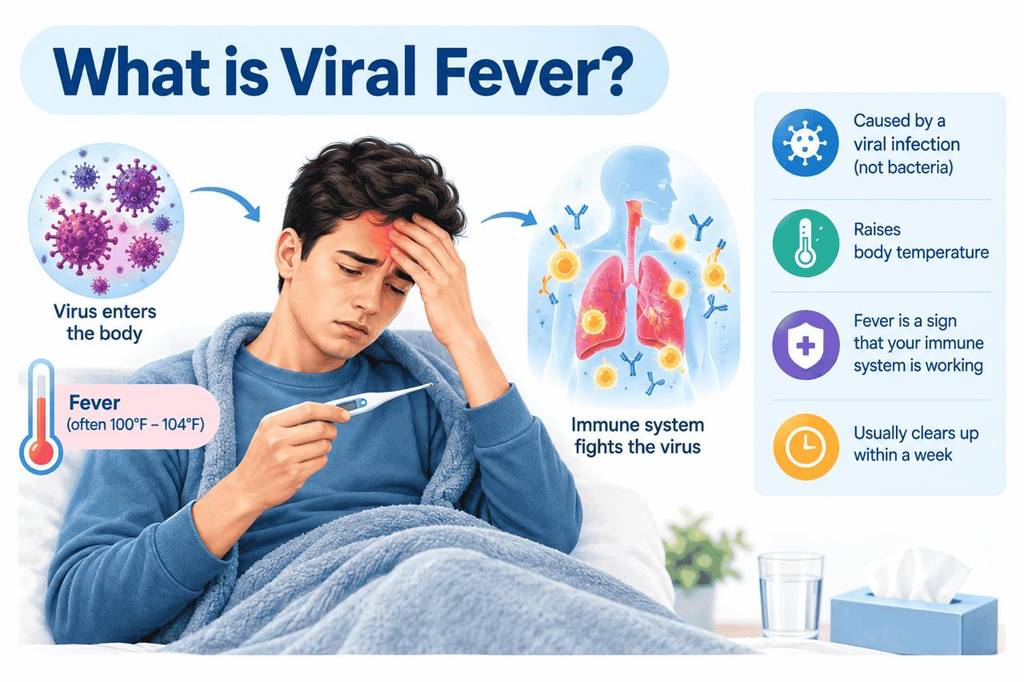
Viral fever is a fever caused by a viral infection rather than bacteria. This distinction matters. Antibiotics kill bacteria. They do nothing against viruses. Your immune system has to fight the virus on its own. Viral fever affects people of every age. Children and older adults tend to feel it more intensely, since their immune responses work differently than a healthy adult’s. Fever is not the enemy here. It is evidence that your immune system is working. Raising body temperature actually slows down how fast a virus can multiply.
Common Causes of Viral Fever
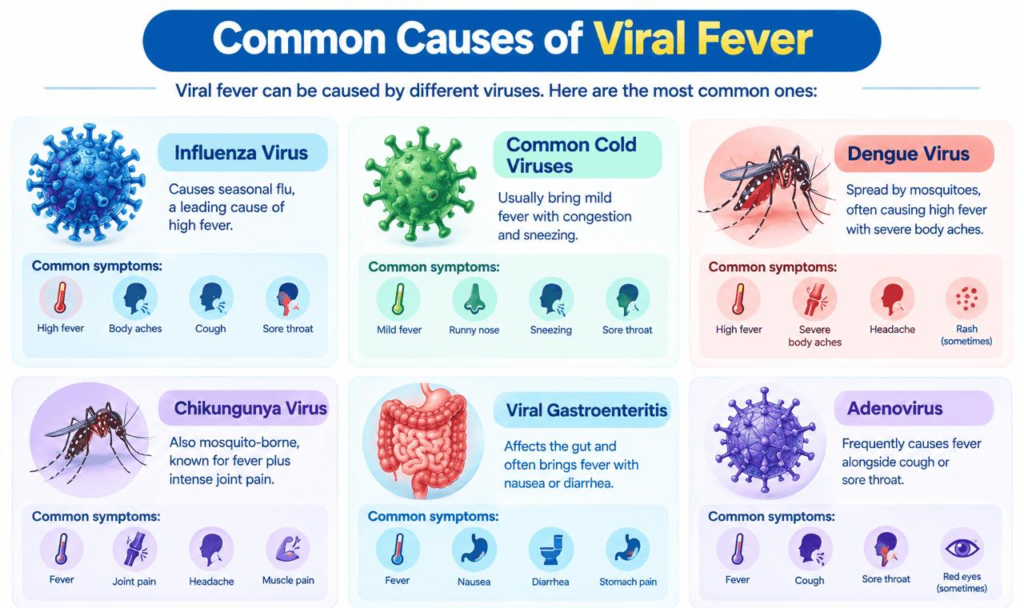
Many different viruses can trigger fever. The most frequent culprits include:
Influenza virus: Causes seasonal flu, a leading cause of high fever.
Common cold viruses: Usually bring mild fever with congestion and sneezing.
Dengue virus: Spread by mosquitoes, often causing high fever with severe body aches.
Chikungunya virus: Also mosquito-borne, known for fever plus intense joint pain.
Viral gastroenteritis: Affects the gut and often brings fever with nausea or diarrhea.
Adenovirus: Frequently causes fever alongside cough or sore throat.
Knowing the likely cause helps guide how closely you should monitor symptoms. Seasonal and regional patterns matter too.
Symptoms of Viral Fever
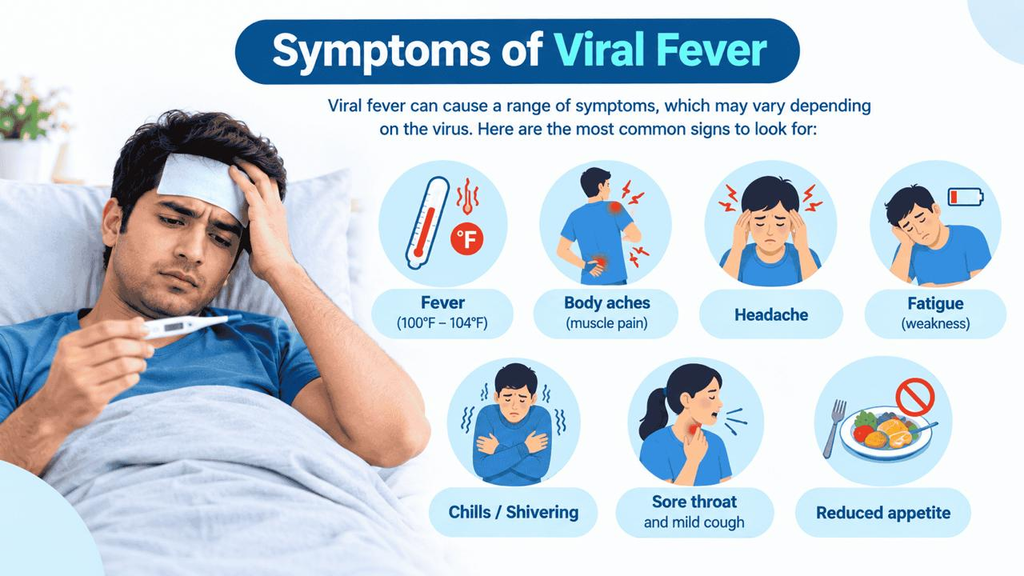
Symptoms vary by virus but most cases share a common pattern. Typical signs include:
- Body temperature between 100°F and 104°F
- Body aches and muscle pain
- Headache
- Fatigue and general weakness
- Chills or shivering
- Sore throat
- Mild cough
- Reduced appetite
Some people also develop viral bronchitis fever, where the infection irritates the airways and triggers a persistent cough alongside fever. Symptoms typically peak on day two or three, then start improving.
How Long Does Viral Fever Last?
This is the question most patients want answered first. In most cases, fever lasts three to seven days. Milder infections often clear faster.
Dengue fever sometimes follows a biphasic pattern. The fever drops for a day, then spikes again. This pattern is a useful clue for doctors trying to identify the virus.
If fever lingers past seven days, get it checked. A prolonged fever can signal a different cause or a developing complication that needs treatment.
Viral Fever vs Malaria Fever
Fever can also come from a parasite, not just a virus. Malaria is caused by a parasite transmitted through mosquito bites, and it behaves differently than viral fever.
Malaria fever often comes in cycles, paired with chills and heavy sweating. Viral fever tends to stay more constant throughout the day. Because the early symptoms can look similar, doctors usually recommend testing for malaria after any mosquito exposure in a high-risk area. If you want the full picture, our guide on malaria symptoms and treatment covers this in detail, including how antiparasitic treatment differs from supportive care.
Viral Fever vs Bacterial Fever
Telling these apart matters, because the treatment is completely different. Viral fever tends to build gradually and improve within a week on its own. Bacterial infections usually cause more localized symptoms, like a specific area of swelling or pain, and often worsen instead of improving after a few days.
Doctors sometimes order a blood test to tell the two apart. This determines whether antibiotics are actually needed. Taking antibiotics for a viral infection does nothing for recovery and contributes to antibiotic resistance over time.
How Do Doctors Diagnose Viral Fever?
Viral fever is a common health problem that can occur when the body responds to a viral infection. Fever itself is a symptom rather than a specific disease, so doctors do not diagnose every case of fever as a viral infection automatically. Instead, they look at the patient’s symptoms, medical history, physical examination, and, when necessary, laboratory test results to identify the likely cause.
Physical Examination
Next, the doctor performs a physical examination. The examination may include checking the:
- Temperature
- Throat and mouth
- Ears
- Nose
- Eyes
- Neck and lymph nodes
- Chest and lungs
- Abdomen
- Skin
- Hydration status
A physical examination can provide important clues about the source of the fever and whether the patient may need additional testing.
Blood Tests
Depending on the clinical situation, the doctor may recommend blood tests such as a complete blood count (CBC). A CBC can provide information about blood cells and may help the doctor assess the overall illness. However, a CBC by itself does not confirm that a fever is caused by a virus. Doctors interpret blood-test results together with symptoms and examination findings.
Specific Viral Tests
When identifying the specific virus is important, doctors may use laboratory tests designed to detect the infection. For example, depending on the suspected illness, testing may include:
Antigen tests – detect specific viral proteins.
PCR or other molecular tests – detect viral genetic material.
Serological tests – detect antibodies produced by the immune system.
For respiratory infections such as influenza and COVID-19, antigen and molecular tests are commonly used
Treatment for Viral Fever
There is no cure that directly kills most fever-causing viruses. Treatment instead focuses on supporting your body while it does the work.
Rest: Your immune system needs energy, and rest frees it up.
Hydration: Fever increases fluid loss, so drink water consistently.
Fever-reducing medication: Over-the-counter options can ease discomfort and lower temperature.
Symptom tracking: Watch for warning signs that suggest the illness is worsening.
Most people recover fully with this approach alone. Skip the antibiotics unless a doctor confirms a bacterial infection is also present.
Home Remedies for Fever
These remedies will not cure the underlying infection, but they can make the days more bearable:
- Warm fluids like soup or herbal tea, which soothe a sore throat too
- Lukewarm sponge baths to help bring temperature down gently
- Lightweight, breathable clothing instead of heavy blankets
- A cool, quiet room for resting
- Oral rehydration solutions if fluid loss is significant
Warning Signs That Need Medical Attention
Most viral infections resolve without incident, Watch for these red flags, though;
- Fever above 104°F
- Difficulty breathing
- Severe abdominal pain
- Persistent vomiting
- Confusion or unusual drowsiness
- A rash appearing alongside fever
- Fever lasting more than seven days
- Any of these means it is time to see a doctor, not wait it out. This matters even more for young children, older adults, pregnant women and anyone with a weakened immune system.
Preventing Viral Fever
- Wash your hands often, especially before touching your face
- You cannot prevent every viral infection, but these habits cut your risk significantly:
- Keep distance from people who are actively sick when you can
- Stay current on recommended vaccinations
- Use mosquito repellent in dengue or malaria-prone areas
- Eat well and sleep enough to keep your immune system strong
- Clear standing water around your home to stop mosquitoes from breeding
- That last point matters more than people realize. Removing stagnant water is one of the most effective community-level defenses against dengue.
Recent Research and Advances
Medical research continues to improve how viral illnesses are diagnosed and managed. New rapid testing methods can identify certain viruses within hours, helping doctors make timely treatment decisions. Vaccine research is also advancing, with newer seasonal flu vaccines being studied for broader protection against multiple strains. Meanwhile, improved disease surveillance is helping health authorities detect outbreaks such as dengue and chikungunya earlier. Researchers are also exploring how climate patterns may help predict seasonal increases in viral infections, potentially allowing healthcare systems to prepare sooner.
Viral fever stays fairly constant. Malaria fever tends to cycle, with chills and heavy sweating in between spikes
Yes, viral fever is a contagious. Many of the viruses behind it spread through respiratory droplets or close contact.
Similar duration, though symptoms can look more intense in kids. Watch them closely.
Usually not, but warning signs like breathing trouble or a fever that won’t budge need urgent care.
Not always, Some viral infections stay mild without significant fever at all.
Most cases resolve in three to seven days. Anything longer deserves a doctor’s evaluation.
Reference
This article draws on general medical guidance from trusted health organizations, including the World Health Organization (WHO), the Centers for Disease Control and Prevention (CDC) and the Mayo Clinic. Readers are encouraged to consult these sources for further information.
World Health Organization — Viral Infections Overview
CDC — Fever and Viral Illness Guidelines
Mayo Clinic — Fever Symptoms and Causes
Medical Disclaimer
The information provided in this article is for educational and informational purposes only and is not intended as medical advice, diagnosis, or treatment. Always seek the advice of a qualified healthcare provider with any questions you may have regarding a medical condition. Never disregard professional medical advice or delay in seeking it because of something you have read on this website. Reliance on any information provided here is solely at your own risk.
About the Author
Dr. Sufyan Awan is a qualified medical doctor who completed his clinical house job training at Nishtar Medical University and holds certifications from the World Health Organization. As an independent medical researcher and clinician, he is dedicated to translating complex health concepts into clear, evidence-based guidance for patients. Through DrInsightPro.com Dr. Sufyan focuses on empowering readers with accurate medical knowledge on seasonal viral infections, disease prevention, and everyday health management.