


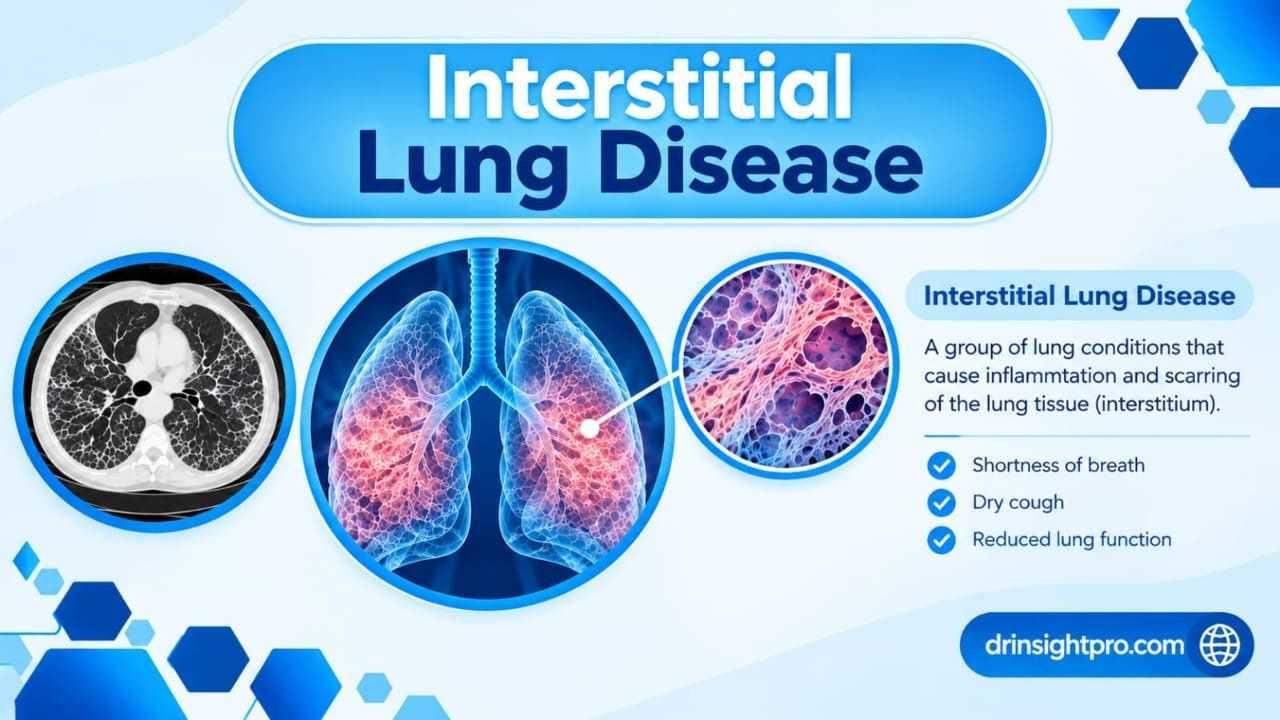
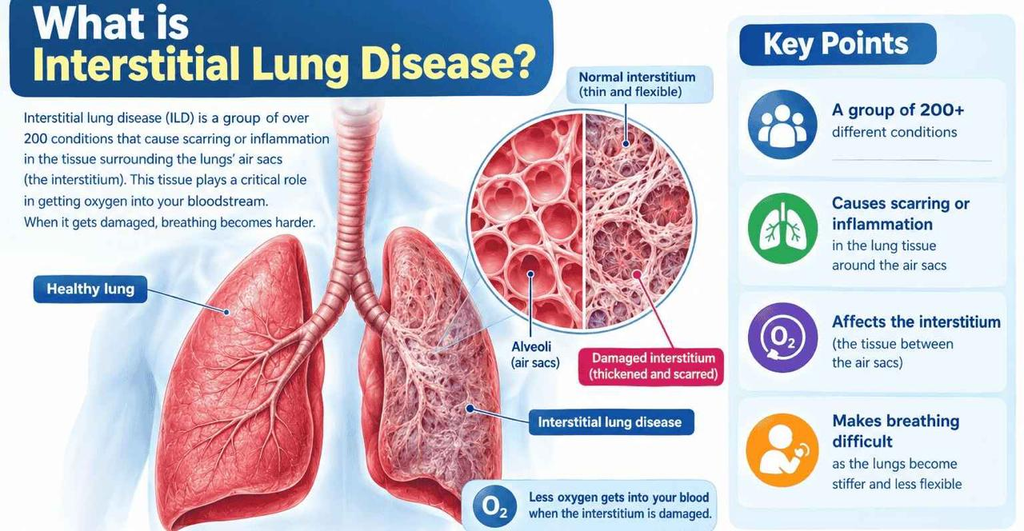
Interstitial lung disease is not one single illness. It is a broad group of over 200 conditions that scar or inflame the tissue surrounding the lungs’ air sacs. That tissue, called the interstitium, plays a critical role in getting oxygen into your bloodstream. When it gets damaged, breathing becomes harder.
The condition affects people of all backgrounds, though certain occupations and genetic factors do raise individual risk. Recognizing symptoms early gives patients and doctors the best chance at slowing its course. Millions of people live with some form of interstitial lung disease worldwide. Some cases stay mild for years. Others progress quickly and need urgent treatment.
What is Interstitial Lung Disease?
Interstitial lung disease refers to a group of disorders that cause scarring or thickening of lung tissue. This scarring is called fibrosis. It makes the lungs stiffer and less able to expand fully with each breath.
Picture your lungs as a sponge. A healthy sponge is soft and flexible. Damaged interstitial tissue turns that sponge stiff and rigid, so less air gets in and less oxygen reaches your blood.
Two well-known conditions fall under this umbrella: pulmonary fibrosis and certain forms of bronchiectasis, including traction bronchiectasis. Both involve interstitial tissue damage, just through slightly different mechanisms.
What Causes Interstitial Lung Disease?
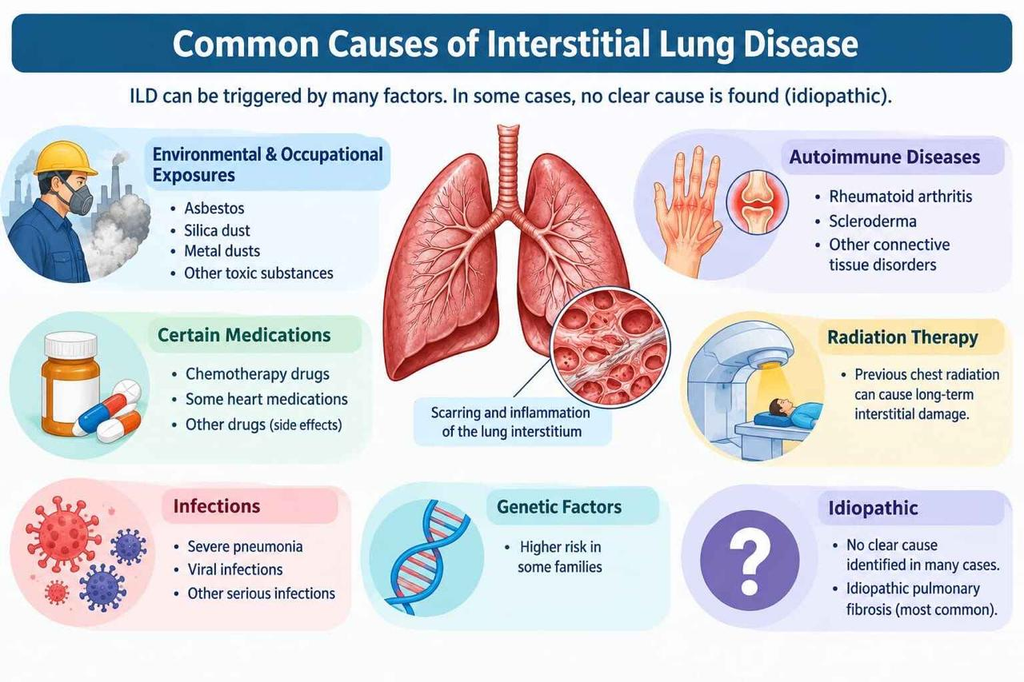
The causes vary widely, and in many cases doctors never identify one at all. Known triggers include:
Long-term exposure to harmful substances: Asbestos, silica dust and certain metal dusts can damage lung tissue over years of exposure.
Autoimmune diseases
Conditions like rheumatoid arthritis and scleroderma often affect the lungs alongside joints or skin.
Certain medications
Some chemotherapy drugs and heart medications carry lung scarring as a side effect.
Radiation therapy
Previous radiation to the chest can leave lasting interstitial damage.
Infections
Severe pneumonia or viral infections sometimes trigger long-term scarring.
Genetic factors
Some families show a higher likelihood of developing these conditions. When no cause is found, doctors label the condition idiopathic. Idiopathic pulmonary fibrosis is the most common example and tends to be more aggressive than other forms.
Interstitial Lung Disease Symptoms
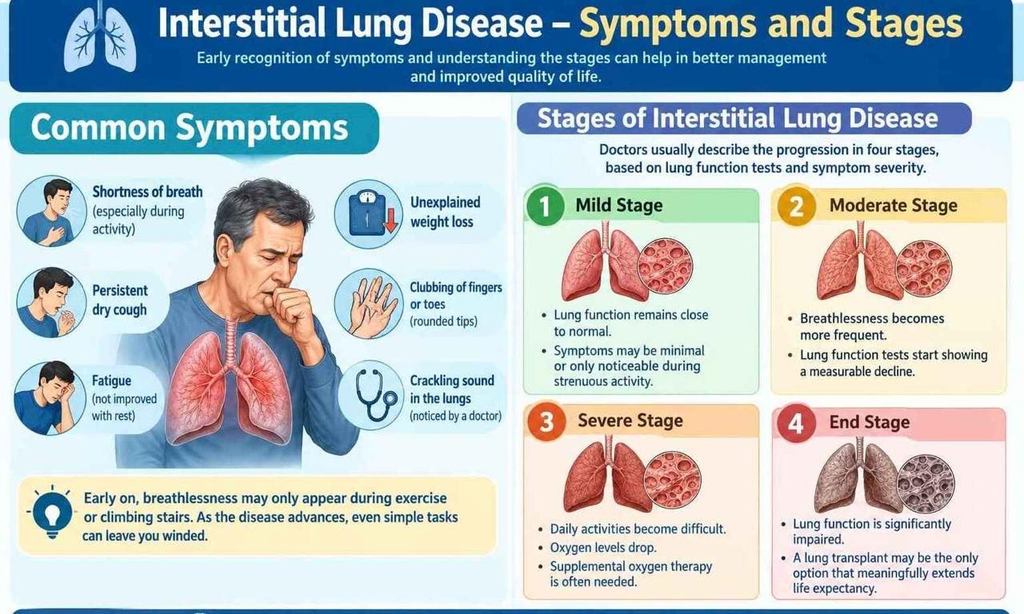
Symptoms usually develop gradually, which is part of why diagnosis often comes late. Common signs include;
- Shortness of breath, especially during physical activity
- A persistent dry cough
- Fatigue that doesn’t improve with rest
- Unexplained weight loss
- Clubbing of the fingers or toes, where the tips become rounded
- A crackling sound in the lungs, often noticed by a doctor during examination
- Early on, breathlessness might only appear during exercise or climbing stairs. As the disease advances, even simple tasks like getting dressed can leave someone winded.
Stages of Interstitial Lung Disease
Doctors typically describe interstitial lung disease progression in four broad stages, based on lung function tests and symptom severity.
Mild stage
Lung function remains close to normal. Symptoms may be minimal or only noticeable during strenuous activity.
Moderate stage
Breathlessness becomes more frequent. Lung function tests start showing a measurable decline.
Severe stage
Daily activities become difficult. Oxygen levels drop, and supplemental oxygen therapy is often needed.
End stage
Lung function is significantly impaired. At this point, a lung transplant may be the only option that meaningfully extends life expectancy.
Staging isn’t just academic. It directly shapes treatment decisions and helps doctors set realistic expectations with patients and families.
How Serious Is Interstitial Lung Disease?
This depends heavily on which specific condition someone has. Some forms progress slowly over decades and barely affect daily life. Others, particularly idiopathic pulmonary fibrosis, can worsen within just a few years without treatment.
Early diagnosis changes outcomes significantly. Patients who start treatment during the mild or moderate stage tend to maintain a better quality of life for longer. This is exactly why persistent breathlessness or a lingering cough should never be brushed off. Don’t dismiss it as “just getting older” or “being out of shape.” That kind of delay can cost valuable treatment time.
How Is Interstitial Lung Disease Diagnosed?
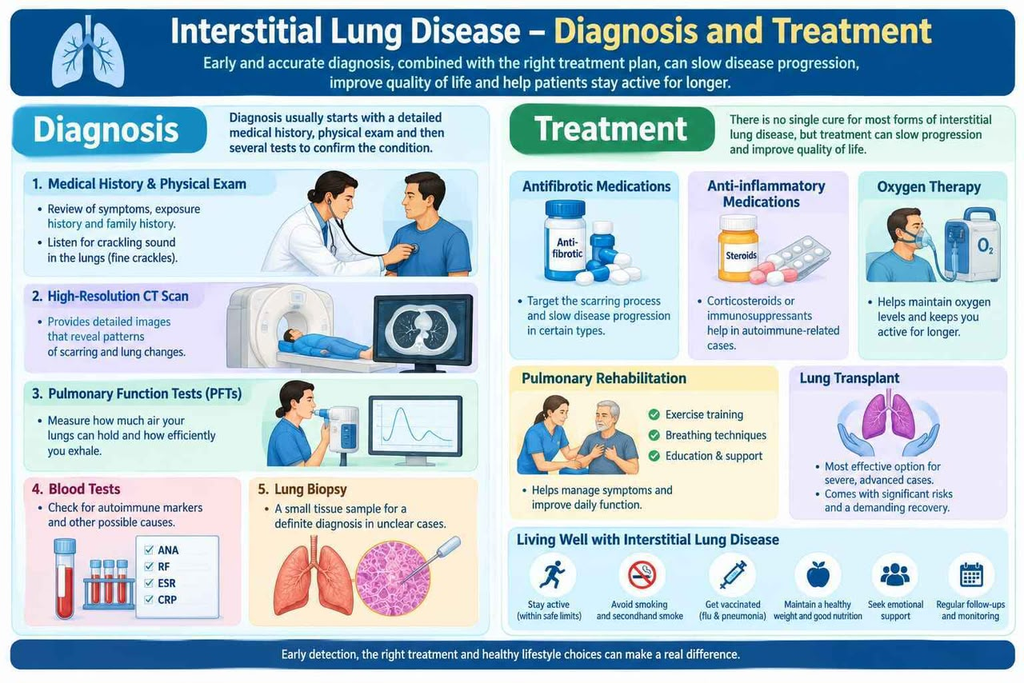
Diagnosis usually starts with a detailed medical history and physical exam. Doctors listen closely for the characteristic crackling sound in the lungs. From there, several tests help confirm the diagnosis;
High-resolution CT scan: This provides detailed images that reveal patterns of scarring.
Pulmonary function tests: These measure how much air your lungs can hold and how efficiently you exhale.
Blood tests: These check for autoimmune markers that might explain the lung damage.
Lung biopsy: In unclear cases, a small tissue sample offers a definitive answer.
Getting an accurate diagnosis matters enormously, since different types of interstitial lung disease respond to very different treatments.
Treatment for Interstitial Lung Disease
There is no single cure for most forms of interstitial lung disease. Still, treatment can slow progression and meaningfully improve quality of life.
Antifibrotic medications: These drugs specifically target the scarring process and can slow disease progression in certain types.
Anti-inflammatory medications: For cases linked to autoimmune conditions, corticosteroids or immunosuppressants often help.
Oxygen therapy: Supplemental oxygen becomes necessary as blood oxygen levels drop, helping patients stay active longer.
Pulmonary rehabilitation: A structured program combining exercise, breathing techniques and education helps patients manage symptoms day to day.
Lung transplant: For severe, advanced cases, transplantation remains the most effective option. It does come with significant risks and a demanding recovery.
Living With Interstitial Lung Disease
- A diagnosis doesn’t mean life stops. Many patients continue working, traveling and staying active for years with the right management plan.
- Staying physically active within safe limits helps preserve lung function longer. Avoiding smoking and secondhand smoke is essential, since it accelerates lung damage regardless of the underlying cause. Additionally, vaccinations against flu and pneumonia matter more here too. As a result, even a mild respiratory infection can trigger a serious flare-up.
- Emotional support matters just as much as physical care. Connecting with support groups, whether local or online, helps many patients. therefore, families process the diagnosis and manage day-to-day challenges together this way.
- Nutrition also plays a quiet but important role. Maintaining a healthy weight reduces strain on the lungs and heart.In fact, working with a dietitian can help patients who experience appetite loss during flare-ups maintain adequate nutrition without added stress.
Recent Research and Advances
- Research into interstitial lung disease has accelerated significantly over the past decade. For instance, scientists are studying new antifibrotic compounds with fewer side effects than current options. As a result, early trial results look promising for several lesser-studied subtypes.
- Furthermore, advanced imaging techniques are also improving early detection. Radiologists can now identify subtle scarring patterns years before symptoms become severe, thus opening the door to earlier intervention.
- In addition, genetic research is another fast-moving area. Scientists have identified several gene variants linked to a higher risk of developing pulmonary fibrosis specifically. Consequently, this research may eventually lead to targeted therapies, which would be based on a patient’s genetic profile, rather than trial-and-error prescribing.
Emerging Technologies and Global Data in ILD
- Meanwhile, international patient registries are also playing a bigger role. By tracking outcomes across thousands of patients globally, researchers can identify which treatments work best. However, this was nearly impossible with smaller, isolated studies.
Role of Artificial Intelligence in ILD Diagnosis
- Additionally, artificial intelligence is entering this field too. Some research teams are training algorithms to spot early scarring patterns on CT scans that even experienced radiologists might miss. Therefore, if validated further, this technology could shorten the diagnostic delay that affects so many patients today.
Frequently Asked Questions
Not exactly, though the two terms are closely related and often confused. Pulmonary fibrosis is one specific type of scarring that falls under the broader interstitial lung disease category. Interstitial lung disease also includes many other conditions with different causes and patterns of lung damage.
It’s a group of over 200 conditions that cause scarring or inflammation in lung tissue. This tissue, called the interstitium, surrounds the tiny air sacs where oxygen normally passes into your blood. As scarring builds up, the lungs become stiffer and less able to expand fully.
Causes range from long-term exposure to toxic substances like asbestos or silica dust to autoimmune diseases such as rheumatoid arthritis. Certain medications, past radiation therapy and severe infections can also trigger it. Genetic factors play a role in some families as well. In a significant number of cases, doctors never identify a clear cause, and these are labeled idiopathic.
It varies widely depending on the specific type involved. Some forms progress very slowly over decades and barely disrupt daily life. Others, like idiopathic pulmonary fibrosis, can advance within just a few years. Early diagnosis and treatment make a substantial difference in long-term outcomes. This is why persistent symptoms should always be evaluated rather than dismissed.
Most forms cannot be fully cured, since the scarring involved is usually permanent once it develops. However, treatment can meaningfully slow disease progression and significantly improve day-to-day quality of life. Many patients continue working, staying active and enjoying daily activities for years with proper management. Early intervention remains the most important factor in achieving these better outcomes.
References
This article draws on general medical guidance from trusted health organizations. Readers are encouraged to consult these sources directly for further information.
Mayo Clinic — Interstitial Lung Disease: Symptoms and Causes Cleveland Clinic — Interstitial Lung Disease Overview American Lung Association — Interstitial Lung Disease
Medical Disclaimer
This article is for informational purposes only and does not substitute for professional medical advice, diagnosis, or treatment. Always consult a qualified physician or pulmonologist regarding any symptoms or medical conditions. Never delay seeking expert medical advice because of content read on this website.
About the Author
Dr. Sufiyan Awan is a medical doctor and clinical researcher who completed his house job at Nishtar Medical University. He holds specialized certifications from the World Health Organization (WHO) and is dedicated to providing clear, evidence-based medical information to patients.