


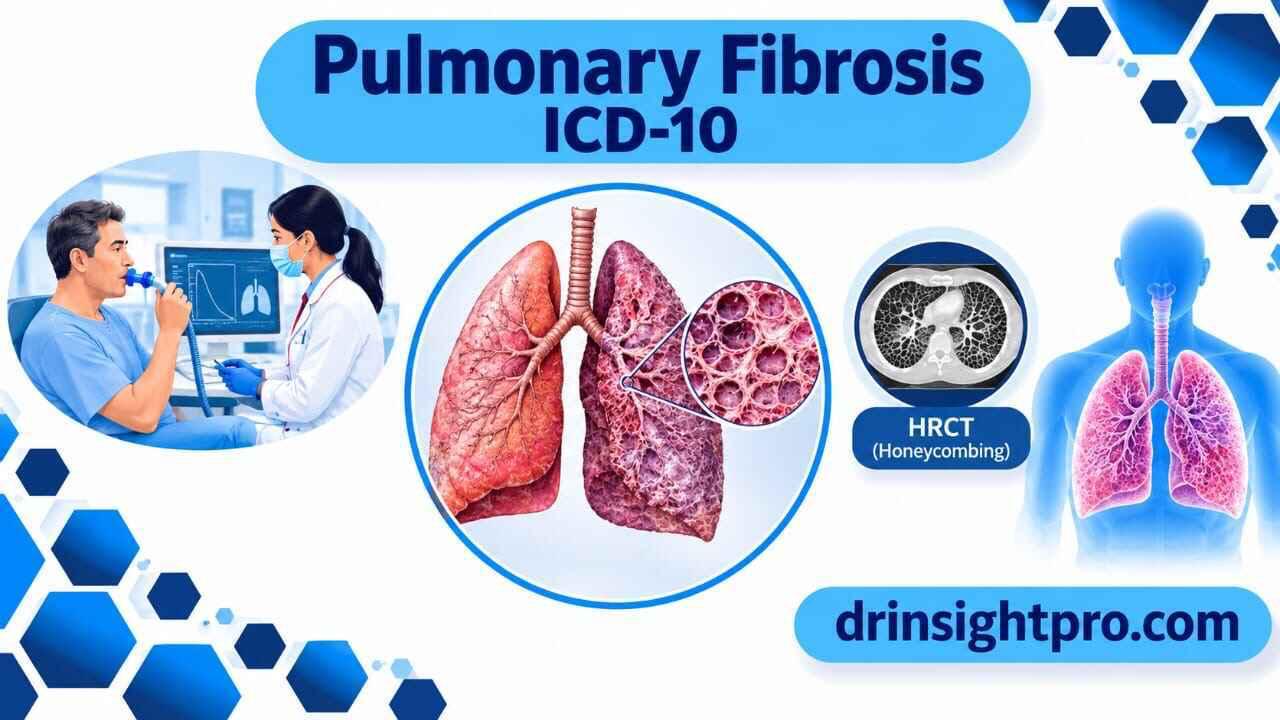
Pulmonary Fibrosis ICD-10 codes are essential for accurately diagnosing and documenting this serious lung condition. It’s cause progressive scarring in the lungs. This scarring makes breathing very difficult. Medical professionals use specific codes daily. In addition, healthcare providers call these ICD-10 codes. Therefore, mastering these codes remains crucial.
What is Pulmonary Fibrosis?
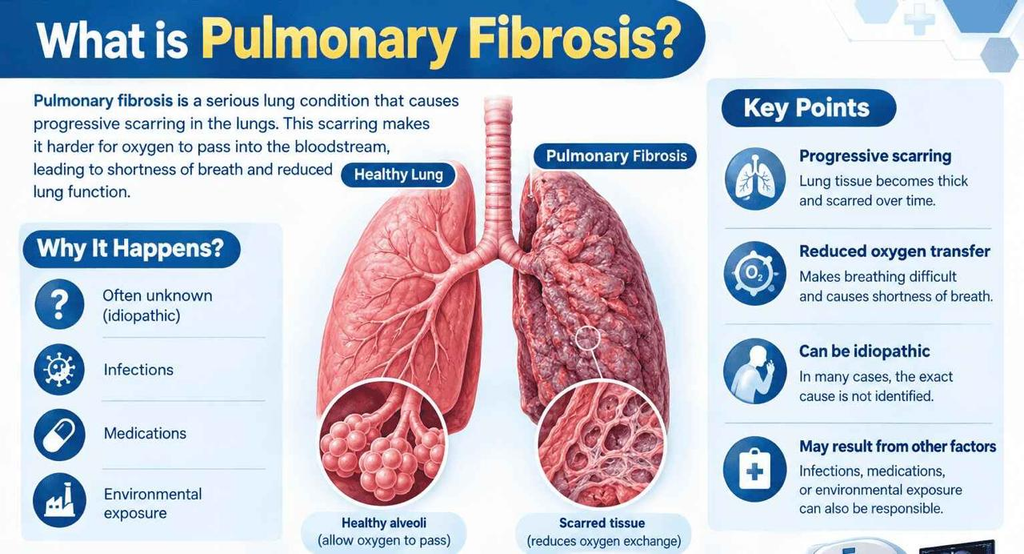
Pulmonary fibrosis occurs when lung tissue becomes thick and scarred. This scarring makes it harder for oxygen to pass into the bloodstream. As a result, patients often feel short of breath.The exact cause is not always known. In many cases, doctors classify it as idiopathic. Furthermore, this simply means doctors cannot identify the exact cause. In other cases, it may result from infections, medications or environmental exposure.
What is ICD-10?
ICD-10 stands for the International Classification of Diseases, 10th Revision. It is a coding system used worldwide. Doctors, hospitals and insurance companies use these codes daily. Each code represents a specific diagnosis. This makes medical records clear and consistent. It also helps track diseases accurately across different healthcare systems.
In the United States, a modified version called ICD-10-CM is used. This version includes additional detail for clinical use.
What is the Pulmonary Fibrosis ICD-10 Code?
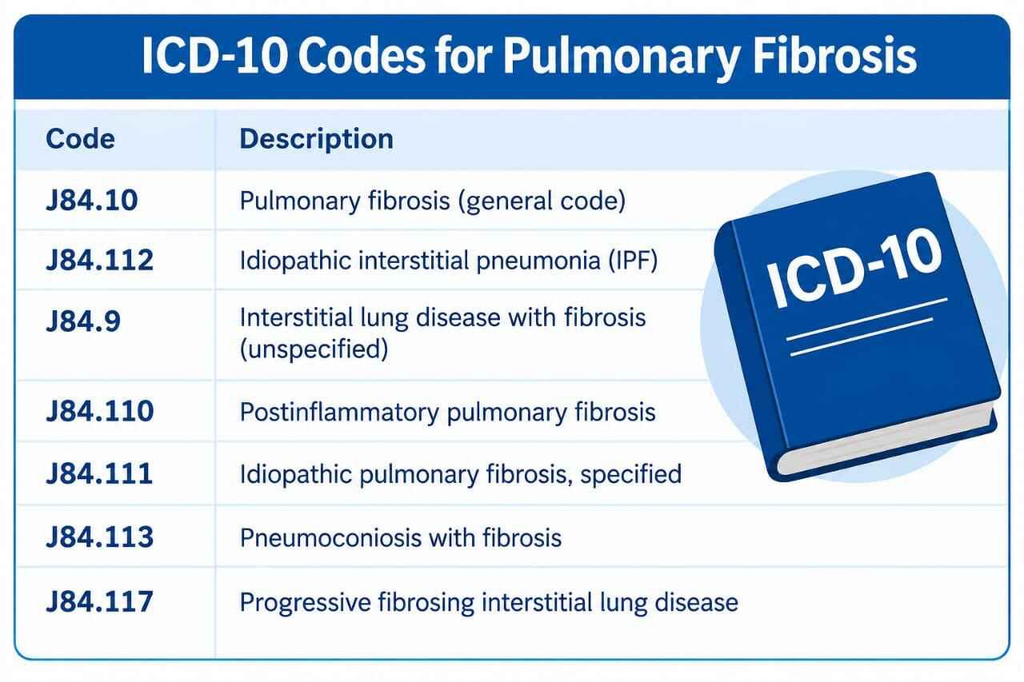
The general ICD-10-CM code for pulmonary fibrosis is J84.10. This code falls under the broader category of interstitial lung diseases. Doctors often use this code when they do not identify a more specific subtype. Consequently, they may update it once further testing is complete.
Medical coders should always confirm the most current code version. ICD-10 codes are updated periodically by health authorities.
Idiopathic Pulmonary Fibrosis ICD-10 Codes
Idiopathic pulmonary fibrosis, often shortened to IPF, has its own specific code. This code is J84.112.
IPF is the most common form of pulmonary fibrosis. It specifically refers to cases where no clear cause can be found. Doctors typically confirm this diagnosis through imaging and lung function tests.
Using the correct, specific code is important. It ensures accurate treatment tracking and proper insurance processing.
Related Pulmonary Fibrosis ICD-10 Guidelines
Pulmonary fibrosis can have different underlying causes. Each cause may require a different code. Below is a simplified reference table.
J84.9 – Interstitial Lung Disease with Fibrosis
This is an unspecified code. Doctors apply it when the exact type is unclear. However, coders should avoid this code if possible. They should always try to find the specific type. Using unspecified codes can lead to billing issues. Therefore, precise documentation is vital.
J84.10 – Postinflammatory Pulmonary Fibrosis
Physicians assign this code for fibrosis caused by previous lung infections. For example, severe pneumonia can cause this. Tuberculosis can also lead to this condition. The infection damages the lung tissue. Later, scar tissue forms. Therefore, doctors use this specific code.
J84.111, J84.113, and J84.117
J84.111 is for idiopathic pulmonary fibrosis. It is a very specific code for clinical trials. J84.113 is for pneumoconiosis with fibrosis. This is caused by inhaling dust particles. J84.117 is for progressive fibrosing interstitial lung disease. This indicates the disease is getting worse over time.
Why Accurate Pulmonary Fibrosis ICD-10 Coding Matters?
Because correct coding affects more than just paperwork. It directly impacts patient care and billing accuracy.
In addition, accurate codes help insurance companies process claims correctly. This reduces delays in patient treatment approval. It also ensures healthcare providers receive proper reimbursement. In addition, accurate coding supports public health tracking. In addition, health organizations use this data to study disease patterns.
Incorrect coding can lead to claim denials. It may also create confusion in a patient’s long-term medical history.
Reimbursement and Insurance
Insurance companies require correct codes. However, if the code is wrong, they deny the claim. Consequently, hospitals lose money. Patients might receive unexpected bills. Therefore, coders must be highly trained.
Public Health Tracking
For example, codes help track disease trends. For instance, researchers use this data to study diseases. They can see which regions have more cases. This helps allocate healthcare resources. Additionally, it helps identify environmental triggers.
Clinical Research
Accurate codes identify eligible patients for trials. Without correct codes, patients miss opportunities. They cannot join crucial studies. This slows down medical progress.
Common Coding Mistakes to Avoid
Medical coders should watch for a few common errors. Avoiding these mistakes improves accuracy and reduces claim issues.
- Using the general code J84.10 when a more specific code applies
- Failing to update codes after a confirmed diagnosis
- Mixing up codes for different interstitial lung diseases
- Not cross-checking with the latest ICD-10-CM guidelines
How Doctors Diagnose Pulmonary Fibrosis
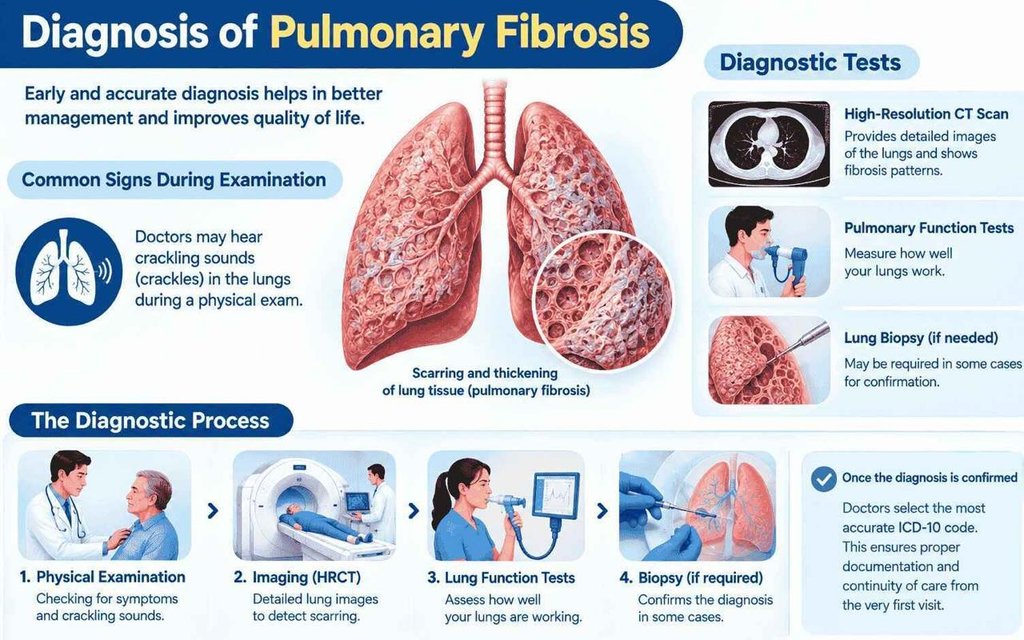
Diagnosis usually begins with a physical examination. Doctors listen for a crackling sound in the lungs. This sound often indicates scarring.
A high-resolution CT scan provides detailed lung images. Pulmonary function tests measure how well the lungs work. In some cases, a lung biopsy may be needed for confirmation.
Once diagnosis is confirmed, doctors select the most accurate ICD-10 code. This ensures proper documentation from the very first visit.
Treatment Approaches for Pulmonary Fibrosis
Although there is no cure, several treatments can help manage symptoms effectively. Specifically, treatment plans depend on disease severity and overall patient health:
- Antifibrotic medications: In addition, these may slow the rate of lung scarring.
- Oxygen therapy: Furthermore, this helps patients breathe more comfortably.
- Pulmonary rehabilitation: For example, this combines exercise and breathing techniques.
- Lung transplant: However, this option is considered only in severe, advanced cases.
Ultimately, treatment plans remain highly personalized, and a pulmonologist typically guides ongoing care decisions.
Recent Research and Advances
Because research on pulmonary fibrosis continues to expand each year, scientists are studying new antifibrotic drugs with fewer side effects. For instance, some early trials show promising results in slowing disease progression. Therefore, researchers are also improving early detection methods. In addition, advanced imaging techniques can now identify scarring patterns earlier than before. As a result, this allows treatment to begin sooner, which may improve long-term outcomes.
Additionally, medical coding systems are evolving alongside these discoveries. Consequently, as new subtypes of pulmonary fibrosis are identified, ICD-10-CM guidelines may be updated.
Frequently Asked Questions
What is the ICD-10 code for pulmonary fibrosis?
The general code is J84.10. A more specific code may apply depending on the cause.
Are ICD-10 codes updated over time?
Yes, Health authorities periodically review and update codes to reflect new medical understanding.
What is the ICD-10-CM code for pulmonary fibrosis?
In the United States, J84.10 is commonly used under the ICD-10-CM system.
Can the ICD-10 code change based on the cause?
Yes, Different underlying causes require different, more specific codes.
Is pulmonary fibrosis the same as IPF in coding?
No, IPF is a specific subtype with its own dedicated code, J84.112.
Who uses ICD-10 codes for pulmonary fibrosis?
Doctors, hospitals, medical coders and insurance companies all use these codes regularly.
Reference
Official ICD-10-CM code lookup for J84.1 (Other interstitial pulmonary diseases with fibrosis) and related subcodes
Find-A-Code – ICD-10-CM diagnosis code reference and documentation guidelines for J84.10
HCC Buddy – FY2026 ICD-10-CM coding and risk adjustment (HCC) guidance for J84.10 and related pulmonary fibrosis codes
Medical Disclaimer
The content provided in this article, including medical coding (ICD-10) and clinical information, is for educational and informational purposes only and does not constitute medical advice. It is not intended to be a substitute for professional medical diagnosis, treatment, or clinical judgment. Healthcare providers should always verify coding guidelines with official ICD-10-CM resources, and patients should consult a qualified physician regarding any medical conditions.
About the Author
Dr. Sufiyan Awan is a licensed medical doctor who completed his clinical house job training at Nishtar Hospital, gaining extensive hands-on experience in patient care and clinical diagnostics. He holds specialized medical certifications and completed professional development courses from the World Health Organization (WHO). Dr. Sufiyan is dedicated to simplifying complex medical knowledge, evidence-based health awareness, and clinical coding guidelines for healthcare professionals and the general public.