


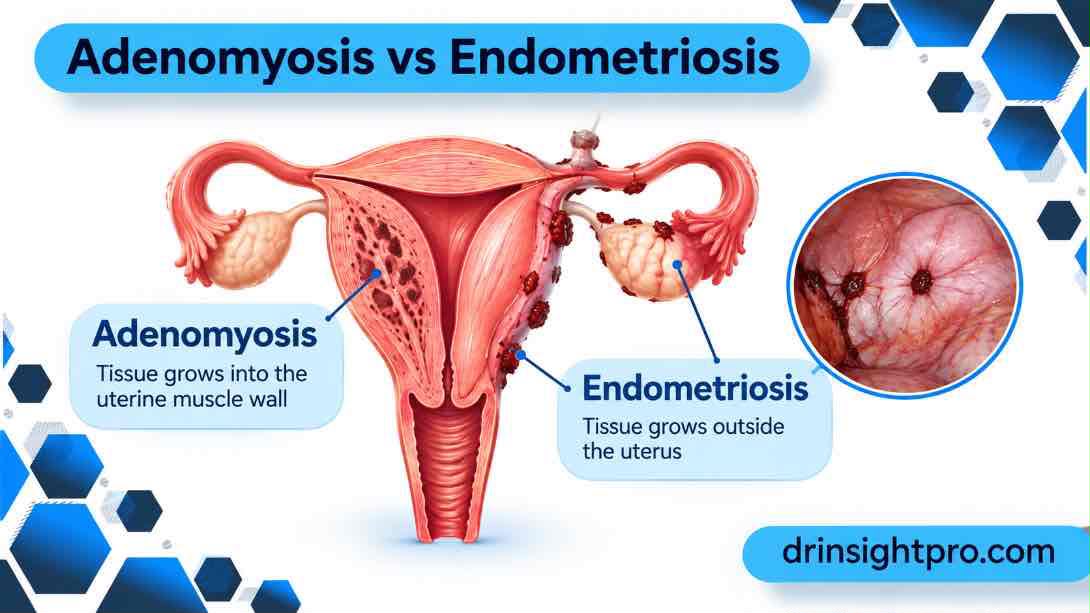
- Adenomyosis vs endometriosis is one of the most confusing comparisons in women’s health. Both conditions involve tissue similar to the uterine lining. Both cause pelvic pain and heavy periods. Yet they are distinct conditions with different causes, different diagnostic paths and different treatments.
- Many women live with one or both conditions for years before getting a clear diagnosis. Understanding the difference between adenomyosis vs endometriosis symptoms helps you have a more informed conversation with doctor.
What Is Adenomyosis?
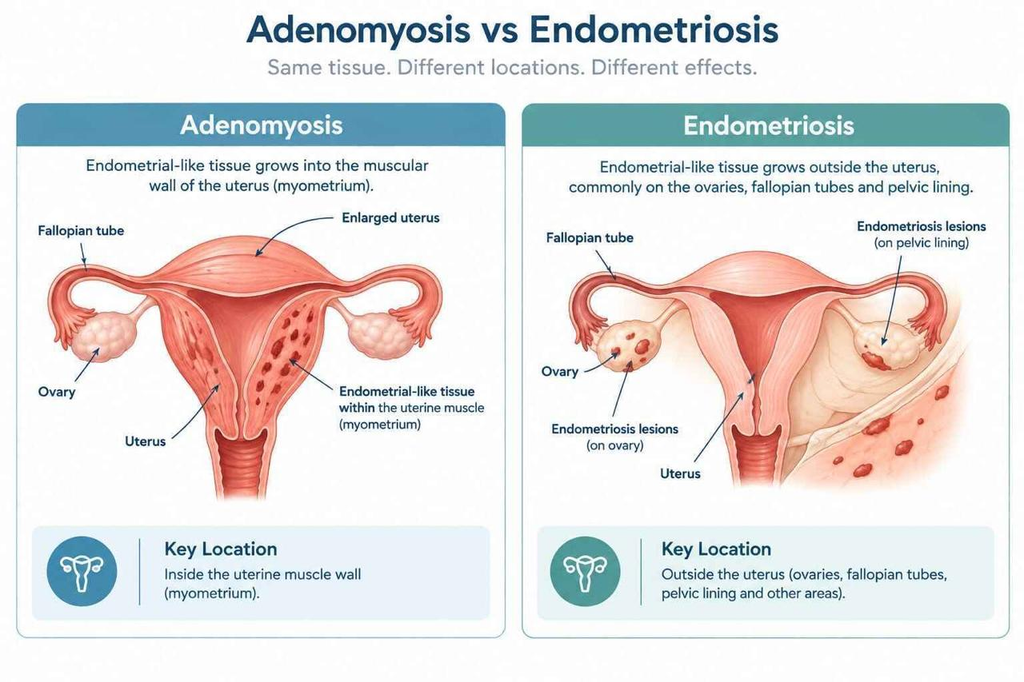
- Adenomyosis occurs when tissue similar to the uterine lining grows into the muscular wall of the uterus itself. Doctors call this muscular wall the myometrium. As this tissue grows into the wall, the uterus often becomes enlarged, sometimes to double or triple its normal size.
- The exact cause of adenomyosis of the uterus remains unclear. Leading theories suggest endometrial cells invade the uterine wall. This may happen through small tears created during childbirth, surgery or other uterine procedures. This condition depends on estrogen for its growth, which is why symptoms typically ease after menopause. Adenomyosis most commonly develops in women in their 40s and 50s. About one in three women with adenomyosis experience no symptoms at all.
What Is Endometriosis?
- Endometriosis occurs when tissue similar to the uterine lining grows outside the uterus instead of inside its wall. This tissue commonly appears on the ovaries, fallopian tubes and the tissue lining the pelvis. In rare cases, it can spread beyond the pelvic region entirely.
- Like normal uterine lining, this displaced tissue thickens and breaks down with each menstrual cycle. Unlike normal tissue, it has no way to leave the body. This trapped tissue causes inflammation, scar tissue and painful adhesions between pelvic organs over time.
- Endometriosis affects roughly 10 percent of women and girls of reproductive age worldwide, according to the World Health Organization. Unlike adenomyosis, it often begins shortly after a girl’s first period rather than in her 40s.
Adenomyosis vs Endometriosis
The simplest way to understand adenomyosis vs endometriosis is location. Adenomyosis grows inward, into the uterine muscle wall. Endometriosis grows outward, onto organs outside the uterus.
This distinction matters more than it might seem. It shapes how each condition is diagnosed, how it progresses and how doctors approach treatment. It also explains why the two conditions, despite similar symptoms, require different diagnostic tools entirely.
Interestingly, the two conditions often coexist. Many women diagnosed with endometriosis also have adenomyosis, and vice versa. This overlap is one reason diagnosis can take longer than patients expect.
Adenomyosis vs Endometriosis Symptoms
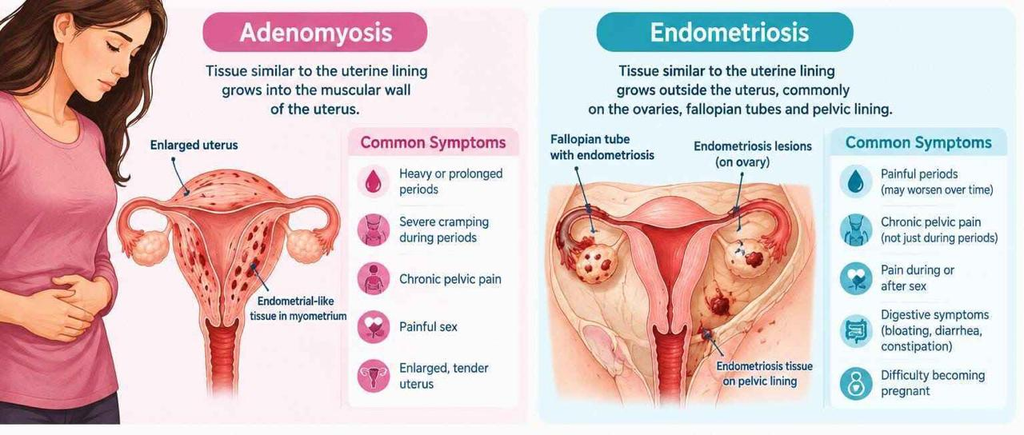
Both conditions share overlapping symptoms, which is exactly why comparing them causes so much confusion. Still, some differences stand out.
Adenomyosis symptoms
- Heavy or prolonged menstrual periods
- Severe cramping or sharp pelvic pain during periods
- Chronic pelvic pain that doesn’t fully resolve between cycles
- Painful sex
- A noticeably enlarged, tender uterus
Endometriosis symptoms
- Painful periods that may worsen progressively over time
- Chronic pelvic pain not limited to menstruation
- Pain during or after sex
- Digestive symptoms like bloating, diarrhea or constipation, especially during periods
- Difficulty becoming pregnant
Why Is My Uterus Swollen? Understanding Enlarged Womb Causes
However, adenomyosis isn’t the only cause of an enlarged womb. Uterine fibroids, benign tumors that grow in or around the uterus, are another common cause and frequently occur alongside adenomyosis. Pregnancy, of course, is the most common reason of all. If you notice unexplained uterine enlargement along with heavy periods or pelvic pressure, get it checked. A pelvic ultrasound is usually the first step toward figuring out the cause.
An enlarged uterus is one of the more distinctive signs pointing toward adenomyosis specifically. As displaced tissue grows within the uterine wall, the organ physically expands to accommodate it.
How to Diagnose Adenomyosis vs Endometriosis?
Diagnosing either condition can be genuinely challenging, and both often go undetected for years.
For adenomyosis, doctors typically start with a pelvic exam. Transvaginal ultrasound or MRI follows next to look for a thickened uterine wall. Symptoms overlap so heavily with fibroids and endometriosis. A definitive diagnosis technically requires examining uterine tissue after hysterectomy, though imaging alone is often considered sufficient for clinical purposes.
For endometriosis, doctors may also start with ultrasound or MRI. However, the gold standard for a confirmed diagnosis is laparoscopy. This minimally invasive surgical procedure allows direct visualization of displaced tissue, and its removal in the same session if needed.
Both conditions can coexist and mimic each other. Doctors sometimes reach a working diagnosis based on symptoms and imaging alone.
Adenomyosis vs Endometriosis Treatments
There is no medication that cures adenomyosis outright. Treatment instead focuses on managing symptoms effectively.
Pain relievers: Anti-inflammatory medications like ibuprofen help manage cramping and discomfort.
Hormonal therapy: Birth control pills, hormonal IUDs or other hormone-based treatments can reduce heavy bleeding and pain.
Heat therapy: A warm bath or heating pad offers simple, accessible relief for cramping.
Hysterectomy: Surgical removal of the uterus is currently the only definitive cure, typically reserved for women who have completed childbearing and have severe symptoms.
While treatment options for adenomyosis focus on localized symptom relief, endometriosis management specifically targets tissue growth outside the uterus.
Pain management: Over-the-counter or prescription pain relievers help with day-to-day symptoms.
Hormonal therapy: Birth control pills, progestin therapy or other hormonal treatments can slow tissue growth and reduce pain.
Conservative surgery; A surgical procedure to remove displaced tissue while preserving the uterus and ovaries, often performed laparoscopically.
Hysterectomy: Reserved for severe cases that haven’t responded to other treatments, particularly when fertility is no longer a concern.
Fertility treatment is often a separate, parallel conversation for women trying to conceive. Standard symptom treatment doesn’t always address fertility challenges directly.
Recent Research and Advances
- Research into both conditions has expanded significantly in recent years, partly driven by long-standing underfunding that advocacy groups have worked hard to address.
- Newer imaging techniques are improving non-surgical diagnosis for both conditions. Advanced ultrasound protocols can now detect adenomyosis patterns that were previously missed. This could potentially reduce reliance on invasive procedures for a working diagnosis.
- For endometriosis specifically, researchers are exploring the connection to immune system dysregulation. Emerging evidence suggests women with endometriosis have higher rates of other immune-related conditions. This opens new directions for future treatment approaches that go beyond hormone suppression alone.
- Genetic research is also progressing on both fronts. Scientists have identified family patterns in both conditions. This suggests inherited factors play a meaningful role, though the specific genes involved are still being mapped.
FAQs:
Both can affect fertility, though endometriosis is more strongly to difficulty conceiving because it effects the fallopian tubes and ovaries. Adenomyosis has also been linked to pregnancy complications in some studies, though more research is still needed.
Adenomyosis involves tissue growing into the uterine muscle wall, causing the uterus to enlarge. Endometriosis involves similar tissue growing outside the uterus, often on the ovaries or pelvic lining. Both are estrogen-dependent and can cause similar pain patterns. Still, they affect completely different locations in the body.
Adenomyosis is one common cause, along with uterine fibroids and pregnancy. If you notice unexplained uterine enlargement alongside heavy periods or pelvic pressure, get it checked. A pelvic ultrasound is typically the first diagnostic step your doctor will recommend.
Yes, this is actually quite common. Doctors often find both conditions in women after an initial diagnosis. This overlap is part of why diagnosis can take longer than patients expect. It is also why doctors often consider both possibilities together.
No, Both conditions are often managed successfully with pain relievers and hormonal therapy first. Surgery, including hysterectomy for adenomyosis or conservative tissue removal for endometriosis, is typically reserved.
Adenomyosis typically causes heavy periods, severe cramping and a tender, enlarged uterus. Endometriosis more often causes progressive pelvic pain, pain during sex and digestive symptoms like bloating.
References
Mayo Clinic — Adenomyosis: Symptoms and Causes
Mayo Clinic — Endometriosis: Symptoms and Causes
Cleveland Clinic — Adenomyosis: Causes, Symptoms, Diagnosis and Treatment
Cleveland Clinic — Endometriosis; Causes, Symptoms, Diagnosis and Treatment
World Health Organization — Endometriosis Fact Sheet
Medical Disclaimer
The content on this website is for informational and educational purposes only and is not intended as medical advice, diagnosis, or treatment. Always consult a qualified healthcare provider regarding any medical condition or symptoms.
About the Author
Dr. Sufiyan Awan is a medical doctor who completed his house job at Nishtar Medical University and holds certifications from the World Health Organization (WHO). As an independent medical researcher, he is dedicated to sharing accurate, evidence-based healthcare insights to help patients make informed decisions about their health.