


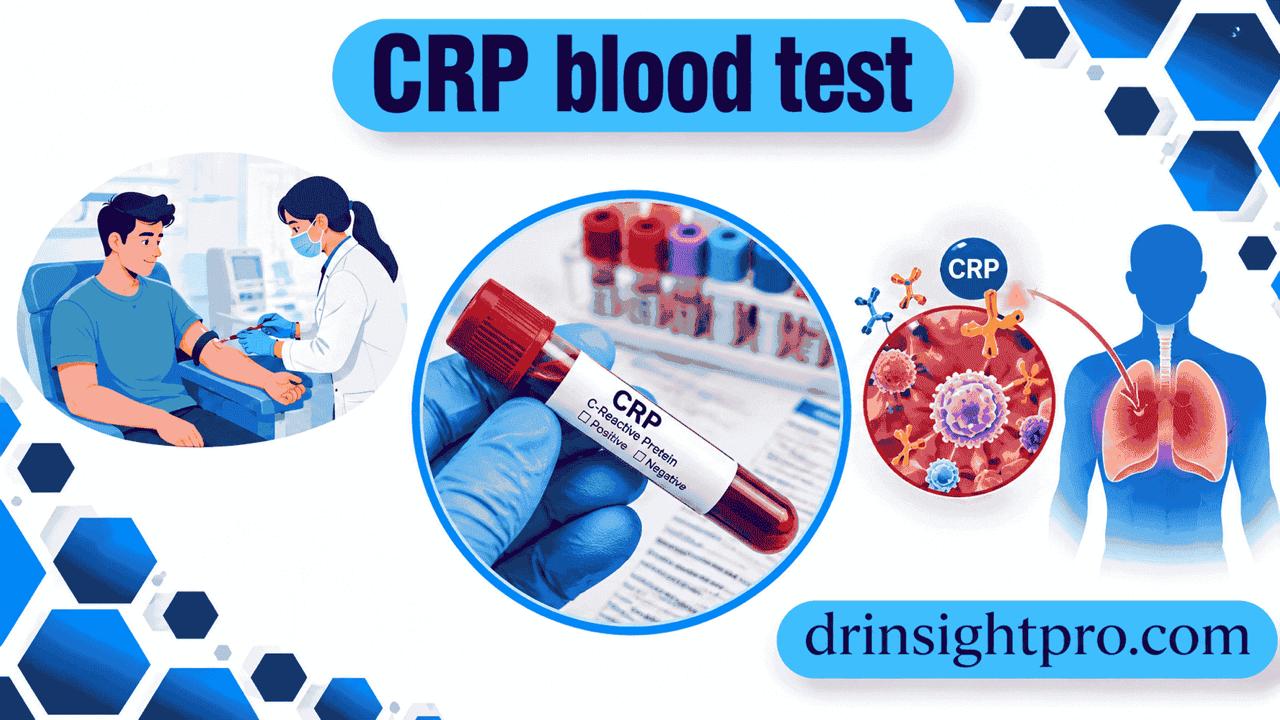
If your doctor recently ordered a CRP blood test, you may wonder what the result means. CRP stands for C-reactive protein, a protein that your liver produces when inflammation occurs in the body.
The test can show that inflammation is present, but it cannot tell your doctor exactly where the inflammation is or what caused it. Doctors therefore interpret CRP alongside your symptoms, examination and other test results.
What Is CRP?
C-reactive protein (CRP) is a protein that your liver makes in response to inflammation.
Your body uses inflammation to protect tissues and support healing after an injury or infection. For example, a small cut may become red, warm and swollen while your immune system responds to the injury.
Short-term inflammation can help the body heal. However, inflammation that continues for a long time can contribute to tissue damage and may occur with several chronic diseases.
When inflammation develops, immune cells release chemical signals called cytokines. These signals, particularly interleukin-6 (IL-6), stimulate the liver to produce more CRP.
Why Is CRP Called an Acute-Phase Protein?
Doctors classify CRP as a positive acute-phase protein. This means that its blood level usually increases during an inflammatory response.
CRP can rise relatively quickly after inflammation begins. It may start increasing within several hours and often reaches its peak within about 36 to 50 hours. The exact timing depends on the underlying cause and severity of inflammation.
CRP can also fall relatively quickly when the inflammatory stimulus improves. This makes it useful for monitoring changes over time.
However, one CRP result provides only a snapshot. It cannot describe your entire health history or identify the cause of inflammation on its own.
Why Would a Doctor Order a CRP Test?
Doctors use CRP for several reasons.
1. To Check for Inflammation
CRP can help show whether significant inflammation may be present somewhere in the body.
Infections, autoimmune diseases, inflammatory bowel disease and tissue injury can all increase CRP.
2. To Help Evaluate Infection
CRP may increase during both bacterial and viral infections.
However, CRP alone cannot reliably tell whether an infection is bacterial or viral. Doctors consider the symptoms, examination and other tests before deciding whether an infection needs specific treatment.
3. To Monitor Inflammatory Bowel Disease
Doctors may use CRP along with other tests to monitor conditions such as:
- Crohn’s disease
- Ulcerative colitis
CRP can provide useful information about inflammation, although it does not always reflect the amount of inflammation inside the intestine.
4. To Monitor Autoimmune Diseases
Conditions such as rheumatoid arthritis, lupus and vasculitis can cause inflammation.
Doctors may use CRP to monitor disease activity or response to treatment. However, some inflammatory conditions can cause little or no CRP elevation, so a normal result does not always exclude active disease.
5. To Investigate Unexplained Symptoms
A doctor may order CRP when symptoms suggest inflammation, such as
- Fever
- Chills
- Unexplained fatigue
- Pain
- Symptoms of infection
- Symptoms suggesting an inflammatory disorder
Doctors usually combine CRP with other tests instead of using it as a stand-alone diagnostic test.
6. To Monitor Treatment or Recovery
Doctors may repeat CRP during treatment or recovery.
When inflammation improves, CRP often falls. A falling CRP can therefore support other signs of clinical improvement.
CRP vs hs-CRP: What Is the Difference?
Standard CRP and high-sensitivity CRP (hs-CRP) measure the same protein, but doctors use them for different purposes.
| Feature | Standard CRP | hs-CRP |
|---|---|---|
| Main purpose | Detect and monitor inflammation | Assess cardiovascular risk |
| Sensitivity | Measures clinically relevant CRP elevations | Detects much smaller CRP changes |
| Common use | Infection and inflammatory conditions | Cardiovascular risk assessment |
| Result | Usually reported in mg/L | Usually reported in mg/L |
| Interpretation | Symptoms and other investigations matter | Overall cardiovascular risk matters |
Standard CRP helps doctors evaluate active inflammation. Meanwhile, the hs-CRP test detects smaller changes and can help estimate cardiovascular risk in appropriate patients.
How Is the CRP Test Done?
A healthcare professional takes a small blood sample from a vein in your arm.
Basically, the procedure usually takes only a few minutes. Most people do not need special preparation for a standard CRP test.
Tell your doctor about any medicines or supplements you take because some substances can affect laboratory results. Do not stop prescribed medicines unless your healthcare provider tells you to do so.
Understanding Your CRP Test Results
Laboratories usually report CRP in milligrams per liter (mg/L).
Your laboratory’s reference range matters because different laboratories may use slightly different methods and reference intervals.
Mostly, healthy adults usually have very low CRP levels. However, a low CRP does not completely rule out inflammation.
CRP Test Value Table
| CRP level | General interpretation |
|---|---|
| <1 mg/L | Very low level; usually little evidence of significant systemic inflammation |
| 1–10 mg/L | Mild or borderline elevation in some settings; interpretation depends on the laboratory and clinical situation |
| 10–50 mg/L | More noticeable elevation; infection, inflammatory disease or other causes may be present |
| 50–100 mg/L | Marked elevation; significant inflammation becomes more likely |
| >100 mg/L | Very high level; can occur with serious infection or other major inflammatory conditions |
Important: These values provide general guidance rather than strict diagnostic cutoffs. Therefore, always compare your result with the reference range on your own laboratory report.
CRP cannot identify the exact cause of an elevated result. Doctors need to consider the patient’s symptoms, medical history, examination and other investigations.
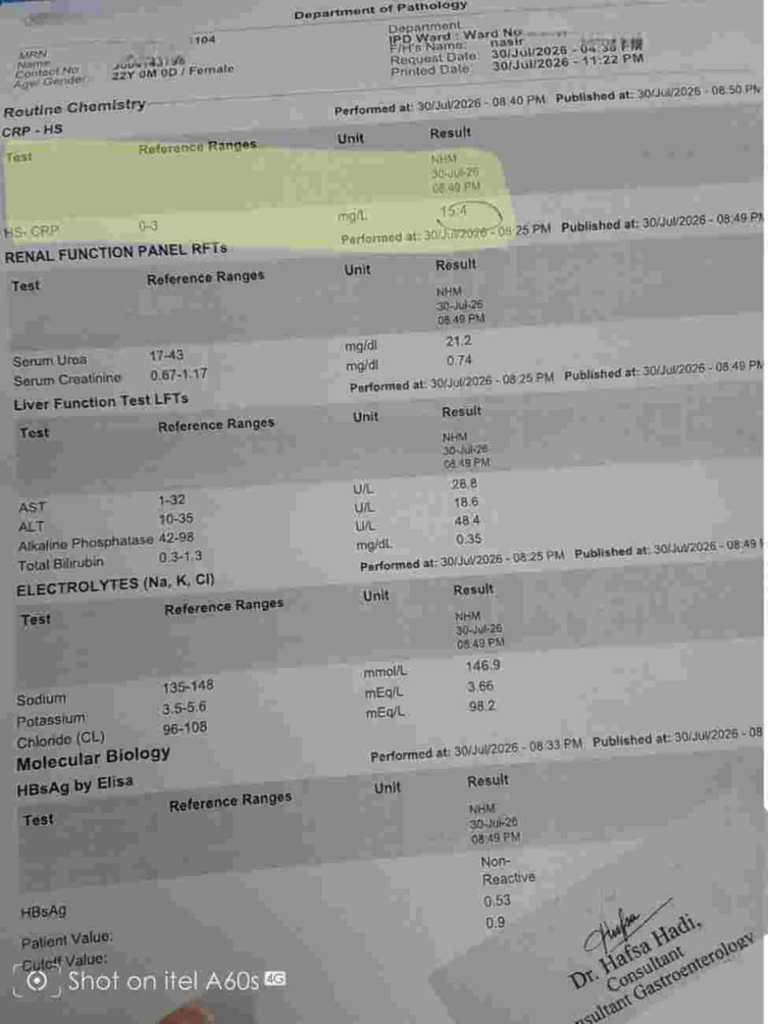
What Does a CRP Test of 10 mg/L Mean?
A CRP result of 10 mg/L sits around an important interpretation point.
Some laboratories consider values around this level elevated, while others use different reference ranges. Therefore, you should first check the reference range printed on your report.
A CRP of 10 mg/L can occur with a mild or moderate inflammatory response. Possible causes include an infection, inflammatory disease, tissue injury or other conditions.
Most importantly, a CRP of 10 mg/L does not automatically mean that you have a bacterial infection.
Doctors look at the complete clinical picture before deciding what the result means.
What Causes a High CRP Test Level?
Many conditions can increase CRP.
Common causes include:
- Bacterial infections
- Viral infections
- Inflammatory bowel disease
- Rheumatoid arthritis
- Lupus
- Vasculitis
- Tissue injury
- Recent surgery
- Some cancers
- Obesity
- Smoking
- Exposure to air pollution
- Other inflammatory conditions
CRP is therefore a sensitive but nonspecific marker. It can show that inflammation may be occurring, but it cannot identify the exact disease or location.
Can CRP Test Tell Whether an Infection Is Bacterial or Viral?
No, not by itself.
Bacterial infections can raise CRP, but viral infections can also increase the level. Non-infectious conditions can produce high CRP as well.
For this reason, doctors should not diagnose a bacterial infection or prescribe antibiotics based only on a CRP result.
Depending on the situation, your doctor may also consider:
- Complete blood count
- Physical examination
- Cultures
- Urine tests
- Stool tests
- Imaging
- Other inflammatory markers
- Procalcitonin in selected clinical situations

The appropriate tests depend on the symptoms and suspected cause.
What Happens If Your CRP Is High?
Additionally, high CRP does not automatically mean that you have a serious disease.
Your doctor will first consider why the test was ordered and then compare the result with your symptoms and other findings.
Depending on the situation, your doctor may recommend:
- A physical examination
- Repeat CRP testing
- Complete blood count and other blood tests
- Urine or stool testing
- Imaging
- Tests for autoimmune disease
- Other investigations based on your symptoms
If the underlying inflammation improves, CRP usually falls over time. A trend in CRP can sometimes provide more useful information than a single measurement.
What Does hs-CRP Mean for Heart Disease Risk?
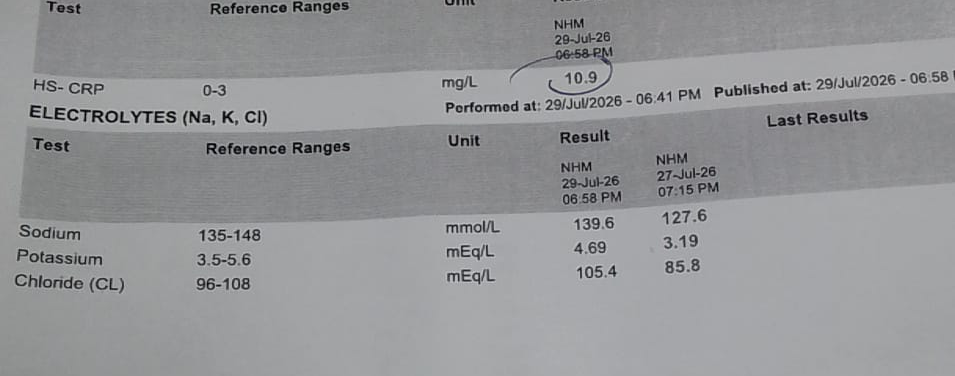
Doctors sometimes use hs-CRP to help estimate cardiovascular risk.
Commonly used categories include:
| hs-CRP level | Relative cardiovascular risk |
|---|---|
| <1.0 mg/L | Lower risk |
| 1.0–3.0 mg/L | Average risk |
| >3.0 mg/L | Higher risk |
These categories describe relative risk, not a diagnosis of heart disease.
An infection or another inflammatory condition can temporarily increase hs-CRP. Therefore, doctors should interpret the result in the appropriate clinical setting rather than treating one elevated value as proof of cardiovascular disease.
Your doctor may also consider:
- Blood pressure
- Cholesterol
- Diabetes
- Smoking
- Weight
- Physical activity
- Family history
- Previous cardiovascular disease
Doctors base treatment decisions on the overall cardiovascular risk profile, not hs-CRP alone.
Does CRP Return to Normal?
CRP usually falls when the underlying inflammatory process improves.
Because CRP changes relatively quickly, doctors can sometimes use repeated measurements to follow the course of an illness. A falling value may support improvement, while a persistently elevated or rising value may indicate ongoing inflammation.
However, CRP still cannot tell the doctor what is causing the inflammation.
Practical Tips Before a CRP Test
You usually do not need special preparation for a standard CRP blood test.
Before your test:
- Ask whether your doctor ordered standard CRP or hs-CRP.
- Tell your doctor about any recent infection.
- Mention recent injuries or surgery.
- Tell your healthcare provider about medicines and supplements you take.
- Follow any fasting instructions if your doctor ordered other blood tests at the same time.
- Do not stop prescription medicines unless your healthcare provider tells you to.
When Should You Seek Medical Attention?
The CRP number itself does not determine how urgently you need treatment. However, your symptoms matter more.
Seek urgent medical care if you develop symptoms such as:
- Severe difficulty breathing
- Chest pain
- Confusion
- Fainting
- Severe weakness
- Persistent high fever with significant illness
- Severe dehydration
- Blood in the stool or vomit
- Severe or rapidly worsening abdominal pain
These symptoms can require prompt assessment regardless of the CRP value.
Frequently Asked Questions
Both tests measure C-reactive protein. Standard CRP mainly helps doctors evaluate active inflammation, while hs-CRP detects smaller CRP changes and can help assess cardiovascular risk.
A CRP of 10 mg/L may represent a mild elevation depending on the laboratory’s reference range. However, it can occur with infection, inflammation or other conditions. Therefore, the number alone cannot identify the cause.
No, CRP can support the overall assessment of inflammation, but it cannot reliably distinguish bacterial infection from viral infection or other inflammatory causes.
Yes, Some inflammatory conditions can occur without a significant CRP increase. Therefore, a normal CRP does not completely exclude inflammation.
The Bottom Line
To conclude, the CRP blood test is a useful marker of inflammation. It can help doctors investigate infection and inflammatory conditions and can also help monitor changes during treatment.
However, CRP cannot tell you exactly where inflammation is occurring or what caused it. A high result does not automatically mean a bacterial infection, and a normal result does not completely rule out inflammation.
Medical Disclaimer
Moreover, this article provides general educational information and does not replace professional medical advice, diagnosis or treatment. Always discuss your symptoms and laboratory results with your healthcare provider.
References
- MedlinePlus, U.S. National Library of Medicine. C-Reactive Protein (CRP) Test. MedlinePlus CRP Test
- MedlinePlus, U.S. National Library of Medicine. C-Reactive Protein. MedlinePlus C-Reactive Protein
- National Center for Biotechnology Information (NCBI). Physiology, Acute Phase Reactants. NCBI Bookshelf – Acute Phase Reactants
- National Center for Biotechnology Information (NCBI). C-Reactive Protein: Clinical Relevance and Interpretation. NCBI Bookshelf – C-Reactive Protein
About Author
Dr. Hafsa Hadi is a medical writer and content creator for DrInsightPro.com, specializing in clinical education, gastroenterology insights, and evidence-based patient healthcare.
Professional Focus & Background
- Clinical Editorial Lead: Authors comprehensive clinical reviews, diagnostic breakdowns, and medical guides for DrInsightPro.com.
- Gastroenterology & Internal Medicine: Focuses on high-yield clinical resources covering liver disorders, gastrointestinal conditions, and routine laboratory interpretation (such as complete blood counts, inflammatory markers, and liver function panels).
- Patient Advocacy & Health Literacy: Bridges the gap between complex diagnostic findings and actionable patient education through clear, structured medical communication.