


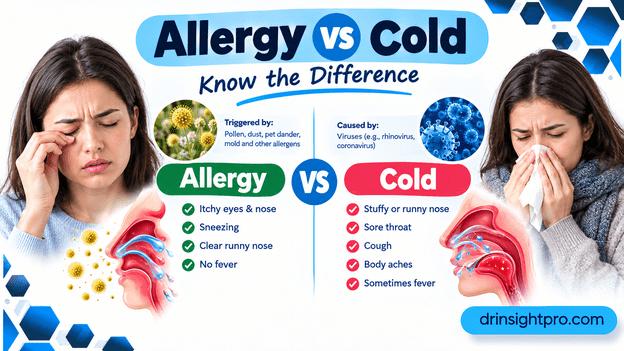
Allergy vs cold symptoms can look very similar, especially when you have a stuffy or runny nose, sneezing, or a scratchy throat. However, allergies and colds have different causes and usually follow different patterns. A cold develops from a viral infection, while allergies occur when your immune system reacts to triggers such as pollen, dust, or pet dander. Consequently, knowing these differences can help you understand your symptoms and choose the right care. In this guide, we explain how to tell allergy symptoms from cold symptoms in simple, clear language.
Allergy vs Cold Symptoms: Understanding Colds and Allergies
In fact, distinguishing between allergy vs cold symptoms is essential for proper management, as both conditions affect the upper respiratory tract but require entirely different approaches to treatment and prevention.
What Is a Cold?
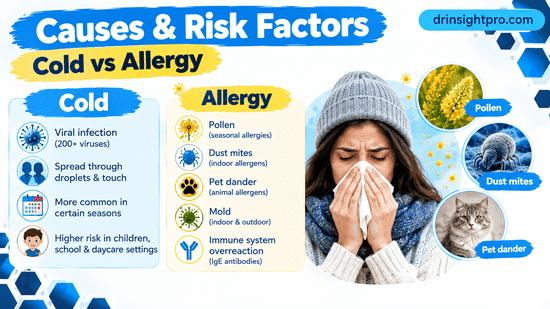
- Specifically, a cold is a viral infection of the nose and throat. Doctors call it an upper respiratory tract infection. More than 200 viruses can cause one. Rhinoviruses are the most common culprits.
- For instance, adults catch two or three colds a year. Young children catch more. Cold viruses spread through droplets when someone coughs or sneezes. They also spread through touch. You can pick up a virus from a doorknob and then rub your eyes.
- Most colds clear in 10-14 days. However, your immune system does the real work. In addition, medicine only eases the symptoms while you recover.
What Are Allergies?
- An allergy is an immune system overreaction. Your body treats a harmless substance as a threat. Doctors call these triggers allergens. Pollen, dust mites, pet dander and mold are common examples.
- As a result, when you breathe in an allergen, immune cells release a chemical called histamine. Histamine causes swelling, itching and extra mucus. That reaction produces the sneezing and runny nose you feel.
- Allergic rhinitis is the medical name for nasal allergy. Most people call it hay fever. The name is misleading. Hay does not cause it and it does not bring a fever. Allergic rhinitis is not contagious.
Key Differences at a Glance
The table below shows the main clues doctors use to separate the two.
| Feature | Cold | Allergy |
|---|---|---|
| Cause | Virus | Immune reaction to an allergen |
| Start | Gradual over 1–3 days | Usually soon after exposure |
| Length | Usually 7–10 days | Weeks or months while exposure continues |
| Itchy eyes, nose or throat | Rare | Very common |
| Fever | Rare in adults | Not typical |
| Body aches | Common | Uncommon |
| Mucus | Thick; may become yellow or green later | Thin and clear |
| Contagious | Yes | No |
Causes and Risk Factors;
Cold viruses enter through the nose, mouth or eyes. Once inside they infect the lining of your nose and throat. Your immune system responds with inflammation. As a result, that inflammation causes most of your symptoms. Colds can occur at any time of year, although some respiratory viruses are more common during certain seasons. For example, people spend more time indoors and close together. Specifically, children in daycare and school catch colds most often.
Allergies begin when your immune system becomes sensitized to an allergen. In response, your body makes IgE antibodies against it. Then, these antibodies sit on immune cells called mast cells. The next exposure triggers those cells to release histamine.
Clinical symptom Breakdown
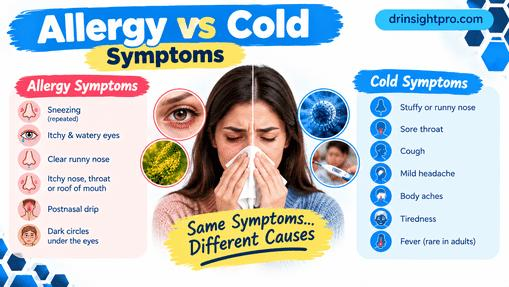
Allergy vs cold symptoms conditions affect the nose and throat. However, the details set them apart. Typically, cold symptoms build gradually over one to three days. IN fact, a tickle in the throat often comes first. Common signs include;
Cold Symptoms
- Stuffy or runny nose
- Sore throat
- Cough
- Sneezing
- Mild headache
- Mild body aches
- Tiredness
- Mucus often starts clear and turns thick and yellow or green later. In addition, this color change is normal. It does not always mean you need antibiotics. Fever is rare in adults with a cold. It is more common in children.
Allergy Symptoms
The signs and symptoms of allergies center on the nose and eyes. Hay fever symptoms include:
- Repeated sneezing
- Clear runny nose
- Nasal congestion
- Itchy and watery eyes
- Itchy nose, throat or roof of the mouth
- Postnasal drip
- Dark circles under the eyes
- Itching is the standout clue. In contrast, cold viruses rarely make your eyes or nose itch. Allergies do so very often.
Stuffy Nose, Sore Throat and Headache
- A stuffy nose, sore throat and headache can appear in both conditions. Context helps you sort them out.
- For instance, a sore throat with congestion and fever points toward infection. Think cold, flu or COVID-19. Allergies do not cause fever. Body aches also lean toward infection.
- On the other hand, an allergy sore throat feels scratchy and mild. It comes from mucus dripping down the back of your throat. It usually improves after you drink water. An allergy headache often feels like pressure around the sinuses. A cold can cause the same pressure. Therefore the other symptoms matter more than the headache itself.
Is Coughing a Symptom of Allergies?
- Yes, Generally, an allergy cough is common. It usually comes from postnasal drip. Mucus runs down your throat and irritates it. The cough is often dry and tickly. It gets worse at night when you lie down.
- However, a cold cough often feels wetter. It tends to appear as the cold progresses. It may linger for a week or two after other symptoms fade.
- In addition, watch for wheezing or chest tightness. These signs suggest allergic asthma rather than simple hay fever. Asthma needs its own evaluation and treatment.
Can Allergies make You Feel Tired, Weak and Sick?
Yes, Allergies can leave you tired and run down. For example, several things explain this. Congestion disrupts your sleep. Furthermore, inflammation also drains your energy. Some older antihistamines cause drowsiness as well. Allergies can make you feel tired and uncomfortable, but they typically do not cause fever or significant body aches. You will not have significant body aches. If you feel weak and feverish, suspect an infection instead.
How Doctors Diagnose Allergy vs Cold symtopms:
Therefore, evaluating allergy vs cold symptoms accurately requires a clear understanding of clinical history and specific diagnostic tests.
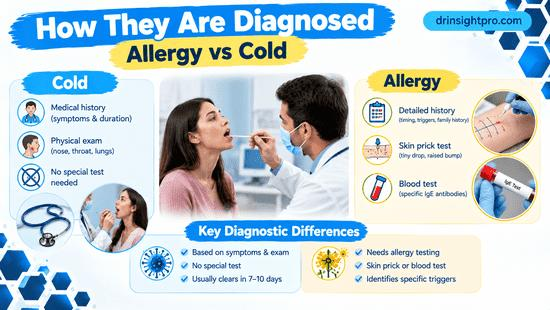
- Doctors diagnose a cold from your history and a physical exam. No special test is needed. They look at your throat and nose. They listen to your lungs.
- Allergies need more detail. Your doctor asks about timing, triggers and family history. Two common tests can help identify sensitization to specific allergens;
- Skin prick test: A tiny drop of allergen goes on your skin. A small raised and itchy bump shows sensitivity.
- Blood test: This measures specific IgE antibodies to common allergens.
How to Get Rid of an Allergy vs cold symptoms
Overall, managing allergy vs cold symptoms effectively depends on choosing the correct treatment targeted at the underlying cause.
Treating a Cold
There is no cure for a cold. In fact, antibiotics do not work because a virus causes it. Care focuses on comfort:
- Rest and drink plenty of fluids
- Use a saline nasal rinse or spray
- Run a humidifier
- Sip warm tea or soup for a sore throat
- For example, take a pain reliever such as acetaminophen or ibuprofen as directed
- Never give aspirin to children. However, ask a doctor before giving any cold medicine to young children.
Treating Allergies
Allergies cannot be cured but you can control them well. Avoiding triggers comes first. Consequently, medicines then reduce symptoms:
- Antihistamines: These block histamine and ease sneezing and itching.
- Nasal steroid sprays: These reduce inflammation inside the nose.
- Saline rinses: These wash out pollen and mucus.
- Immunotherapy: Allergy shots or under-the-tongue tablets slowly train your immune system to tolerate the trigger. Immunotherapy can give long-term relief. An allergist decides whether it suits you.
How to Prevent Allergy vs cold symptoms
- Reduce Allergy Triggers
- Small habits add up. Try these steps:
- Check daily pollen counts
- Keep windows closed on high-pollen days
- Shower and change clothes after time outdoors
- Wash bedding weekly in hot water
- Use dust mite covers on pillows and mattresses
- Keep pets out of the bedroom
- Reduce Cold Risk
- Wash your hands often with soap for 20 seconds
- Avoid touching your face
- Stay away from people who are sick
- Sleep well and stay active
Recent Research and Advances
- Pollen seasons are changing. A 2021 study in PNAS examined pollen records from 60 North American stations between 1990 and 2018. It found longer pollen seasons and a 21 percent rise in pollen levels. Furthermore, climate change explained about half of the seasonal shift. As a result, allergy seasons may keep growing longer.
- On the other hand, cold research faces a different challenge. Cold viruses come in more than 200 types. This variety is one reason no cold vaccine exists.
- Allergy treatment options are also expanding. Under-the-tongue immunotherapy tablets are now available for some pollen and dust mite allergies. Doctors can also prescribe biologic medicines for severe allergic asthma. Consequently, these advances help patients whose symptoms resist standard treatment.
FAQs
Can you have allergies and a cold at the same time?
Yes, Many people with hay fever also catch colds. As a result, the symptoms overlap and this makes it hard to tell what is happening. Fever and body aches suggest a cold has joined the picture.
A cold comes from a virus and an allergy comes from an immune reaction. Colds bring body aches and sometimes a mild fever. In contrast, allergies bring itching in the eyes and nose and never cause fever. This is the quickest way to separate them.
Yes, Postnasal drip is the usual reason. Mucus drips down the back of the throat and irritates it. The soreness is mild and scratchy. However, a severe sore throat with fever suggests infection instead.
No, Allergies do not cause fever. In fact, a fever means your body is fighting an infection. Cold, flu and COVID-19 are the usual causes. Therefore, if you have a fever with nasal symptoms, think infection first.
See a doctor if symptoms disrupt your sleep or daily life despite treatment. In addition, get help for wheezing or chest tightness. Seek emergency care right away for swelling of the face or throat or trouble breathing. Consequently, these can be signs of a severe allergic reaction.
References
Mayo Clinic — Common Cold: Symptoms and Causes: https://www.mayoclinic.org/diseases-conditions/common-cold/symptoms-causes/syc-20351605
Mayo Clinic — Hay Fever: Symptoms and Causes: https://www.mayoclinic.org/diseases-conditions/hay-fever/symptoms-causes/syc-20373039
Mayo Clinic Health System — Is It an Allergy or the Common Cold?: https://www.mayoclinichealthsystem.org/hometown-health/speaking-of-health/is-it-an-allergy-or-the-common-cold
Cleveland Clinic — Allergic Rhinitis (Hay Fever): Symptoms and Treatment: https://my.clevelandclinic.org/health/diseases/8622-allergic-rhinitis-hay-fever
Medical Disclaimer
This article is for educational and informational purposes only and does not replace professional medical advice, diagnosis or treatment. Therefore, if symptoms are severe, persistent, or worsening, consult a qualified healthcare professional for proper evaluation.
About the Author
Sufiyan Awan is a medical health writer who has completed his House Job from Nishtar and has completed several short medical courses from the World Health Organization (WHO). In addition, he focuses on presenting medical information in clear, simple and easy-to-understand language.