


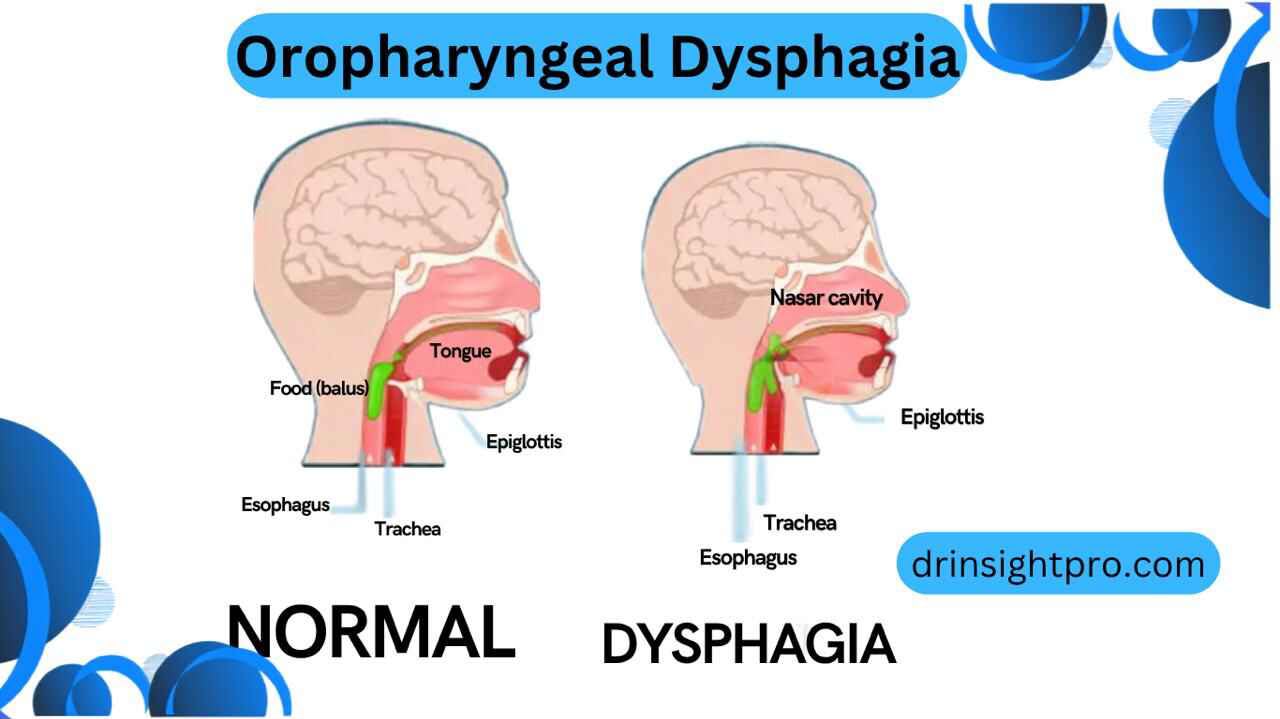
Oropharyngeal dysphagia is a swallowing problem that affects the mouth and throat. People with this condition may have difficulty starting a swallow or moving food safely from the mouth into the throat. Common symptoms include coughing, choking and a wet or gurgly voice while eating or drinking. Early evaluation can help identify the cause and reduce the risk of complications such as aspiration pneumonia
What is Oropharyngeal Dysphagia?
The mouth prepares food the throat moves it forward and the airway closes to prevent it from entering the lungs in a precisely timed sequence that is necessary for swallowing. Instead of feeling food stuck lower in the chest, patients with oropharyngeal dysphagia typically struggle to initiate a swallow.
In contrast, this condition differs from esophageal dysphagia because it is a condition in which food passes through the esophagus and into the stomach but swallowing starts normally. Since the causes, tests, and treatments vary greatly, identifying the type is the first step in the diagnosis process.
: Home → Gastroenterology → Swallowing Disorders → Oropharyngeal Dysphagia
Unlike oropharyngeal dysphagia, esophageal disorders such as achalasia cardia usually cause food to stick after swallowing begins. Learn more in our detailed guide on Achalasia Cardia.
Normal Swallowing Process
First, understanding how normal swallowing works makes it easier to recognize where oropharyngeal dysphagia interferes. The first three phases of a typical swallow take place in less than two seconds:
Oral preparatory phase:
Food is chewed and combined with saliva to create a cohesive bolus The lips, teeth, tongue, and jaw must all cooperate during this stage.
Oral phase:
The tongue pushes the food bolus backward to the throat. However, this is optional and can be stopped or slowed down at any time.
Pharyngeal phase:
The swallow reflex triggers automatically. The soft palate closes off the nasal passage, the vocal cords close, the larynx lifts and the epiglottis tips over the airway all within about one second while the pharyngeal muscles push the bolus down toward the esophagus.
Esophageal phase:
Coordinated muscle contractions (peristalsis) carry the bolus through the esophagus into the stomach; the lower esophageal sphincter relaxes to let it pass then closes again.
Causes of Oropharyngeal Dysphagia
Meanwhile, causes fall into two broad groups:
- Problems with nerve/muscle control (neuromuscular)
- Physical obstructions or local tissue problems (structural).
Neurological and Muscular Causes difficulty Dysphagia
Furthermore, these interfere with the coordination or strength needed to swallow safely:
- Stroke (cerebrovascular accident)
- Parkinson’s disease
- Multiple sclerosis
- Amyotrophic lateral sclerosis (ALS)
- Myasthenia gravis
- Muscular dystrophy and other myopathies
- Cranial nerve dysfunction
- Traumatic brain or spinal cord injury
Structural and Local Causes of transfer Dysphagia
Not every swallowing problem originates from nerves or muscles; however, physical changes in the mouth or throat can interfere just as much:
Cricopharyngeal dysfunction:
The cricopharyngeus muscle, part of the upper esophageal sphincter (UES), must relax at the right moment to let food pass. When it doesn’t, patients may notice food sticking in the neck, trouble starting a swallow or residue left in the throat. A prominent muscle seen on imaging is often called a cricopharyngeal bar.
Zenker diverticulum:
Additionally, an outpouching that develops close to the upper esophagus as a result of swallowingrelated pressure changes. It can result in coughing at night, difficulty swallowing, bad breath and regurgitation of undigested food. For diagnosis doctors use a contrast swallow study.
Head and neck tumors:
Masses in the mouth, pharynx, or larynx can cause mechanical obstruction of swallowing. Evaluation is necessary if there is progressive difficulty, unexplained weight loss, ongoing throat pain or voice changes.
Oral and mucosal problems:
Moreover, severe mouth ulcers, oral infections, mucositis brought on by chemotherapy, poor dental health, or ill-fitting dentures can interfere with swallowing
Saliva and moisture problems:
For a food bolus to form and move there must be enough saliva. Therefore, chewing and swallowing can be more difficult when there is less saliva (xerostomia) due to certain medications, radiation therapy or Sjögren syndrome.
Risk Factors of Oropharyngeal Dysphagia
Risk factors raise the likelihood of dysphagia but don’t cause it directly:
- Older age
- Previous stroke
- Neurodegenerative disease
- Head and neck cancer treatment
- Prolonged hospitalization
- Frailty and reduced muscle strength
- Multiple coexisting chronic illnesses
Furthermore, older adults are especially vulnerable since swallowing muscles and protective reflexes naturally weaken with age.
Symptoms of Oropharyngeal dysphagia
Furthermore, symptoms depend on which phase of swallowing is affected.
Oral phase symptoms (food preparation):
- Difficulty chewing
- Food falling from the mouth
- Weak tongue movement
- Food remaining inside the cheeks
- Specifically, difficulty forming a food bolus
Pharyngeal phase symptoms (throat protection):
- Frequent, coughing during swallowing as a result
- Moreover, choking episodes
- Throat clearing after eating
- Wet or gurgling voice
- Nasal regurgitation
- Sensation of food remaining in the throat
A useful clinical clue: liquids vs. solids:
- Neuromuscular dysphagia: thin liquids are often harder, since they move quickly and demand precise timing of airway closure.
- Mechanical obstruction: solid foods are usually affected first, since they need a wider passage.
Differential Diagnosis of Difficulty Dysphagia
Doctors should distinguish oropharyngeal dysphagia from other conditions that can cause similar symptoms, including:
- Esophageal dysphagia – Oropharyngeal dysphagia occurs after swallowing begins with food feeling stuck in the chest. Common causes include strictures, tumors, and Achalasia cardia.
- Globus sensation – A persistent sensation of a lump in the throat without true difficulty swallowing.
- Odynophagia – Pain during swallowing, often caused by infections, ulcers, or inflammation.
- Gastroesophageal reflux disease – May cause heartburn and occasional swallowing discomfort but does not usually impair the initiation of swallowing.
- Dyspepsia – Causes upper abdominal discomfort, early fullness, bloating, or nausea rather than true swallowing difficulty.
- Functional dysphagia – Patients experience swallowing symptoms despite normal structural and motility evaluations.
🚨 Red Flag Symptoms:
Seek immediate medical attention if swallowing difficulty occurs with the following:
Sudden onset: especially alongside facial weakness, arm weakness, speech difficulty or confusion . These may signal an acute stroke.
Signs of aspiration: such as frequent coughing during meals, dyspnea, fever following episodes of choking, discomfort in the chest, or recurrent infections. Aspiration can result in aspiration pneumonia when food or liquid gets into the airway rather than the esophagus.
Severe impairment: likewise, inability to swallow saliva, frequent choking episodes or inability to maintain hydration or nutrition.
These symptoms should never be managed by waiting them out; prompt evaluation is important.
A Special Concern: Silent Aspiration
Not every aspiration results in choking or coughing. However, silent aspiration occurs when food, liquid, or saliva gets into the airway without causing the typical cough reflex, so there isn’t a clear warning sign at the moment. This occurs because, as is frequently the case following a stroke, Parkinson’s disease, and other neurological disorders, the sensory nerves that typically detect material entering the airway are themselves impaired.
Even if a person is not coughing or choking while eating, silent aspiration is a significant reason why recurrent chest infections or unexplained pneumonia in someone with a swallowing risk factor should prompt a swallowing evaluation. Instrumental tests (VFSS or FEES) usually detect silent aspiration not by observing someone eat, since there is no obvious warning sign.
How to Diagnose Oropharyneal Dysphagia
Diagnosis works out three things: where the problem occurs, whether the cause is neurological, muscular, or structural, and whether aspiration risk is present.
Diagnostic Tests
Videofluoroscopic Swallow Study (VFSS)
It is also called a Modified Barium Swallow Study (MBS). However, it is one of the primary instrumental assessments for evaluating swallowing physiology and aspiration risk. The patient swallows liquids and foods mixed with contrast material while X-ray video records movement through the mouth and throat. It can identify delayed swallowing reflex, poor airway closure, food remaining in the valleculae or piriform sinuses, and aspiration below the vocal cords.
Flexible Endoscopic Evaluation of Swallowing (FEES)
It uses a small flexible camera passed through the nose to directly visualize throat structures, assess saliva management and detect residue and can be done at the bedside. Many swallowing specialists also use FEES as a first-line instrumental evaluation. in many settings, alongside VFSS.
High-resolution pharyngeal manometry
Measures pressure changes during swallowing and helps evaluate throat muscle strength, UES relaxation, and swallowing coordination. It’s mainly available at specialized centers.
Additional evaluation
In addition, further evaluation may include neurological assessment, ENT examination, upper GI endoscopy or nutritional assessment depending on the patient’s symptoms.
| VFSS | FEES |
| X-ray based | Endoscopic camera |
| Shows complete swallowing sequence | Direct throat visualization |
| Involves radiation exposure | No radiation |
Treatment and Swallowing Rehabilitation
Treatment depends on the underlying cause and severity and typically involves a multidisciplinary team:
- Speech-language pathologist
- Gastroenterologist
- Neurologist
- ENT specialist
- Radiologist
- Dietitian.
Swallowing rehabilitation therapy aims to improve muscle strength, coordination, and airway protection:
- Tongue-strengthening exercises: Additionally, it improves bolus control, food movement, and oral preparation
- Pharyngeal exercises: improve throat contraction, laryngeal elevation, and airway protection
- Neuromuscular electrical stimulation (NMES): Sometimes used alongside exercises; effectiveness varies by patient
Postural and compensatory techniques
These can improve safety immediately:
- Chin-tuck maneuver: lowering the chin toward the chest while swallowing may narrow the airway entrance and help control liquid flow.
- Head rotation: turning the head toward the weaker side may direct food through the stronger side of the throat.
Diet modification using the IDDSI framework:
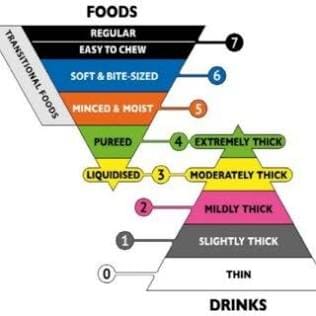
The International Dysphagia Diet Standardisation Initiative (IDDSI) is the internationally recognized system speech-language pathologists and dietitians use to prescribe food and drink textures, replacing older inconsistent labels like “thick” or “soft” with a shared numbered scale:
| IDDSI Level | Drinks | Foods |
| 0 | Thin | — |
| 1 | Slightly thick | — |
| 2 | Mildly thick | — |
| 3 | Moderately thick / liquefied | Liquefied |
| 4 | Extremely thick / pureed | Pureed, no chewing required |
| 5 | — | Minced and moist |
| 6 | — | Soft and bite-sized |
| 7 | Regular | Regular, easy to chew |
A speech-language pathologist assigns the specific level after a swallowing assessment. Patients and caregivers should never self-select a texture level, since choosing incorrectly in either direction can increase aspiration risk or unnecessarily restrict nutrition and quality of life.
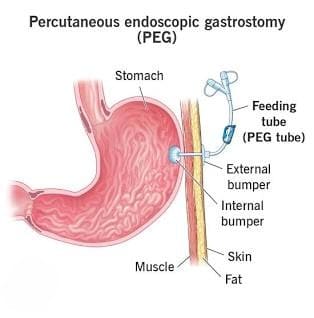
Enteral feeding (PEG tube)
A Percutaneous Endoscopic Gastrostomy (PEG) tube can deliver food, liquids and medications straight into the stomach when swallowing becomes dangerous or nutritional intake is insufficient. When oral intake is unsafe, a PEG tube may help maintain nutrition and hydration, although it does not totally remove the risk of aspiration because saliva aspiration can still happen. Aspiration risk, general health, anticipated disease progression, and patient preferences are all taken into account.
Prognosis and Recovery
Recovery depends mainly on the underlying cause, severity, overall health, and response to rehabilitation.
- Conditions that may improve significantly
These include stroke-related swallowing problems, medication-related difficulty, temporary inflammation, and certain treatable muscle disorders. Early assessment and rehabilitation improve both safety and functional recovery. Timelines vary widely by stroke severity, location, overall health and rehabilitation intensity, so no fixed recovery window applies to everyone.
- Progressive neurological disorders
ALS, advanced Parkinson’s disease, and progressive neuromuscular disease are usually managed with a different goal: not full reversal but maintaining safe swallowing, adequate nutrition, quality of life, and preventing aspiration complications.
Possible Complications of Untreated Dysphagia
Moreover, left unmanaged, oropharyngeal dysphagia can lead to problems well beyond the swallow itself:
- Aspiration pneumonia: the most serious complication, caused by food, liquid or saliva repeatedly entering the lungs.
- Malnutrition: from reduced intake avoidance of difficult foods or fear of eating
- Dehydration: Thin liquids are often the hardest texture to manage safely, so fluid intake frequently drops first.
- Choking episodes: which can become a medical emergency
- Social and psychological impact: anxiety around eating in public, avoidance of shared meals, and reduced quality of life are common and often underrecognized.
- Reduced medication effectiveness: If pills or oral medications become difficult to swallow safely
These risks are the reason persistent or worsening swallowing difficulty warrants a formal evaluation rather than long-term self-management.
Prevention of Complications
Not all causes are prevented, but complications often can be reduced:
- Maintain good oral hygiene: reduces bacteria that could enter the lungs during aspiration
- Eat in a safe position: sit upright during meals, remain upright afterthat, avoid rushed eating
- Follow swallowing recommendations: food texture, liquid thickness, and technique as advised by a swallowing specialist
- Manage chronic diseases: diabetes, neurological disorders, reflux disease, and muscle disorders, since better control reduces swallowing-related complications.
Motor vs. Structural
| Feature | Neuromuscular (Motor) Dysphagia | Structural (Mechanical) Dysphagia |
| Primary trigger | Weak nerves or muscles; altered reflex timing | Structural narrowing or outward tissue compression |
| Problematic foods | Liquids often harder than solids | Solids harder first, progressing to liquids |
| Neurological signs | Frequently present (speech changes, dysarthria, dysphonia) | Usually absent, unless a tumor invades nerves |
| Common findings | Retention in valleculae and piriform sinuses; weak airway closure | Zenker diverticulum, cricopharyngeal bar, strictures, head/neck mass |
| Main causes | Stroke, Parkinson’s disease, ALS, myasthenia gravis | Tumor, Zenker diverticulum, cricopharyngeal bar |
| Main tests | VFSS, FEES | Imaging, ENT assessment, endoscopy |
Medical Disclaimer:
This article is intended for educational purposes only; therefore, it is not a replacement for professional medical advice, diagnosis, or treatment. Anyone experiencing persistent swallowing difficulty, choking episodes, unexplained weight loss, or recurrent chest infections should seek evaluation from a qualified healthcare professional.
Medical References:
This article aligns with patient education resources from:
- National Institute on Deafness and Other Communication Disorders (NIDCD), National Institutes of Health (NIH)
- MedlinePlus (U.S. National Library of Medicine)
- Mayo Clinic
- Cleveland Clinic
- National Health Service (NHS), United Kingdom
Note: Specific guideline citations, publication years, and document titles should be manually verified and linked before publishing, because they are not confirmed via live web lookup during drafting.
Author Information
Written by: DrInsightPro Medical Content Team
Author bio: DrInsightPro provides evidence-based medical education written with clinical accuracy and patient understanding in mind. Our content focuses on gastroenterology, digestive health, and modern diagnostic approaches. Articles are developed using established medical references and reviewed for accuracy, clarity, and relevance for patients and healthcare learners.
Medically reviewed by: [Dr. Sufiyan Awan]
Thin liquids move quickly through the mouth and throat. Safe swallowing requires precise timing between liquid movement and airway closure. When nerve signals or muscle coordination is impaired, then the airway should close quickly enough, thus increasing aspiration risk.
Doctors may recommend a PEG tube when swallowing is unsafe, aspiration risk is high, or a patient can’t maintain adequate nutrition and hydration through oral feeding. However, the decision depends on the underlying disease, expected recovery, and individual patient goals
However, recovery depends on the cause. Some patients improve significantly after treatment of stroke, inflammation, or reversible conditions. In progressive neurological diseases, treatment focuses on maintaining safe swallowing, preventing complications, and supporting nutrition
Yes. When swallowing becomes unsafe, food, liquids, or saliva may enter the airway instead of the esophagus, a process called aspiration. Repeated aspiration can introduce bacteria into the lungs and may lead to aspiration pneumonia, especially in elderly or medically fragile patients.