


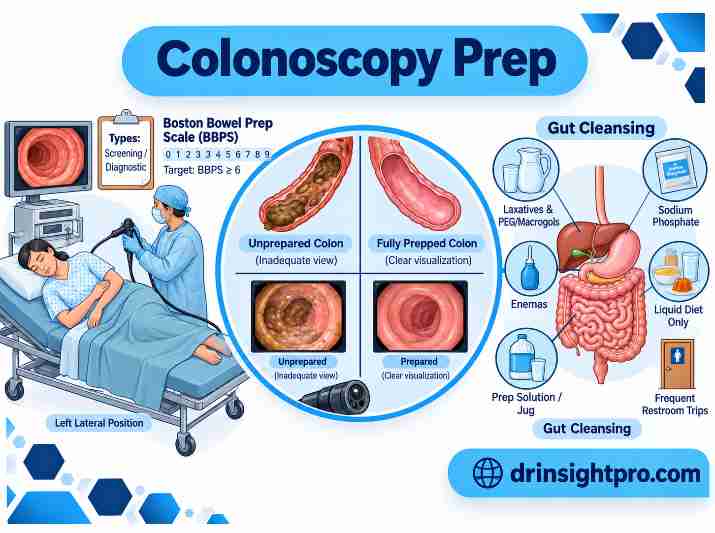
Preparing for a colonoscopy requires proper bowel cleansing. Stool remaining in the colon can hide polyps, inflammation, bleeding and other abnormalities. Following the correct colonoscopy prep instructions helps the doctor examine the colon more accurately.
Why Is Colonoscopy Prep Important?
A colonoscopy uses a thin, flexible camera to examine the inside of the large intestine. Poor bowel preparation can hide lesions, make the examination more difficult and increase the chance of needing another colonoscopy.
Moreover, proper bowel cleansing improves visibility and helps the endoscopist examine the colon effectively.
Who Needs a Colonoscopy?
Doctors may recommend colonoscopy for:
- Colorectal cancer screening
- Blood in the stool or rectal bleeding
- Persistent diarrhea or changes in bowel habits
- Unexplained iron deficiency anemia
- Unexplained weight loss
- Persistent abdominal symptoms
- Follow-up after polyp removal
- Monitoring inflammatory bowel disease
- Selected cases of suspected colorectal disease or a family history of colorectal cancer
The indication depends on the patient’s symptoms, risk factors and medical history.
What Is Bowel Preparation?
Bowel preparation is the process of emptying the colon before colonoscopy. It usually involves dietary changes and laxative medicines. Common types include PEG-based preparations, stimulant laxatives, other oral bowel-cleansing products and enemas in selected situations.
Types of Colonoscopy Prep
1. PEG or Macrogol Sachets
Polyethylene glycol (PEG), also called macrogol, is an osmotic laxative that retains water in the bowel and helps remove stool.
Some macrogol products are designed for routine constipation, while others are formulated for bowel cleansing before colonoscopy.
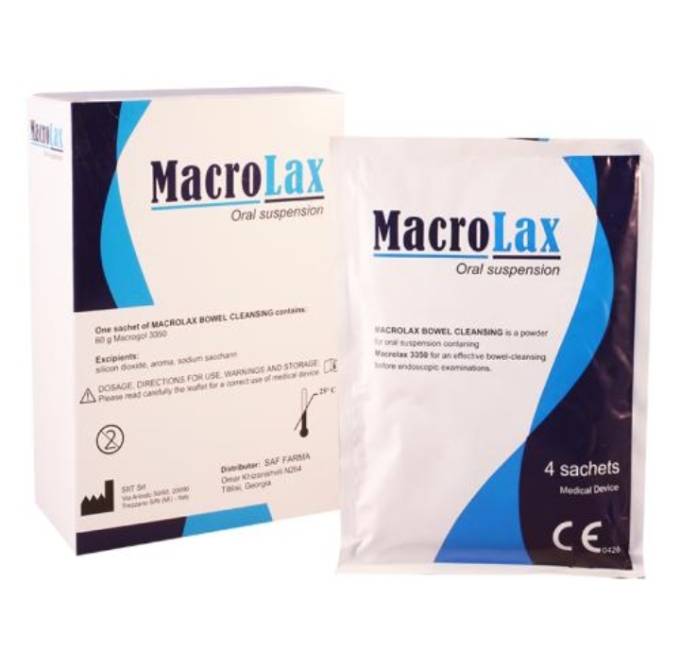
How PEG/Macrogol works:
PEG increases the water content of intestinal contents, producing softer stool or frequent watery bowel movements, depending on the formulation and dose.
How to take PEG/Macrogol
The powder is dissolved in the specified amount of water according to the product instructions. The number of sachets and the amount of water depend on the particular product.
In addition, not every macrogol sachet is suitable for complete colonoscopy preparation. Do not assume that a constipation sachet can replace a prescribed bowel-cleansing regimen.
Possible side effects include bloating, nausea, abdominal discomfort and diarrhea.
2. Bisacodyl Tablets
Bisacodyl is a stimulant laxative that increases intestinal contractions and helps the bowel empty.
Doctors may prescribe bisacodyl as an additional medicine with certain PEG-based colonoscopy preparation regimens. However, it is not required for every preparation.
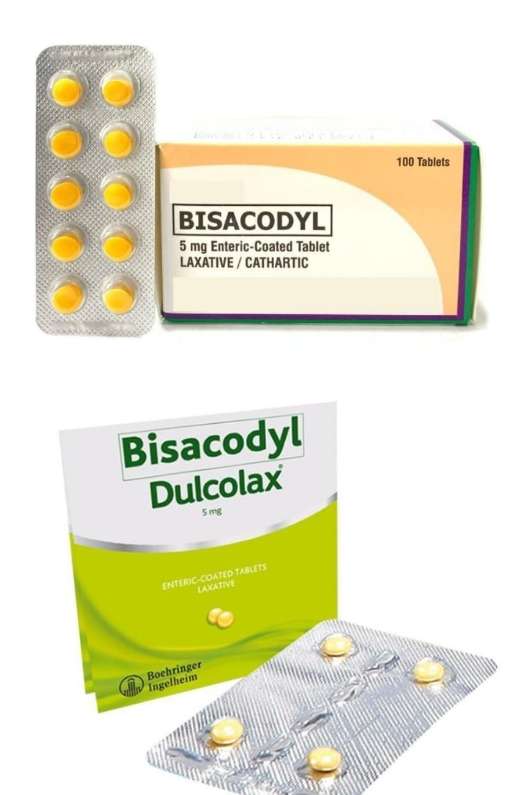
How Bisacodyl Tablets Work:
Bisacodyl stimulates bowel movement activity, helping stool pass through the intestine.
Possible side effects include abdominal cramps, nausea and diarrhea. In addition, excessive laxative use can contribute to dehydration and electrolyte disturbances.
Take bisacodyl only according to the prescribed regimen. Do not automatically combine it with macrogol or another bowel preparation.
3. PEG and Bisacodyl Combination Regimens
Some bowel preparation protocols combine PEG-based preparations with bisacodyl.
The medicines work differently: PEG retains water in the bowel, while bisacodyl stimulates intestinal contractions. The doctors prescribe combination in selected patients or under specific local protocols.
The dose, timing and fluid requirements depend on the regimen. Follow the instructions provided by your endoscopy center rather than creating your own combination.
4. PEG-Electrolyte Solutions
Some bowel-cleansing products contain PEG together with electrolytes. These solutions clean the colon while helping manage electrolyte balance during preparation.
The patient mixes the product according to the instructions and drinks the prescribed volume over the recommended period.
Possible side effects include bloating, nausea, abdominal discomfort and frequent watery stools. The volume and timing vary by product.
5. Sodium Picosulfate-Based Preparations
Some colonoscopy preparations contain sodium picosulfate, often combined with magnesium citrate or another osmotic component, depending on the product.
Sodium picosulfate stimulates bowel movements, while the additional ingredient helps promote bowel evacuation.
Patients must follow the prescribed fluid instructions. These products may not be suitable for everyone, particularly people with certain kidney conditions or an increased risk of fluid and electrolyte disturbances.
6. Oral Sodium Sulfate Preparations
Oral sodium sulfate is used in certain approved bowel-cleansing products. Depending on the formulation, these preparations may be available as solutions or tablets.
Therefore, they help draw water into the intestine and produce bowel evacuation. Patients must take the product with the specified amount of water and additional permitted fluids. It may be unsuitable for people with kidney disease, heart failure, dehydration or other conditions that increase these risks.
Do not use sodium phosphate preparations for colonoscopy without specific medical guidance.
8. Enema Before Colonoscopy
An enema introduces liquid through the anus into the rectum to help remove stool from the lower bowel.
Depending on the product and clinical situation, an enema may be administered using a prefilled bottle or another appropriate device.
The patient is commonly positioned on the left side. The tip must be inserted gently according to the product instructions. Stop if there is severe pain, resistance or bleeding.
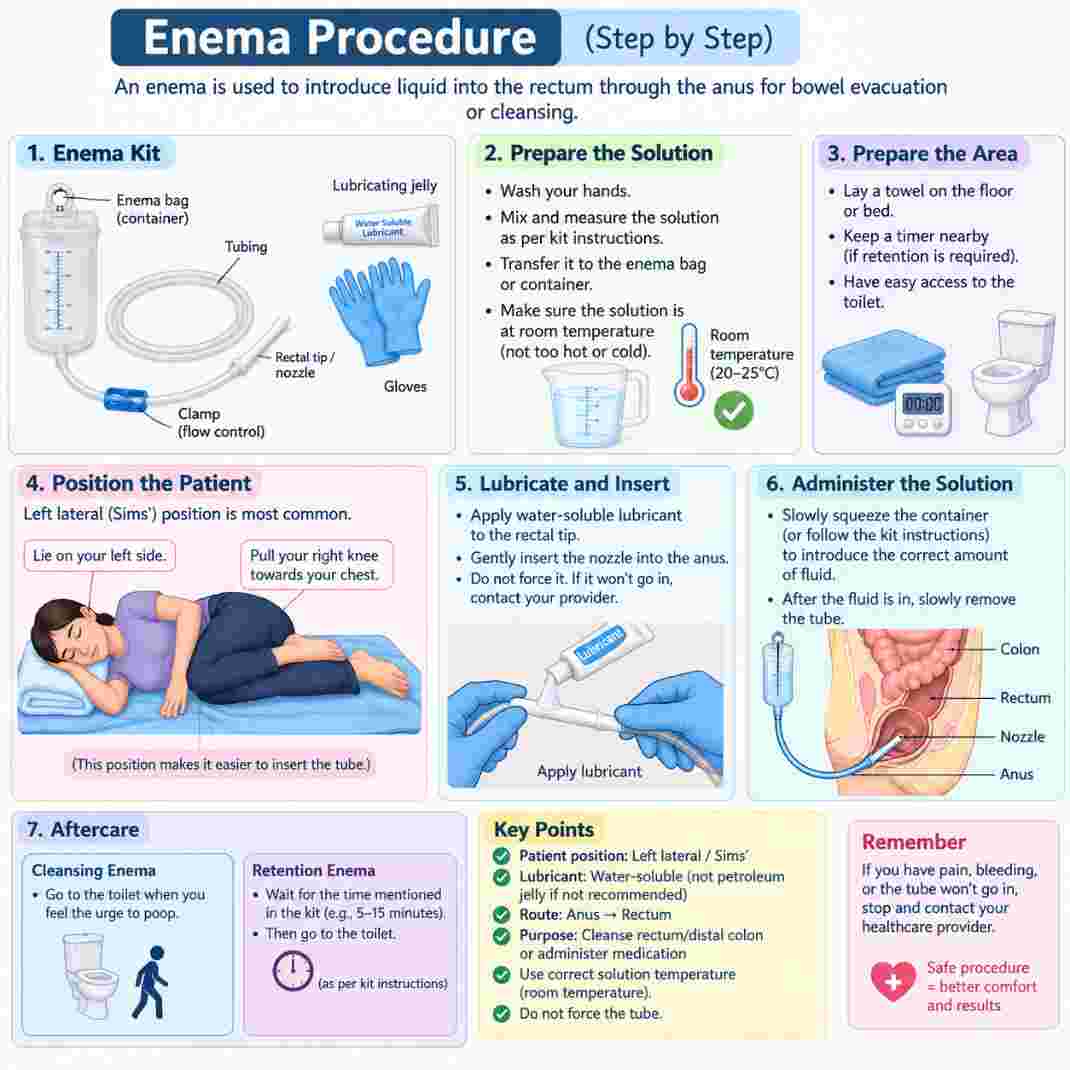
An enema may be useful in selected situations, but an enema alone usually does not adequately clean the entire colon for a standard colonoscopy. Oral bowel preparation is generally needed.
Which Colonoscopy Prep Is Best?
There is no single preparation that is best for every patient. PEG-based preparations are commonly used, while other approved regimens may be appropriate depending on the patient’s medical history and the product available.
Your doctor should consider kidney function, heart disease, current medications, chronic constipation and previous preparation quality before selecting a regimen.
How to take Colonoscopy Prep ?
Many oral preparations use a split-dose regimen, in which the prescribed preparation is divided into two portions.
A typical schedule involves:
- First portion: the evening before the colonoscopy or at the time specified by the endoscopy center.
- Second portion: on the day of the procedure, closer to the examination.
- Completion: the preparation must be completed according to the center’s fasting and procedural instructions.
Split-dose preparation generally improves bowel cleanliness. The exact timing depends on the preparation, procedure time and clinical instructions.
Colonoscopy Prep Diet
Your endoscopy center may recommend a low-fiber diet before colonoscopy. Follow its instructions regarding when to change your diet and begin the preparation.
Foods Commonly Allowed on a Low-Fiber Diet
| Foods commonly allowed | Foods commonly restricted |
|---|---|
| White bread | Whole-grain bread |
| White rice | Brown rice |
| Plain pasta | Popcorn |
| Eggs | Nuts and seeds |
| Chicken without skin | Raw vegetables |
| Fish | Salad |
| Peeled, cooked potatoes | Beans and lentils |
| Plain yogurt, if permitted | Foods with seeds or skins |
Clear Liquid Diet
When instructed to consume clear liquids, suitable options may include:
- Water
- Clear broth
- Apple juice without pulp
- White grape juice without pulp
- Tea without milk
- Black coffee without milk or cream
- Clear electrolyte drinks
- Clear gelatin or popsicles, if permitted
Avoid milk, cream, juices with pulp and alcohol. Some centers also restrict red or purple drinks.
Drink the permitted fluids recommended by your healthcare team to help maintain hydration.
Colonoscopy Prep Timeline
| Time | What to do |
|---|---|
| Several days before | Review medications and medical conditions with your doctor. |
| Before the procedure | Follow the recommended low-fiber diet. |
| Day before | Follow the prescribed diet and begin bowel preparation at the instructed time. |
| Evening before | Take the first portion if your regimen uses split dosing. |
| Morning of colonoscopy | Take the remaining portion at the prescribed time, if applicable. |
| Before the procedure | Stop drinking according to the endoscopy center’s fasting instructions. |
| Procedure day | Arrive on time with the required documents and an escort if sedation is planned. |
The schedule varies according to the prescribed product and the time of colonoscopy.
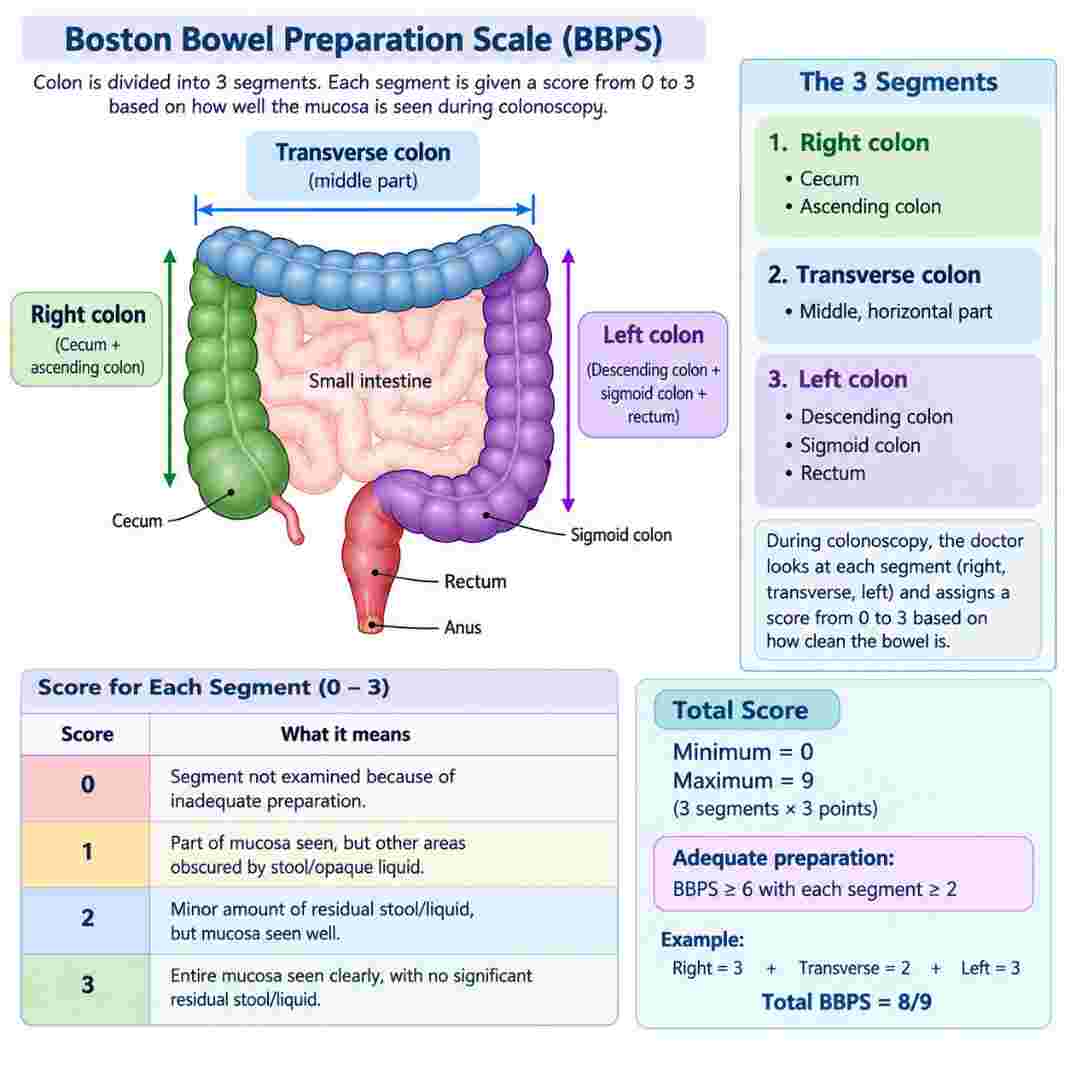
Colonoscopy Prep: Boston Bowel Preparation Scale (BBPS)
The Boston Bowel Preparation Scale (BBPS) measures bowel cleanliness during colonoscopy after washing and suctioning.
The colon has three segments:
- Right colon
- Transverse colon
- Left colon
Each segment receives a score from 0 to 3.
| Score | Meaning |
|---|---|
| 0 | Unprepared segment; mucosa cannot be seen because of solid stool. |
| 1 | Some mucosa is visible, but other areas remain obscured by stool or liquid. |
| 2 | Minor residual stool or liquid remains, but most mucosa is clearly visible. |
| 3 | The entire segment is well visualized with no significant residual stool or liquid. |
However, the total score of three segment is from 0 to 9.
Example: Right colon 3 + transverse colon 2 + left colon 3 = BBPS 8/9.
A score of at least 2 in each segment is commonly used to indicate adequate bowel preparation for routine screening and surveillance decisions.
Medicines and Conditions to Discuss With Your Doctor
Tell your doctor about all medicines and supplements you take, particularly:
- Blood thinners and antiplatelet medicines
- Diabetes medicines and insulin
- Iron supplements
- Medicines that affect kidney function
- Opioids or other medicines that cause constipation
- GLP-1 medicines or other medicines that may slow gastric emptying
Also mention kidney disease, heart failure, liver disease, diabetes, chronic constipation, pregnancy or a previous inadequate bowel preparation.
Do not stop prescribed medicines or add extra laxatives without medical advice.
What If You Have Chronic Constipation?
People with chronic constipation may have a higher risk of inadequate bowel preparation. Your doctor may recommend a modified regimen, dietary changes or treatment for constipation before colonoscopy.
Do not increase the dose of macrogol, add bisacodyl or combine laxatives independently.
What Happens on the Day of Colonoscopy?
On the day of the procedure, you will usually:
- Check in at the endoscopy unit.
- Change into a gown.
- Have your vital signs checked.
- Receive an intravenous line if needed.
- Receive sedation according to the procedure plan.
- Undergo colonoscopy.
- Recover in the observation area.
If sedation is used, a responsible adult may be required to take you home.
After Colonoscopy
Mild bloating and gas can occur after the procedure. Follow your doctor’s instructions about eating, drinking and resuming regular medicines.
Seek urgent medical assessment if you develop severe or worsening abdominal pain, fever, heavy rectal bleeding, large blood clots or persistent vomiting.
Frequently Asked Questions
They may be prescribed together in certain colonoscopy preparation regimens. However, the combination and timing depend on the prescribed protocol. Do not combine them independently.
Bisacodyl alone is not the usual preparation for a standard colonoscopy. It may be used as an additional laxative in a prescribed regimen.
Usually not. An enema mainly cleans the rectum and lower bowel. Oral bowel preparation is generally required to cleanse the entire colon.
References
- American Society for Gastrointestinal Endoscopy (ASGE): Bowel preparation guidance
- American Gastroenterological Association: Bowel preparation guidance
- Calderwood AH, Jacobson BC. Validation of the Boston Bowel Preparation Scale
Medical disclaimer
This article is for educational purposes and does not replace individualized medical advice. Always follow the bowel preparation and fasting instructions provided by your doctor or endoscopy center.
About Author
Dr. Hafsa Hadi is a medical writer, clinical content researcher and consultant in gastroenterology. She focuses on translating complex clinical research, diagnostic data and therapeutic guidelines into clear, evidence-based educational resources for both healthcare professionals and the public.