


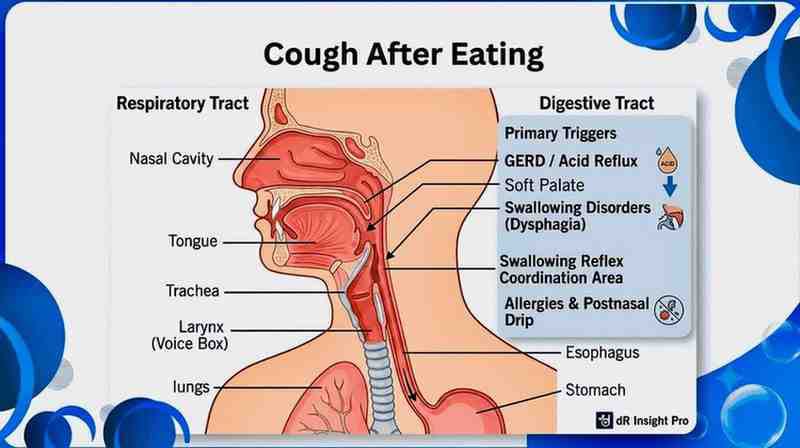
Cough after eating is a common symptom that can have several possible causes. Sometimes it happens because food or liquid briefly irritates the throat. Frequent coughing after meals stems from acid reflux or swallowing issues. Other causes include allergies, asthma or aspiration. There is no single reason for coughing after meals. The cause often depends on when the cough starts and what you eat?
Why do you Cough After Eating?
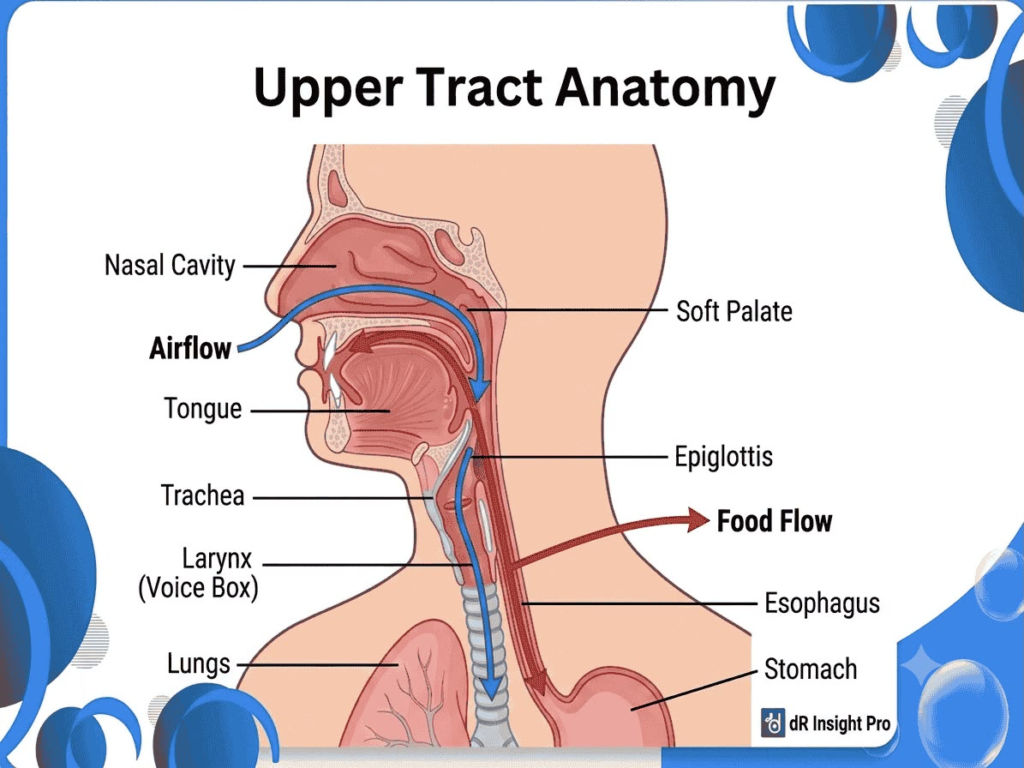
Swallowing is a complex process. The throat and food pipe must coordinate perfectly each time. A small flap called the epiglottis closes over the windpipe so food goes down the right way into the esophagus and stomach instead of into the lungs. Most of the time, this all happens automatically without anyone ever thinking about it. But sometimes the timing is a little off. Stomach acid can creep back up. Throat muscles might not coordinate the swallow perfectly. Swallowing involves precise coordination between the tongue throat muscles, voice box and esophagus.
Common causes of Cough After Eating
The most common causes include;
- Acid reflux or GERD
- Food or liquid entering the airway
- Difficulty swallowing
- Food allergies
- Postnasal drainage
- Asthma
- Certain foods or eating habits
Acid Reflux (GERD)
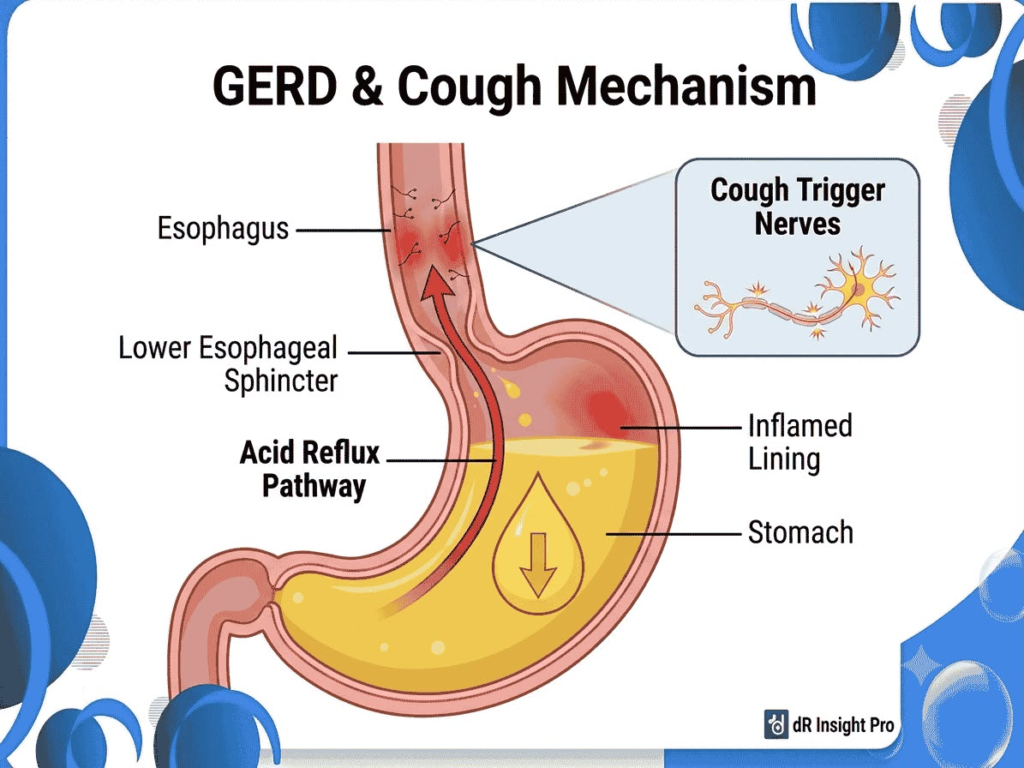
When stomach acid moves backward into the esophagus it irritates the lining and the body responds with a cough often within 30 to 60 minutes of finishing a meal.Reflux is thought to affect roughly one in five adults to some degree which is part of why it’s the first thing most doctors check for. When reflux becomes frequent and starts happening on a regular basis, it’s classified as gastroesophageal reflux disease or GERD. Left unmanaged for a long time chronic reflux can eventually lead to changes in the esophageal lining which is one more reason it’s worth addressing rather than ignoring. Common companions include a burning feeling behind the breastbone, a sour taste in the mouth or a dry, nagging cough with no clear trigger.
Dysphagia (Swallowing Difficulty)
It happens when the coordination between the tongue, throat, and esophagus is disrupted allowing food or liquid to reach the airway instead of moving safely downward. People with dysphagia often notice a wet or gurgly sounding voice right after swallowing along with more frequent coughing during meals. Dysphagia is one of the more important causes to be aware of especially for older adults or anyone recovering from a stroke or neurological illness.
Asthma
People who already live with asthma may notice it flares up specifically around mealtimes. Certain foods can act as asthma triggers and reactions can range from a mild, annoying cough to more noticeable tightness in the chest. If you have asthma and notice a clear pattern with specific foods it’s worth mentioning to a doctor.
Food Allergies
An allergic reaction to certain foods can cause throat swelling, irritation and coughing sometimes appearing within minutes and other times taking up to two hours to show up. Shellfish and tree nuts are among the most frequent triggers in adults.
Post-Nasal Drip and Excess Mucus
For anyone dealing with allergies or recovering from a cold mucus draining down the back of the throat can mix with the sensation of eating and trigger coughing that feels food related but really isn’t. Some foods and drinks can also temporarily thicken mucus .
Spicy, Acidic, Very Cold or Very Hot Food
Certain foods are simply more likely to irritate the throat directly. Spicy foods contain a compound called capsaicin which triggers the same nerve pathways involved in the cough reflex. Highly acidic foods think lemons, vinegar or pickled vegetables can have a similar effect. And a sudden blast of cold like a big bite of ice cream or food that’s too hot can irritate throat nerve endings.
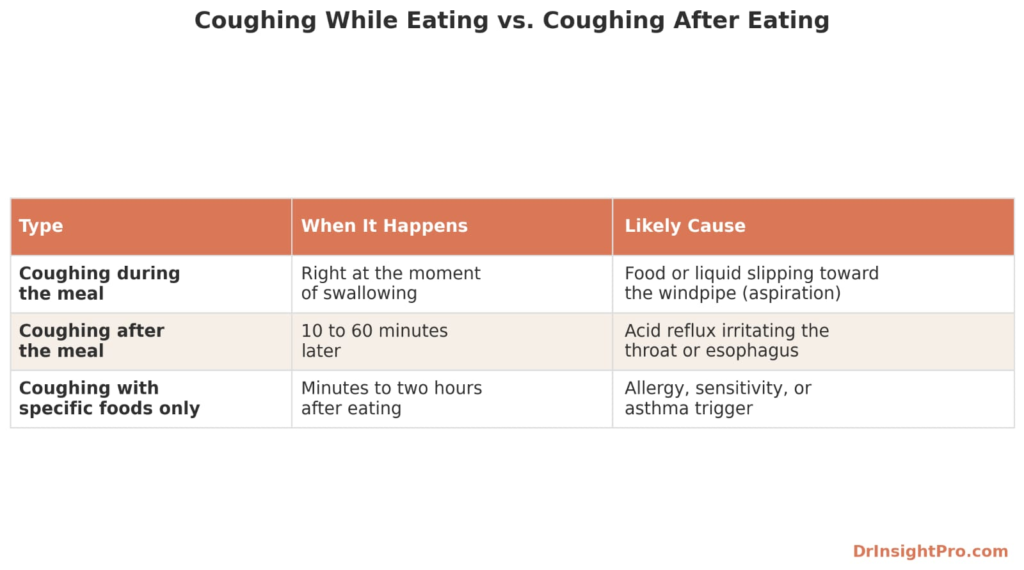
Coughing While Eating vs. Coughing After Eating
Diagnosis of cough after eating:
- From there, an ENT specialist may perform a flexible laryngoscopy a quick exam that allows a direct look at the throat and voice box for signs of irritation or reflux damage.
- For cases where swallowing itself seems to be the problem a test called FEES (Flexible Endoscopic Evaluation of Swallowing) is one of the most useful tools available. It lets a specialist watch in real time, exactly what happens during swallowing whether food or liquid is moving safely into the esophagus or slipping toward the airway. This kind of direct evaluation takes the guesswork out of diagnosis and helps guide the right treatment plan.
Is cough after eating Serious?
For most people, coughing after eating is minor and resolves on its own without any long term issue.
Talk to a doctor if you notice;
- Coughing at almost every meal not just occasionally
- A cough that has lasted for several weeks without improving
- Progressive difficulty swallowing solid foods
- Unintentional weight loss
- A voice that sounds hoarse or different than usual
Emergency care
There’s real difficulty breathing after a coughing episode
Blood shows up when coughing
Chest pain occurs specifically during or right after eating
The lips, tongue or throat start swelling
Someone appears to be choking and can’t speak, cough or breathe properly
How to treat a Cough After Eating
Reducing coughing after meals doesn’t require anything complicated. Small consistent changes make a real difference for most people dealing with this on a regular basis:
- Eat slower, Smaller bites and full chewing before swallowing again go a long way.
- Stay upright after eating. Remaining vertical for two to three hours after a meal
- Eat smaller portions. Cutting a typical meal size down by even a third can reduce pressure on the esophagus and lower the chances of acid escaping upward.
- Watch personal triggers. Spicy food, citrus, vinegar based dishes, caffeine and alcohol are common reflux and irritation triggers worth tracking.
Frequently Asked Questions
Why do I cough every single time I eat, no matter what the food is?
If you cough every time you eat, it may be a sign that something is irritating your throat or affecting the normal swallowing process. Acid reflux is another common possibility especially if you also notice heartburn a sour taste or throat irritation. If it happens with both food and drinks swallowing difficulties should also be considered. Since frequent coughing during meals can have several causes.
Can stress or anxiety make coughing after eating worse?
Stress alone rarely causes this directly but it can heighten awareness of normal throat sensations or worsen an existing mild issue like reflux making the cough feel more frequent or noticeable than it actually is.
Is coughing after eating ice cream normal?
Yes, the sudden cold temperature can briefly irritate nerve endings in the throat. As long as it’s not happening with most cold foods and isn’t paired with other symptoms, it’s typically nothing to worry about.
Can acid reflux cause coughing without any heartburn?
Yes, and this catches a lot of people off guard. With laryngopharyngeal reflux acid reaches high enough to irritate the throat without ever causing the classic burning sensation in the chest, so the cough can end up being the only noticeable symptom.
Medical Disclaimer:
This article is for general informational and educational purposes only and is not a substitute for professional medical advice, diagnosis, or treatment. Always consult a qualified healthcare provider regarding any medical concern.
About us:
Dr. Sufiyan Awan is a medical doctor and former House Officer at Nishtar Hospital, Multan. Having completed professional healthcare certifications from the World Health Organization (WHO), he founded drinsightpro.com to share accurate research-backed medical insights and promote public health awareness.