


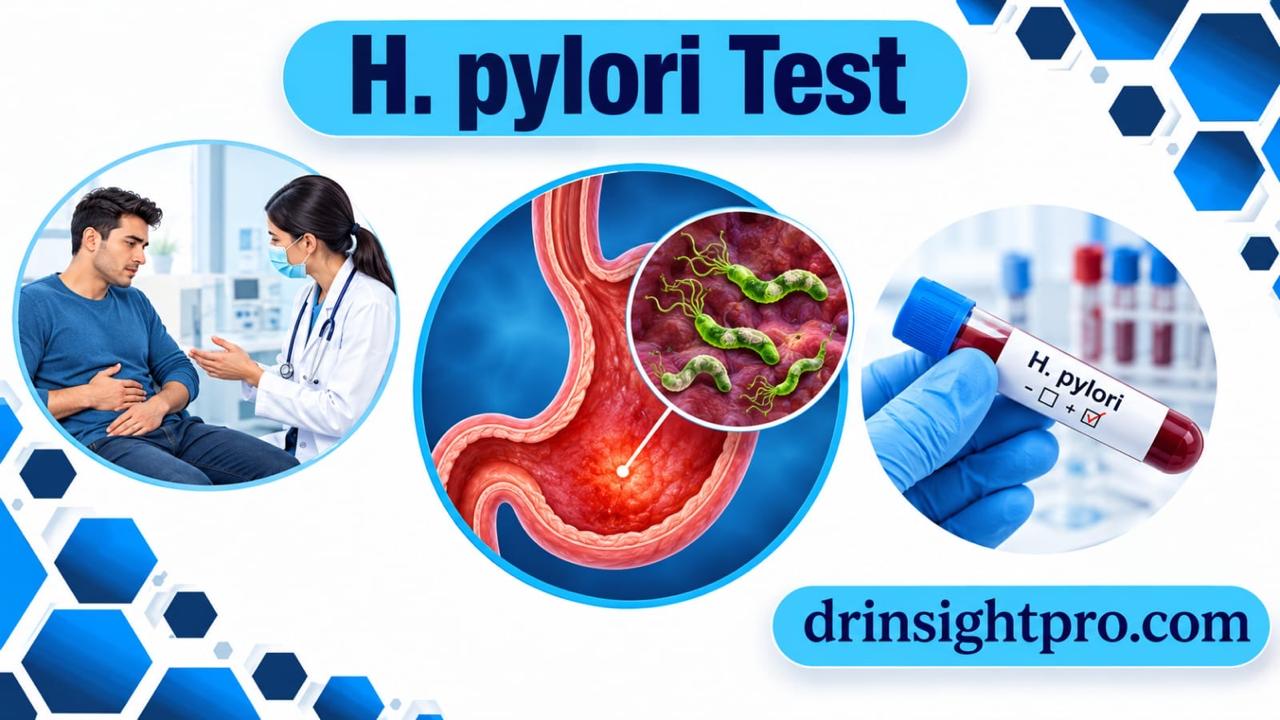
H.pylori test is used to detect an infection caused by Helicobacter pylori, a common bacterium that affects the stomach. The infection can cause gastritis, stomach ulcers, and other digestive problems. Several testing methods are available, including the urea breath test and stool antigen test. Choosing the right test can help ensure accurate diagnosis and appropriate treatment.
What is H.Pylori and Why Does Testing Matter?
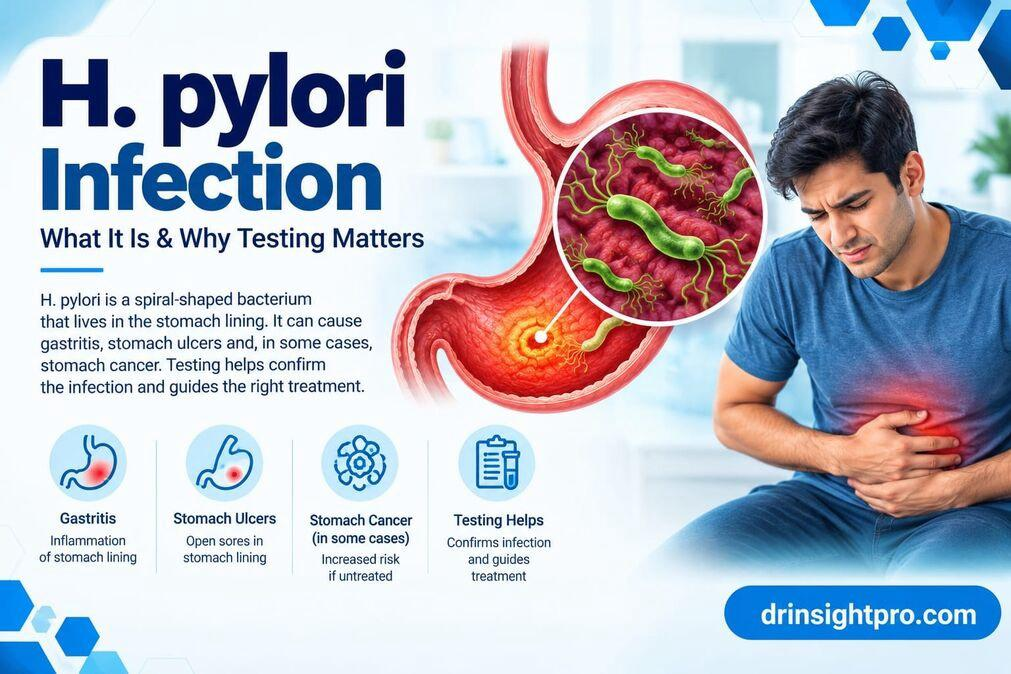
H.pylori is a spiral-shaped bacterium that lives in the stomach lining. It is one of the most common chronic bacterial infections worldwide. Therefore, many people carry it for years without realizing it. Left untreated, H.pylori can cause gastritis, peptic ulcers and, in some cases, stomach cancer. As a result, doctors take a confirmed diagnosis seriously rather than guessing based on symptoms alone. Consequently, testing is the first and most important step before any treatment begins.
What Is the Most Accurate Test for H.Pylori?
Among all available options, the urea breath test is widely considered the most accurate noninvasive test for H.pylori. It consistently outperforms stool antigen testing and blood tests for detecting active infection.
The reason comes down to biology. H pylori produces an enzyme called urease, which breaks down urea into carbon dioxide. This reaction only happens when live bacteria are present. Therefore, the breath test directly detects active infection rather than past exposure. For this reason, it remains the gold standard among noninvasive methods.
H.Pylori Breath Test: How It Works
Doctor most commonly use the H.pylori breath test, also called the urea breath test, in outpatient settings. Because it is fast, noninvasive and highly reliable, most doctors recommend it first.
Here is what happens during the test:
- You breathe into a collection bag to record a baseline reading.
- You then swallow a liquid, pill or pudding containing labeled urea.
- If H pylori bacteria are present, they break down the urea and release carbon dioxide.
- Your body absorbs this carbon dioxide and releases it when you exhale.
- You breathe into a second bag after a short waiting period.
- A device compares both samples to detect elevated carbon dioxide levels.
- The entire process typically takes about an hour from start to finish. Additionally, it works well for both adults and children older than six who can follow the instructions.
Types of H.Pylori Test
Stool Antigen Test for H.Pylori
- Doctor also widely use the stool antigen test is another widely used noninvasive option. Instead of measuring breath, it checks a stool sample for specific H pylori proteins called antigens.
- This test is accurate and relatively inexpensive. As a result, it works as a practical alternative when a breath test is not readily available. However, research comparing both methods shows the breath test tends to outperform stool antigen testing slightly in overall accuracy. Even so, many clinicians still consider stool antigen testing a reliable first-line option, particularly for confirming eradication after treatment.
- A newer variation, the stool PCR test, can also detect specific genetic markers linked to antibiotic resistance.
Blood Test for H.Pylori
A blood test checks for antibodies your immune system produces in response to H.pylori. While this test is simple to perform, it comes with an important limitation. Specifically, antibodies can remain in your blood long after an infection has cleared. Therefore, a positive blood test cannot distinguish between a current infection and a past one you already treated. For this reason, doctors rarely rely on blood tests alone for diagnosis or to confirm successful treatment.
Endoscopy and Biopsy Testing
For patients with alarming symptoms, doctors may recommend an upper endoscopy instead of a noninvasive test. During this procedure, a thin tube with a camera examines the stomach lining directly.
If needed, the doctor can also take a small tissue sample for a rapid urease test or histology. Although this method is more invasive, it allows direct visual examination of ulcers or abnormal tissue at the same time. Consequently, endoscopy is typically reserved for patients with warning signs rather than used as a routine first step.
Signs and Symptoms of H.Pylori Infection
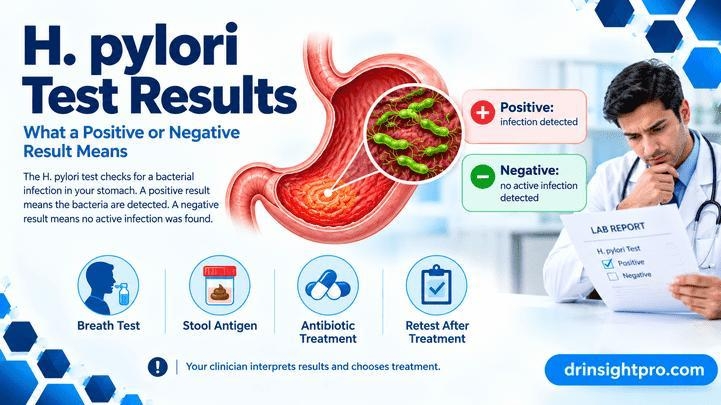
Many people with H.pylori have no symptoms whatsoever. When symptoms do appear, however, they often include;
- Burning or gnawing stomach pain, especially on an empty stomach
- Bloating and excessive burping
- Nausea
- Loss of appetite
- Unintentional weight loss
- Dark or tarry stools, which can indicate bleeding
- Medical experts generally recommend testing if you notice persistent stomach pain lasting more than a week. Moreover, dark stools or unexplained weight loss should prompt urgent medical evaluation rather than a wait-and-see approach.
Risk Factors for H.Pylori Infection
H.pylori spreads primarily through contaminated food, water or close contact with an infected person. As a result, certain factors increase your likelihood of exposure;
- Living in crowded or lower-resource housing conditions
- Lacking access to clean, reliable water sources
- Living with someone who has a confirmed H.pylori infection
- Living in a developing country, where infection rates tend to be higher
- Because transmission often happens during childhood, the bacterium often remains in many adults for decades before testing.
Understanding H.Pylori Test Results
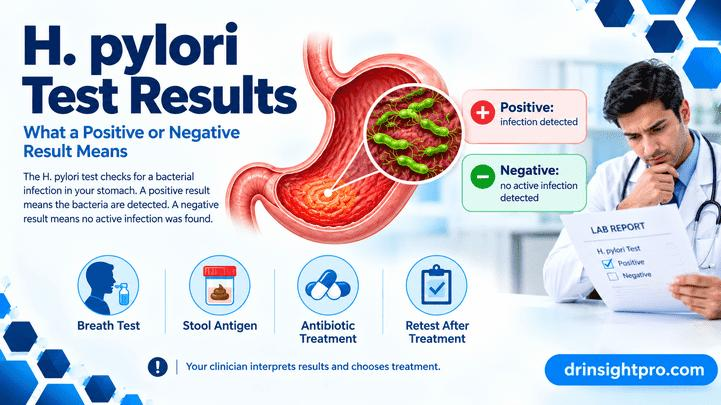
- A positive result means tests de H.pylori bacteria were detected in your body. Consequently, your doctor will likely recommend a treatment plan, usually a combination of antibiotics and acid-reducing medication.
- A negative result generally means no active infection was found. However, if your symptoms persist despite a negative result, your doctor may suggest a different test type or further investigation.
- After completing treatment, doctors typically recommend retesting with a breath test or stool antigen test. This step confirms the infection has fully cleared, since symptoms improving does not always mean the bacteria are gone.
Treatment After a Positive H.Pylori Test
Standard treatment usually combines two antibiotics with a proton pump inhibitor for one to two weeks. This approach, often called triple therapy, clears the infection in most patients when followed correctly.
That said, antibiotic resistance is becoming more common in some regions. Therefore, doctors sometimes adjust the antibiotic combination based on local resistance patterns or previous treatment failures. Completing the full course exactly as prescribed significantly improves your chances of successful eradication. Skipping doses or stopping early, even when symptoms improve, often allows surviving bacteria to develop further resistance.
Recent Research and Advances
- Research into H.pylori testing continues to evolve. Comparative studies consistently show the urea breath test delivers higher sensitivity than stool antigen testing. This reinforces its role as the preferred noninvasive option in most guidelines.
- Meanwhile, researchers are also refining stool-based PCR testing to detect antibiotic resistance genes directly from a single sample. This advancement could eventually allow doctors to select the most effective antibiotic combination before starting treatment. That beats adjusting the plan after a treatment failure.
- In addition, ongoing studies are examining how rising antibiotic resistance affects standard treatment success rates. As a result, treatment guidelines are updated periodically to reflect these shifting resistance patterns across different regions.
Frequently Asked Questions
The urea breath test is generally considered the most accurate noninvasive option. It directly detects active infection by measuring carbon dioxide released when bacteria break down urea. Stool antigen testing is a close second. It remains a reliable alternative in many clinical settings
It is close, though slightly less sensitive in most comparative studies. Nevertheless, the stool antigen test remains a dependable, cost-effective option. This holds true especially where breath testing equipment is unavailable.
The entire test usually takes about one hour. This includes the waiting period between breath samples. However, most of that time simply involves waiting. As a result, the process itself feels quick and straightforward for most patients.
Blood tests do not reliably confirm a current infection because they detect antibodies that can linger long after successful treatment. Therefore, doctors generally prefer breath or stool antigen tests, as both tests accurately confirm whether an infection is currently active
Yes, appropriate antibiotic combinations along with acid-suppressing medication usually eliminate H. pylori infection.
References
- Mayo Clinic — H. pylori Infection: Diagnosis and Treatment: https://www.mayoclinic.org/diseases-conditions/h-pylori/diagnosis-treatment/drc-20356177
- Cleveland Clinic — H. pylori Tests: Types, How It’s Done, Results: https://my.clevelandclinic.org/health/diagnostics/5217-h-pylori-tests
- Mayo Clinic Proceedings — Diagnostic Testing for Helicobacter pylori Infection: https://www.mayoclinicproceedings.org/article/S0025-6196(17)30068-X/fulltext
- PMC — Comparison of Tests for the Diagnosis of Helicobacter pylori Infection: https://www.ncbi.nlm.nih.gov/pmc/articles/PMC11312091/
Medical Disclaimer
The information provided in this article is for educational and informational purposes only and should not be construed as professional medical advice, diagnosis, or treatment. Always seek the advice of your physician or qualified healthcare provider with any questions regarding a medical condition. Never disregard professional medical advice or delay seeking it because of something you have read on this website.
About the Author
Written by a dedicated medical professional who completed their house job at Nishtar Medical University and holds specialized certifications from the World Health Organization (WHO). Committed to providing evidence-based health insights, clinical guidance, and bridging the gap between complex medical science and patient understanding.