


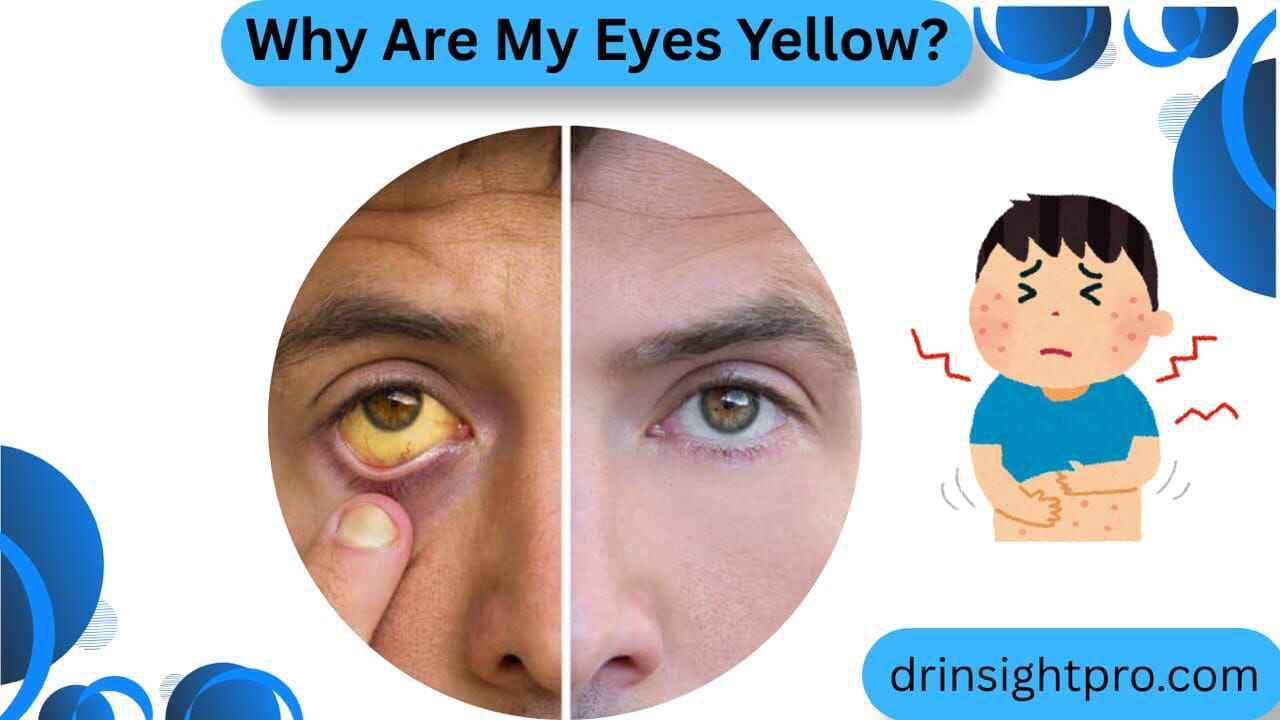
If the whites of your eyes suddenly look yellow, you may wonder Why are my eyes yellow? Yellowing of the whites of the eyes is called scleral icterus and is often caused by a buildup of bilirubin in the blood.
Jaundice can occur because the body is producing too much bilirubin, the liver cannot process it normally, or bile cannot drain properly. Common causes include hepatitis, gallstones, liver disease, certain blood disorders and some medications. New or worsening yellow eyes should be medically evaluated rather than ignored.
What Does It Mean When Your Eyes Turn Yellow?
The white part of the eye is called the sclera. When it becomes yellow this is called scleral icterus.
The yellow color usually results from excess bilirubin, a yellow pigment produced when the body breaks down old red blood cells. The liver normally processes bilirubin and helps eliminate it through bile. If bilirubin production increases liver processing is impaired or bile flow is blocked bilirubin can accumulate in the blood and cause jaundice. Jaundice is a sign rather than a disease itself. It can result from problems involving the blood, liver, gallbladder, bile ducts or pancreas.
The Normal Bilirubin Pathway
To understand why bilirubin builds up, it helps to know what happens when everything is working normally. Bilirubin moves through several steps before it leaves the body;
- Red blood cell breakdown. Old red blood cells are broken down mainly in the spleen releasing a substance called heme.
- Formation of unconjugated bilirubin. Heme is converted into unconjugated (indirect) bilirubin which travels through the blood attached to a protein called albumin.
- Uptake by the liver. The liver takes up this bilirubin from the blood.
- Conjugation in the liver. Liver cells convert it into conjugated (direct) bilirubin a water soluble form that can be excreted.
- Release into bile. Conjugated bilirubin is released into bile which is stored in the gallbladder and released into the small intestine to help digest fat.
- Elimination from the body. In the intestine, bilirubin is broken down further and eliminated mainly through stool giving stool its normal brown color with a small amount excreted through urine.

When this pathway works as expected, bilirubin doesn’t build up and the sclera stays white. Jaundice happens when a step along this pathway is disrupted too much bilirubin is produced, the liver can’t take it up or conjugate it properly, or conjugated bilirubin can’t drain out through bile. The three-category breakdown in the next section (increased production, liver dysfunction and blocked bile flow) maps directly onto these steps.
Is It Really Jaundice?
Not every yellow looking eye is caused by jaundice. A small yellowish raised spot on the white of the eye may be a pinguecula, which is different from generalized yellowing of the sclera. Lighting and camera settings can also change how eye color appears.
A useful distinction is that jaundice usually causes more generalized yellow discoloration of the sclera, whereas a pinguecula is a localized surface lesion. If the yellowing is new, persistent, spreading or accompanied by other symptoms, it is better to have it medically assessed rather than assuming it is simply an eye surface change.
What Causes Yellow Eyes?
In addition, the causes of jaundice can be broadly grouped into three stages of bilirubin handling.
1. Increased bilirubin production
This occurs when red blood cells are breaking down faster than normal. Examples include:
- Hemolytic anemia
- Some inherited blood disorders
- Certain transfusion reactions
- Other conditions that increase red blood cell breakdown
When more bilirubin is produced than the liver can process, bilirubin can accumulate in the blood. (MedlinePlus)
2. Problems with the liver
The liver may be unable to process or excrete bilirubin normally because of conditions such as the following:
- Viral hepatitis, including hepatitis A, B, C, and E
- Alcohol-associated liver disease
- Cirrhosis
- Autoimmune liver disease
- Drug-induced liver injury
- Certain inherited conditions, such as Gilbert syndrome
- Other acute or chronic liver diseases
Meanwhile, the exact cause depends on the person’s symptoms, medical history, examination and laboratory results.
3. Blocked bile flow causes yellow eyes
Bilirubin normally leaves the liver through the biliary system. If bile flow becomes blocked, bilirubin can build up in the bloodstream.
Possible causes include the following:
- Gallstones in the bile duct
- Bile duct inflammation or narrowing
- Certain gallbladder conditions
- Pancreatic tumors
- Bile duct tumors
- Other conditions affecting bile drainage
Bile duct obstruction can also cause dark urine, pale or clay-colored stools, and itching.
Other causes of yellow eyes
Some medications and inherited disorders can also cause elevated bilirubin or jaundice. However, eye color alone can’t reliably tell you the cause.
Causes at a Glance
| Mechanism | What’s Happening | Example Causes |
| Increased production | Red blood cells break down faster than normal | Hemolytic anemia, inherited blood disorders |
| Impaired liver processing | The liver can’t process bilirubin normally | Viral hepatitis, cirrhosis, alcohol-associated liver disease, Gilbert syndrome |
| Blocked bile flow | Bilirubin can’t drain out through the bile ducts | Gallstones, bile duct narrowing, pancreatic or bile duct tumors |
Risk Factors for Yellow Eyes
Your risk depends on the underlying condition. Moreover, factors that may increase the likelihood of some causes of jaundice include the following:
- Previous or chronic viral hepatitis
- Gallstones or a history of biliary disease
- Long-term heavy alcohol use
- Certain inherited blood disorders
- Metabolic conditions associated with liver disease
- Exposure to hepatitis viruses
- Use of medications that can affect the liver
- A personal or family history of certain liver or blood disorders
Moreover, having a risk factor doesn’t mean that condition is causing your yellow eyes. Doctors often use testing to identify the actual cause.
Symptoms That May Occur With Yellow Eyes
Yellow eyes may occur with other symptoms depending on the underlying cause.
You may notice:
- Yellowing of the skin
- Dark or tea-colored urine
- Pale or clay-colored stools
- Itchy skin
- Fatigue or weakness
- Nausea or vomiting
- Loss of appetite
- Abdominal pain
- Fever or chills
- Unexplained weight loss
- Swelling of the abdomen or legs
In addition, dark urine and pale stools can be particularly useful clues when doctors are evaluating liver or bile duct disease. (MedlinePlus)
When Should You Worry About Yellow Eyes?
New yellowing of the eyes should be evaluated by a healthcare professional, especially when the cause is not already known.
Seek urgent medical attention if yellow eyes occur with the following:
- Severe or worsening abdominal pain
- Fever and chills, particularly with abdominal pain
- Confusion or unusual difficulty staying awake
- Vomiting blood
- Black, tarry stools
- Persistent vomiting or inability to keep fluids down
- Rapid clinical deterioration
These symptoms can occur with serious conditions such as severe infection, biliary obstruction, gastrointestinal bleeding, or significant liver dysfunction.

A particularly important combination is fever/chills plus abdominal pain and jaundice, which can indicate a serious biliary infection and requires assessment.
Diagnosis of Yellow Eyes
There is no single test that explains every case of yellow eyes. Doctors usually combine your symptoms and medical history with blood tests and, when needed, imaging.
Evaluation may include:
1. Medical history and physical examination
Your clinician may ask about:
- When the yellowing started
- Alcohol use
- Prescription and over-the-counter medications
- Supplements
- Recent travel
- Hepatitis exposure
- Previous liver or gallbladder problems
- Abdominal pain, fever, itching, urine color, and stool color
2. Bilirubin testing
A blood test can measure total bilirubin and may distinguish between direct (conjugated) and indirect (unconjugated) bilirubin.
The pattern can help clinicians determine whether the problem is more consistent with increased bilirubin production, impaired liver processing, or impaired bile drainage. (MedlinePlus)
3. Liver blood tests
Depending on the clinical situation, testing may include the following:
- ALT
- AST
- Alkaline phosphatase
- GGT
- Albumin
- Prothrombin time/INR
4. Complete blood count and additional blood tests
A CBC may help identify anemia or other abnormalities. If hemolysis is suspected, additional tests may be required.
Depending on your history and exam, they may also order hepatitis testing and other targeted investigations
5. Imaging
Doctors commonly use an abdominal ultrasound when they suspect gallstones, bile duct obstruction, or structural liver and biliary disease.
Treatment for Yellow Eyes
There is no single treatment for yellow eyes because jaundice is a symptom, not a diagnosis.
Treatment depends on the underlying cause.
- Viral hepatitis: treatment depends on the specific virus and whether the infection is acute or chronic.
- Bile duct obstruction: Doctors may sometimes need to perform a procedure to relieve the obstruction
- Gallstone disease: treatment depends on whether stones are present in the gallbladder, bile duct, or both.
- Alcohol-associated liver disease: stopping alcohol use and treating the underlying liver condition are important.
- Hemolytic anemia: treatment focuses on the cause of increased red blood cell destruction.
- Medication-related liver injury: Under medical supervision, a healthcare provider can change or stop the suspected medication
- Inherited bilirubin disorders: some conditions, such as Gilbert syndrome, may require reassurance and monitoring rather than specific treatment.
How to Prevent Yellowing of the Eyes
Not every cause of jaundice is preventable. Moreover, do not avoid genetic conditions.
However, you can reduce the risk of some liver and biliary conditions by:
- Following recommended hepatitis vaccination schedules
- Practicing safe food and water precautions when traveling
- Avoiding excessive alcohol use
- Maintaining a healthy weight and metabolic health
- Using medications and supplements according to medical advice
- Avoiding unnecessary high-dose medication use
- Seeking medical evaluation when symptoms suggest liver or gallbladder disease
Prevention depends on the underlying cause.
Medical Disclaimer
This article is for educational purposes only and is not a substitute for professional medical advice, diagnosis, or treatment. The information provided cannot determine the cause of yellow eyes in an individual person. If you develop new or worsening yellowing of the eyes or skin, consult a qualified healthcare professional. Seek urgent medical attention for severe symptoms such as confusion, gastrointestinal bleeding, severe abdominal pain, or fever with jaundice.
Author Information
Written by: Hafsa Hadi,
About the Author
The author of DrInsightPro.com creates educational content on medical topics, diseases, diagnostic procedures and healthcare. The goal is to make medical information easier to understand through clear explanations and reliable sources.
References
NIH / MedlinePlus — patient information on jaundice, bilirubin, and liver function
Mayo Clinic — clinical overview of jaundice causes and diagnostic approach
Cleveland Clinic — patient education on liver disease and bile duct disorders
There is no single timeline. Yellowing usually improves when the underlying cause is treated or resolves, but the duration varies substantially between conditions.
For example, a temporary illness may resolve relatively quickly, while chronic liver or biliary disease may require longer-term treatment.
No. Jaundice can result from increased red blood cell breakdown, liver disease, or blockage of bile flow.
That is why blood tests and, when appropriate, imaging are used to determine the cause.
Yes, but cancer is not the most common explanation for yellow eyes.
Tumors involving the pancreas, bile ducts, or liver can cause jaundice, particularly when they interfere with bile drainage. New painless jaundice, especially with unexplained weight loss, requires medical evaluation.
No. Newborn jaundice has different causes, timing, and treatment considerations. Adult jaundice should be evaluated according to adult causes and clinical circumstances.
If a newborn appears yellow, parents should seek prompt pediatric assessment because bilirubin levels need to be evaluated appropriately.